
How many times can a person encounter the same text before it stops surprising them?
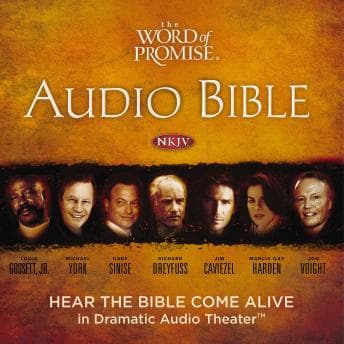
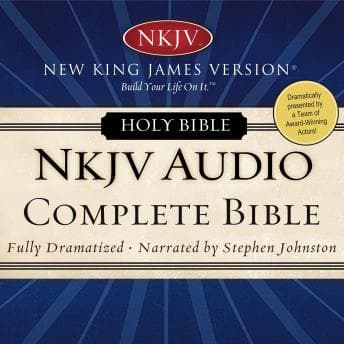
I've been teaching literature for twenty years. I've read the Bible — or parts of it — more times than I can count, in more translations than I care to remember. I've taught Genesis as creation myth alongside Ovid's Metamorphoses. I've used Ecclesiastes to introduce my juniors to existential dread before we hit Camus. The Psalms show up in my poetry unit every single year. So when I queued up this 71-hour dramatized NKJV on a Saturday morning walk along the lakefront with Denise, I figured I knew what I was getting into.
I did not know what I was getting into.
Seventy-One Hours Is a Different Kind of Commitment
Let me put this in perspective. War and Peace clocks in around 60 hours. Les Misérables runs about 57. This is the complete Bible — Genesis through Revelation — and at nearly 71 hours, it's the longest single audiobook I've ever finished. It took me the better part of two months, spread across morning walks, late-night grading sessions, a handful of faculty meetings (sorry again, Principal Martinez), and one memorably long drive to visit Denise's sister in Milwaukee.
And here's the thing about listening to the Bible straight through rather than dipping in and out the way most of us do: you feel the architecture of it. The repetitive genealogies in Numbers and Chronicles — the ones that make every reader's eyes glaze over on the page — become almost hypnotic in audio. There's a rhythm to "and so-and-so begat so-and-so" that Stephen Johnston leans into rather than rushing past. He treats those passages like percussion. Not exciting, exactly, but purposeful.
But then you hit the narrative stretches — David and Bathsheba, the Joseph saga, the raw fury of the prophets — and the full cast kicks in and you remember why people have been telling these stories for millennia. The dramatization during the confrontation between Nathan and David genuinely startled me. I was grading sophomore essays on The Great Gatsby at the time and I just... stopped. Red pen hovering. Because the voice actor playing Nathan delivered that "You are the man" with this quiet devastation that hit harder than any pulpit performance I've heard.
Johnston Knows When to Get Out of the Way
Stephen Johnston directs and narrates, and what struck me most is his restraint. He's an Emmy winner. He could chew scenery. He doesn't. His connective narration — the "And the Lord said unto Moses" tissue that holds everything together — is measured, clear, almost professorial. (I mean that as a compliment. We're not all boring.) He sets the table and then lets the cast bring the drama.
The sound effects and background music walk a tightrope that most dramatized Bibles fall off of. I've listened to productions where the thunder during Sinai sounds like a bad horror movie. Here, the music sits underneath like a film score — present enough to create atmosphere, quiet enough that you never lose a word. One listener quoted it perfectly: the dramatization is "just enough to add to the narration without drowning it."
Now, the criticism I've seen about pacing? I get it. Johnston moves. Some passages — particularly in the Epistles, where Paul is building complex theological arguments — could use more breathing room. I listen at 1.0x because the author chose those words and I choose to hear them properly, but even at normal speed, Romans felt rushed in places. Paul's logic needs pauses the way poetry needs line breaks. The narrator understands that pause is punctuation — most of the time. In the letters, he occasionally forgets.
The other legitimate gripe: navigation is a nightmare. Trying to find, say, Psalm 23 or a specific chapter of Isaiah? Good luck. The audiobook isn't chaptered in any intuitive way, which is a real problem for a text that people use as daily reference material. For straight-through listening, fine. For devotional use where you want to jump to a specific passage, this is genuinely frustrating.
This Is Why We Still Read the Classics
Here's what I keep coming back to. I teach kids who think anything written before 2010 is ancient history. And whatever your faith tradition — or lack of one — the Bible is the most influential text in Western literature. Period. I made a similar case to my juniors last semester when we spent a week with Buddhist Writings — that you can't really understand a civilization's literature without sitting with its sacred texts, even if they're not your own. My students can't fully understand Steinbeck or Morrison or Dostoevsky without it. And this production makes the case that the text is alive, not some dusty obligation.
Denise, who grew up Baptist and drifted away from church years ago, stopped me on the lakefront during Ecclesiastes. "Play that part again," she said. "To everything there is a season." She'd heard it a thousand times. But hearing it performed — not preached, not recited, but performed — made it land differently.
That's the power of great narration. It doesn't replace the text. It reveals it.
Who Gets 71 Hours of Their Life Back Richer
If you want a dramatized Bible that respects the source material without turning it into a theme park ride, this is the one. Best for commuters, walkers, anyone with long stretches of time and a genuine interest in hearing the full sweep of the text. If you need easy chapter navigation for daily devotionals, you'll be frustrated — look for a version with better digital chaptering. And if you're sensitive to pace, maybe bump it down to 0.9x for the denser Pauline letters.
My students would hate this. Seventy-one hours? They can barely sit through a sonnet. But for anyone who believes the prose deserves to be savored — and this is prose that's shaped civilizations — it's worth every minute.
(My mom asked if I'd do a podcast episode about it. I might. That'd bring my listener count to... still 47.)