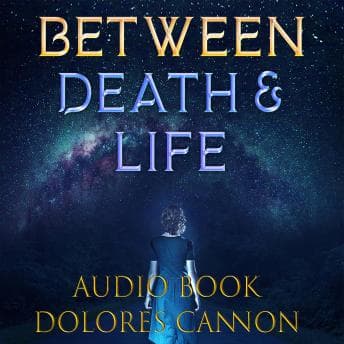

Dolores Cannon's work sits at a strange intersection that I find myself drawn to and frustrated by in equal measure. As someone who studies how people construct narratives about their own identities, the premise here is genuinely interesting: hundreds of hypnotic regression subjects independently reporting similar experiences of death, the spirit realm, and rebirth. That's a pattern. And patterns are my thing.
I was up late one night, unable to sleep after reading a particularly dense paper on autobiographical memory distortion, and figured — why not let someone talk to me about the afterlife for eleven hours? So I queued this up.
When Anecdotal Data Wants to Be Science
Here's what I kept coming back to: Cannon spent sixteen years collecting these regression accounts, and the consistency she describes across subjects is genuinely the most compelling part of the book. Guides, life planning before birth, karmic relationships, the whole architecture of an afterlife that sounds suspiciously organized — like a cosmic HR department. The protagonist here, if we can call Cannon that, exhibits classic confirmation bias patterns. She's asking leading questions under hypnosis and then marveling that people give convergent answers. The research actually shows that hypnotic subjects are extraordinarily suggestible, and Cannon never really grapples with that. She presents the transcripts as evidence rather than as fascinating psychological artifacts, which — honestly — they are, just not in the way she thinks. Think Like a Freak actually has a sharp chapter on exactly this kind of motivated reasoning — where the data collector becomes so invested in a conclusion that the methodology bends quietly around it.
What makes this book compelling despite itself is that the content touches on something real in human psychology: our desperate need for narrative continuity beyond death. The sections on planning your lifetime before birth and choosing difficult experiences for karmic growth? That's a coping framework. It's how people retroactively make suffering meaningful. I found myself asking: why does Cannon never interrogate the convenience of an afterlife that perfectly validates every painful thing that's ever happened to you? Because that's not curiosity — that's comfort dressed up as exploration.
Some listeners have called the information "too Hollywood movie," and yeah, I get it. The descriptions of the spirit realm have a polished, almost cinematic quality that feels less like raw transcription and more like something that's been smoothed over many retellings.
Three Narrators Walk Into an Audiobook
And then there's the narration situation. Three narrators — Carol Morrison, Doug Warrings, and Ted Snow — for what is essentially a nonfiction book structured around hypnotic transcripts. In theory, multiple narrators could work here: one for Cannon's voice, others for the regression subjects. In practice? It gets confusing. The transitions between narrators aren't always clear, and you lose track of who's supposedly speaking — is this Cannon analyzing, or a subject recounting? The female narrator drew particularly sharp criticism from other listeners, and while I wouldn't call it terrible, there's a flatness to certain sections that drains the emotional weight from moments that should feel, well, otherworldly. You're hearing someone describe crossing into death, and the delivery has the energy of reading a grocery list.
Doug Warrings and Ted Snow fare somewhat better, but the inconsistency between all three creates this jarring tonal whiplash. For eleven hours, that wears on you.
I ended up listening at 1.25x, which helped with pacing — the book drags in sections where Cannon is essentially restating the same spiritual framework from a slightly different angle. By hour seven, I could predict the structure of each new regression account: subject goes under, recalls death, encounters light/guides, receives wisdom about life purpose. Rinse, repeat. The individual details vary, but the architecture is identical, which is either profound evidence of a universal afterlife or — and my therapist would have thoughts about this — evidence that Cannon's methodology shaped the responses.
Who This Is Actually For (And Who Should Run)
If you're already a Dolores Cannon devotee and you've read her Convoluted Universe series, this is earlier, more focused work that covers death and rebirth specifically. You'll find it valuable as part of her larger body of research. If you're coming to this from a psychology or skeptical perspective, it's a fascinating case study in how belief systems get constructed and reinforced through therapeutic practice — just not in the way Cannon intended.
But if you need rigorous methodology, controlled conditions, or any acknowledgment that hypnotic regression is not accepted as reliable memory retrieval by mainstream psychology? Skip this audiobook. And honestly, even if the content appeals to you, the narration quality might push you toward the print version instead.
My Subconscious Says: Read the Book Instead
Dolores Cannon asked a genuinely interesting question — what do people experience when they believe they're dying under hypnosis? — and then refused to interrogate her own answers. The content is repetitive but occasionally striking, the spiritual framework is internally consistent if you accept its premises, and the narration actively undermines whatever atmosphere the material tries to build. I wanted to love this more than I did. Psychologically, there's something real buried in here about how humans construct meaning around mortality. But the audiobook format does it no favors.