
What happens when you give a grad student procrastinating on his thesis a two-hour children's book from 1917?
Apparently, he finishes it in one sitting while his D&D campaign notes gather dust.
When Historical Fiction Hits Different Than Expected
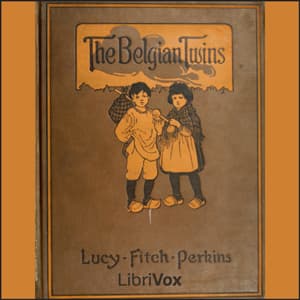
Look, I grabbed this because I needed something short while reorganizing my board game shelf (it had become a Jenga tower of shame). The Belgian Twins sounded like a quick palate cleanser between my usual 40-hour epic fantasy commitments. What I didn't expect was getting genuinely invested in two kids and their dog trying to survive WWI occupation.
Lucy Fitch Perkins wrote this in 1917—like, during the actual war—as part of her Twins series that introduced American kids to different cultures. Jan and Marie aren't chosen ones with magical powers. They're just Belgian children whose parents get marched off by German soldiers, leaving them to fend for themselves. The stakes are real. The danger is real. That stripped-down approach to real horror reminded me of Head Full of Ghosts, which also uses restraint to amplify dread. And yeah, it's written for kids, but there's something about the simplicity that makes the horror of occupation land harder, not softer.
The world-building here isn't Sanderson-level complex (obviously), but Perkins does something clever—she grounds everything in sensory details. The smell of the family's destroyed home. The weight of the bundle Jan carries. The way Fidel the dog becomes their only constant in a world gone wrong. There There does something similar with its characters clinging to identity markers while their world fractures around them. For a book aimed at children, it doesn't flinch from showing war's disruption of ordinary life.
The LibriVox Gamble
Here's the thing about LibriVox recordings—they're free, they're volunteer-read, and they're wildly inconsistent. This one falls somewhere in the middle of that spectrum. The readers are earnest, clearly trying their best, but you're not getting Steven Pacey-level character differentiation here. The production is clean enough, no weird audio artifacts or background noise that I noticed.
But let's be honest: this is a 2-hour children's book from the public domain. You're not paying for it. The narration serves the story without elevating it, which is... fine? It's fine. My D&D group would call this "adequate roleplay from a new player"—gets the job done, shows heart, room to grow.
A Time Capsule With Some Dust On It
I need to address the elephant in the room: this book is over a hundred years old, and it shows. The prose has that formal early-20th-century children's book cadence. Some of the wartime propaganda elements are pretty transparent—Germans are uniformly villainous, Belgians are uniformly noble. It's a product of its time, written to generate sympathy for Belgian refugees when that was a pressing political issue.
Does that make it less valuable? Not entirely. As a historical artifact, it's fascinating. This is how Americans taught their kids about WWI while it was still happening. The progression of Jan and Marie's journey—from their destroyed village to finding safety—follows a satisfying arc even if you can see the moral lessons coming from a mile away.
(My advisor Dr. Patel would probably appreciate that I'm analyzing historical children's literature instead of working on my thesis. Actually, no she wouldn't. She'd ask why I'm not analyzing procedural generation algorithms. Sorry, Dr. Patel.)
Roll For Initiative (Or Don't)
Queue this up if: you've got a kid interested in history, you're a teacher looking for accessible WWI content, or you're a grad student avoiding your responsibilities and want something that won't demand 40 hours of your life.
Skip it if: you need polished professional narration, or dated wartime propaganda (even in children's lit) is going to pull you out of the story.
The magic system is... well, there isn't one. But the emotional core is solid. Two kids, one dog, a war-torn country, and the desperate hope of finding their parents again. Sometimes the simplest quests hit hardest.
I finished it, reorganized exactly zero board games, and immediately texted my mom. She didn't ask about my thesis for once. Small victories.