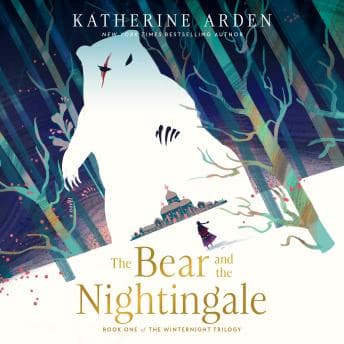

I was grading papers at 11 PM—Macbeth essays, if you're curious, and no, they weren't getting better—when Kathleen Gati's voice pulled me into a Russian winter so cold I forgot about the stack of C-minuses on my desk.
Look, I'm an English teacher. I've read more fairy tale retellings than I can count, watched my students butcher "once upon a time" in creative writing assignments, and generally developed a healthy skepticism toward anything marketed as "lyrical." But Katherine Arden? She earned that word.
When the Old Stories Still Have Teeth
What Arden does here—and what Gati's narration amplifies beautifully—is remind us why we told these stories around fires in the first place. Not to comfort. To warn. The household spirits in this book aren't cute. They're necessary. They're the thin barrier between a family and the hungry dark outside, and when Vasya's devout stepmother starts dismantling that protection in the name of Christian piety, you feel the wrongness of it in your bones.
This is the kind of folklore that Grimm sanitized and Disney buried. Arden digs it back up.
My students would probably complain about the pacing in the first half—it's slow, deliberately so, building the world of medieval Russia with the patience of someone who knows winter lasts most of the year. But this is why we still read the classics, or in this case, why we listen to books that feel like them. The prose deserves to be savored. Arden writes with a cadence that feels oral, like something passed down through generations of nurses and grandmothers. Gati picks up on this completely.
The Voice That Became the Hearthfire
Here's the thing about Kathleen Gati: she sounds like someone telling you a story you shouldn't hear after dark. Warm, yes, but with edges. Her Russian accent work is subtle—not a caricature, just enough to ground you in place—and while I've seen some listeners complain it was distracting, I'd argue they're missing the point. The slight unfamiliarity of the accent is the point. This isn't your world. These aren't your fairy tales.
She handles the Russian names with confidence (which honestly saved me from embarrassing myself if I ever discuss this book out loud), and her character voices are distinct without being theatrical. The stepmother Anna sounds brittle and desperate. Frost—the blue-eyed winter demon—has a stillness in his voice that made me pause my walk along the lakefront more than once.
Gati understands that pause is punctuation. She uses silence the way Arden uses snow: as atmosphere, as threat, as beauty.
Where the Narrative Shifts
The book takes its time getting to the supernatural confrontation, and honestly? I didn't mind. Denise and I walked the lakefront through the entire first half, and the slow build felt appropriate for a story about patience, about endurance, about surviving winters that seem endless. But when the tension finally breaks—when the Bear wakes and the village's protections fail—the payoff is worth every measured chapter.
Vasya herself is the kind of heroine I wish I could assign to my juniors. She's not rebellious for the sake of being rebellious. She's rebellious because the alternatives—marriage or convent—would kill something essential in her. She sees the spirits that others have forgotten, and she refuses to pretend otherwise. In a time when women had no choices, she makes one anyway.
(If you loved Naomi Novik's Uprooted, this is its spiritual successor. Same dark fairy tale energy, different mythology, equally gorgeous.) I got that same atmospheric pull from Secret Garden—different setting, but the same sense of a world that operates by older, stranger rules than the ones we're used to.
Who This Is (and Isn't) For
If you need action in your first chapter, this isn't for you. If accented narration pulls you out of stories, you might struggle. And there are some genuinely dark moments here—death, undead things, the kind of violence that fairy tales used to contain before we decided children needed protecting from their own imaginations.
But if you want a book that feels like it was written to be spoken aloud, that treats Russian folklore with the respect it deserves, and that features a narrator who sounds like she's been telling these stories her whole life? This is the one.
Class Dismissed
I already know I'll return to this one. Probably in January, when Chicago decides to remind me what real cold feels like and I need something that understands winter as more than inconvenience.
Worth pausing the faculty meeting for. (Sorry again, Principal Martinez.)