
Everyone kept telling me this was a quirky, fun romp. A light read. Charming. And sure, it is all of those things on the surface. But nobody warned me that a nine-year-old boy in a three-piece suit was going to absolutely wreck me on a Tuesday afternoon while I was designing wedding invitations for a couple I've never met.
Let me back up.
Frank Banning Wore a Cravat to My Heart and I Let Him
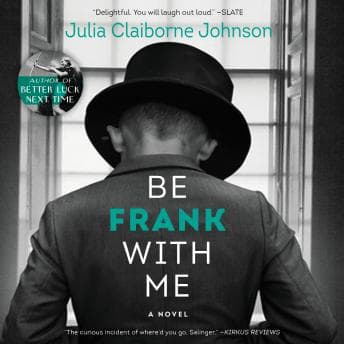
Here's what you need to know about Frank: he's nine, he dresses like Clark Gable circa 1934, he speaks in this flat, declarative way that sounds almost rehearsed, and he is the loneliest kid in the world even though he'd never say so. Tavia Gilbert makes a choice with his voice that I think is going to split listeners right down the middle - she gives him this deadpan, slightly robotic delivery that strips the emotion out of his words even when what he's saying is devastating. At first? I wasn't sure. It felt stiff. I kept waiting for her to soften it. But by hour three, I understood - Frank doesn't perform his feelings the way other kids do. He catalogs them. He files them away under movie references and vintage fashion facts. And Gilbert's flat affect for him makes the moments when real feeling slips through hit so much harder.
There's a scene where Frank explains something about why he wears the clothes he wears - I won't spoil it - but the way Gilbert delivers it with that same controlled cadence while the content of what he's saying is just... God. I had to pause the audio and pretend I was checking my email because my eyes were doing that thing. You know the thing. Frida was sitting on my desk staring at me like I was having a medical event.
Mimi Banning Is Not Your Cool Literary Mom Fantasy
So here's where I'll push back on the comparison to Where'd You Go, Bernadette. People love grouping these two together because reclusive brilliant woman plus quirky kid plus outsider narrator, right? But Mimi is harder to love than Bernadette. Way harder. She's caustic, she's neglectful in ways that made me genuinely uncomfortable, and Julia Claiborne Johnson doesn't let her off the hook with a tidy redemption arc. Gilbert gives Mimi this sharp, almost brittle quality - all edges and ice - and it works because you can hear the fear underneath. This woman lost everything. Her money, her creative confidence, her ability to connect with her own son. Gilbert plays the brittleness so that when Mimi does crack, even a little, it feels earned.
Alice, our narrator and audience stand-in, is maybe the weakest link? She's fine. She's our eyes and ears. But compared to the hurricane of Frank and Mimi, she's a little... vanilla. Gilbert gives her a warm, grounded voice that serves the story well, but I found myself waiting through Alice's internal observations to get back to Frank's next wild declaration about why fedoras are superior to baseball caps.
The Quiet Devastation of Kids Who Don't Fit
Look, I know this book gets shelved as contemporary fiction, maybe even light literary fiction. But under the Hollywood setting and the witty dialogue and Frank's encyclopedic knowledge of Golden Age cinema - this is a book about what it costs to be different. Frank doesn't have a diagnosis in the book, and I actually respect that choice. He's just Frank. He's particular and brilliant and exhausting and tender, and the world doesn't know what to do with him.
Abuela would have loved this one. She had this thing about kids in old movies - she used to say they had "proper faces," whatever that means. Frank would have charmed her into making him conchas while he lectured her about Buster Keaton.
I cried twice. Once during the thing I won't spoil (you'll know), and once at the very end, not because it was sad but because it was gentle. This book is gentle in a way that sneaks up on you. At 8 hours and change, it doesn't overstay. It sits with you on the couch, makes you tea, tells you a strange and wonderful story about people who are bad at loving each other but trying anyway.
Give This to the Friend Who Needs a Good Ache
This is a rainy Sunday book. Headphones in, 1.0x speed (obviously), let Tavia Gilbert's voice carry you through Bel Air like you belong there. I had a similar slow-burn, atmosphere-over-plot experience with Great Train Robbery — different century, different stakes, but that same sense of being carried somewhere specific by the voice of the thing. If you need action or plot twists, skip this - the "mystery" of Frank's father is more of a gentle current than a driving force. But if you want to feel something specific and hard to name - that ache of watching a kid navigate a world that wasn't built for him, held together by his own strange armor of bow ties and film trivia - my heart. MY HEART.
The vibes are immaculate if you let them be. Just give Frank's voice about an hour to settle into your brain. Trust the choice. It pays off.