
Debugging the Human Source Code
Look, I don't usually do the "feelings" section of the bookstore. My Audible library is 80% hard sci-fi and 20% books about scaling distributed systems. But after watching a friend implode their relationship for the third time this year (same pattern, different guy), I decided to run a root cause analysis. Plus, Kevin made a joke about how I try to "optimize" our date nights, so I figured I might as well lean into the stereotype.
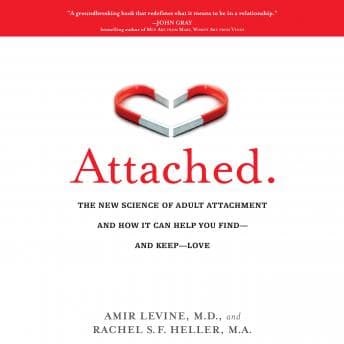
So, I queued up Attached on the 6 AM Baby Bullet to Mountain View. Just me, a lukewarm coffee, and a desperate need to understand why humans are so bad at networking (the emotional kind).
The Documentation We Should've Had at Launch
Here's the thing: This book is basically system documentation for relationships. And as an engineer, I appreciate that. Levine and Heller don't give you fluffy advice about "following your heart." They give you a framework.
They break the user base down into three distinct operating systems:
- Secure: The reliable servers. 99.99% uptime. Low latency.
- Anxious: The systems that ping the load balancer every millisecond checking for a connection.
- Avoidant: The servers that reject requests and go offline whenever traffic gets too high.
(I'm oversimplifying, but barely.)
Listening to this was like reading the logs of every failed relationship I had in my 20s. The science—based on John Bowlby's attachment theory—actually holds up. It explains the mechanics of why the Anxious person and the Avoidant person attract each other like magnets, only to create a deadlock situation that crashes the whole system.
I listened to the first half at 1.75x speed because, honestly, once you get the concept, you get it. But I slowed down for the case studies. It's practical. It's logical. It's debugging.
Robert Petkoff: The Voice of a Very Expensive Therapist
Petkoff narrates this, and the man has a voice like a very expensive therapist. He brought that same calming authority to Being Mortal, which was equally heavy but in a completely different way. It's soothing. Almost too soothing for 6 AM when I'm trying to stay awake past Palo Alto.
He handles the technical jargon—neuroscience, psychology terms—without sounding dry. But there's a weird pacing issue. Sometimes he's slow and deliberate, and then suddenly he rushes through a list like he's double-parked. Didn't bother me too much since I mess with the playback speed anyway, but if you're a 1.0x purist, it might glitch you out.
Also, fair warning: This book has quizzes.
Audiobooks with quizzes are usually a UI nightmare. You're driving or on a train, and the narrator is like, "Check box A if..." Petkoff does his best to make it engaging, and there is a PDF included, but let's be real—I didn't open the PDF. I just mentally tallied my score while staring at the back of a hoodie in front of me.
The Bug Report: Avoidants Get Roasted
Okay, we need to talk about the bias.
The authors clearly—and I mean clearly—have a bone to pick with the Avoidant attachment style. If you identify as Avoidant (or your partner is), this book is going to feel like a personal attack.
The text is filtered heavily through an Anxious lens. It validates the Anxious need for closeness (which is great!) but treats the Avoidant need for independence like a deprecated feature that needs to be refactored immediately. It lacks compassion for that group. If I were an Avoidant listener, I'd probably rage-quit the audiobook by Chapter 4.
(Kevin is painfully Secure, by the way. It's annoying. He just communicates needs and moves on. Who does that?)
The ROI
Is it worth the 7 hours (or 4 hours at my speed)? Yes.
Even with the bias, the framework is incredibly useful. It stops you from taking things personally. When you realize someone isn't ignoring your text because they hate you, but because their internal operating system perceives intimacy as a threat to independence, it changes how you react.
I finished this in two days of commuting. It's not a literary achievement, and it could've been 20% shorter (classic business book bloat), but the mental models are solid. Essentialism has the same issue—good framework buried under too many case studies—but at least that one won't make you psychoanalyze your relationship.
Who should listen: Anyone stuck in a loop of confusing relationship patterns who wants a logical framework instead of vague advice. Who should skip: Avoidant listeners who don't want to feel attacked, or anyone hoping for balanced coverage of all attachment styles.
Just maybe don't listen to it with your partner unless you're ready for a very long, very awkward dinner conversation.