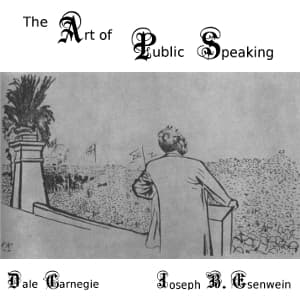

I tried to tackle this beast during a red-eye from JFK to LAX. Thought I could knock out a classic while drifting in and out of consciousness in 12B.
Here's the thing about a 20-hour audiobook on public speaking: If you need 20 hours to explain how to talk to people, you're probably overthinking it. My dad ran a business for thirty years with a vocabulary of about 500 English words and a glare that could melt steel. He did fine. But this is Dale Carnegie (and Esenwein), the godfathers of self-help, so I felt obligated to give it a shot.
The LibriVox Roulette Experience
First off, let's talk about the elephant in the room—or rather, the herd of elephants. This is a LibriVox recording. For the uninitiated, that means it's read by volunteers. Free. Public domain.
(I love the concept. Democratizing knowledge. Very noble.)
But from an efficiency standpoint? It's a gamble. You're playing narrator roulette every time a chapter ends. One minute you've got a guy who sounds like a retired BBC broadcaster—smooth, earnest, pacing on point. The next chapter? Someone recording on a laptop microphone in what sounds like a tiled bathroom while their cat scratches the door.
It breaks the flow. I listen at 2.0x speed—standard operating procedure—and the variation in audio quality actually made me slow down to 1.5x just to parse some of the accents and mic buzz. I had the same narrator whiplash with The Art of War—LibriVox is a beautiful idea until you're three chapters deep and suddenly someone's recording in an echo chamber. That hurt my soul a little bit.
Old School Hustle vs. Modern Fluff
Content-wise? It's actually solid. Surprisingly so.
We're so used to modern business books that are basically one blog post stretched into 200 pages of "synergy" and "paradigm shifts." This isn't that. Game of Life and How to Play It has that same old-school density—actual substance instead of corporate buzzword bingo. This is from an era where "public speaking" meant standing on a crate and convincing people not to throw tomatoes at you.
The advice is granular. It's about breath control, vocabulary, and—my favorite—confidence. Not the fake "fake it 'til you make it" confidence, but the kind that comes from actually knowing what you're talking about. (Novel concept, right? I know a few VCs who could use a refresher on that chapter.)
But—and this is a big but—it is dense. There's a lot of theory here. And the last section? It's just famous speeches. Hours of them. Patrick Henry, Lincoln, the greatest hits.
The ROI Verdict
Look, I respect the volunteers. Seriously. They're doing the Lord's work making this accessible. But if you value your time—and if you're reading my reviews, you definitely should—this is a tough sell as an audiobook.
The pacing drags because of the format. The content is valuable, but extracting the diamonds from the 20-hour rough is exhausting.
If you want the lessons, buy the paperback. Skim the speeches. Highlight the techniques. Listening to someone else read the Gettysburg Address at 1.0x speed isn't going to make you a better speaker. It's just going to make you sleepy.
Who should listen: Completists who want every Carnegie word and don't mind inconsistent audio quality. Who should skip: Anyone who bills by the hour—grab the paperback instead.
Bottom line: The wisdom is timeless. The delivery method? Painfully outdated.