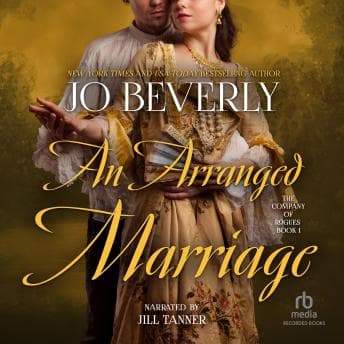

"When her vile brother's wicked scheming ruins her reputation, Eleanor Chivenham is forced into a marriage of convenience." That's the jacket copy. What it doesn't tell you is that this book opens with a rape scene — Eleanor's own brother orchestrating her assault to force a marriage that serves his political ends. I was grading sophomore essays on The Great Gatsby at 11 PM, half-listening, and that opening made me put the red pen down. Hard.
This is why I always tell my students: the first chapter is a contract with the reader. Jo Beverley's contract here is brutal and honest. She's saying, This is not a fairy tale. This is Regency England, and women were property, and I'm not going to pretty it up for you. If you can't accept that contract, this isn't your book. And that's okay.
Eleanor Chivenham Didn't Ask For Your Pity
What Beverley does with Eleanor after that opening is what separates this from the bodice-rippers my students' parents hid in nightstands in the '90s. Eleanor doesn't crumble. She doesn't become a passive object waiting to be rescued by her reluctant husband, Nicholas Dolaney. Instead, she's angry. She's calculating. She's trying to survive within a system designed to crush her, and Beverley lets her be smart about it without turning her into some anachronistic girl-boss fantasy.
Nicholas is the more interesting character study, though. He's presented initially as the reluctant groom trapped by honor into this marriage, but Beverley peels back layers — his work with the Company of Rogues, his genuine decency warring with his resentment at being manipulated. The emotional growth between these two doesn't happen because of some grand romantic gesture. It happens in small, awkward negotiations. Conversations where they're both guarded. Moments where trust is offered in increments. This reminds me of what Hemingway said about the iceberg theory — what's underneath the dialogue is doing all the work. Beverley works the same slow-burn psychology in Unwilling Bride, though she's a touch gentler with her characters there.
The historical realism grounds everything. Beverley clearly understands that Regency society wasn't just balls and bonnets. There's political scheming, class anxiety, the constant awareness of reputation as currency. My students would hate this. I love it. The prose deserves to be savored, and at 13 hours, Beverley gives you time to live inside that world.
Jill Tanner Understands That Pause Is Punctuation (Mostly)
Tanner's narration carries real emotional weight. Her Eleanor has a clipped quality early on — defensive, controlled — that gradually warms as the character opens up. Her male voices are distinct enough that I never lost track of who was speaking, and her Nicholas carries this quiet gravity that suits the character's reserve. The storytelling pace is steady, letting scenes breathe without dragging. I've heard her sustain that controlled warmth across whole books — Wild Rose is her best work in my listening so far.
But. There are these pauses. Not everywhere, and not dealbreakers, but scattered through the middle chapters where Tanner seems to lose her rhythm between dialogue and narration. They're the kind of thing you notice at 11:30 PM when you're trying to stay locked in. I'd say three or four moments across the whole book where I thought my Bluetooth had glitched. It didn't. It was just an odd beat in the performance. Minor, but worth noting.
I listened at 1.0x — because the author chose those words — and at that speed, Tanner's pacing works well. The emotional scenes land. There's a stretch around the midpoint where Eleanor and Nicholas are navigating their first real vulnerability with each other, and Tanner's voice cracks just slightly on one of Eleanor's lines. Whether intentional or not, it felt true.
The Elephant in the Drawing Room
Let's talk about what the author is really saying with that opening. Some listeners have called the premise ludicrous. I get the objection, but I think they're confusing discomfort with implausibility. Beverley isn't endorsing what happens to Eleanor — she's indicting a society where it could happen, where a brother could wield his sister's body as a bargaining chip and face no real consequences. The arranged marriage itself becomes both the wound and the possible healing, which is complicated and uncomfortable and exactly the kind of thing good historical fiction should make you sit with.
Denise and I walked the lakefront on a Saturday morning while I listened to the final two hours. She asked why I looked so serious. I told her I was thinking about how romance novels get dismissed as lightweight when the best ones — this one — are really about power, consent, and whether two damaged people can build something honest inside a dishonest system. She said, "You're going to put that in your podcast, aren't you?" (She knows me too well.)
Who This Is For — And Who Should Walk Away
If you loved Georgette Heyer's wit but wanted more emotional teeth, this is its spiritual successor. If you read Mary Balogh and thought, Give me something darker, Beverley delivers. For a milder entry in the genre that still respects your intelligence, Blue Cross scratches a similar historical itch without the darkness. But I need to be direct: if sexual violence as a plot catalyst is a hard no for you, respect that boundary. This book doesn't glorify it, but it doesn't shy from it either.
Worth pausing the faculty meeting for. Just maybe not the first chapter.