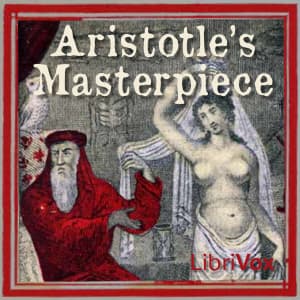

What exactly qualifies as obscene in 1684?
That's the question I kept circling back to while listening to this odd little artifact at 1.25x during a late-night session cleaning my Sig P320 at the kitchen table. Linda was asleep, Ranger was sprawled at my feet, and I was genuinely fascinated - not by the content itself, but by the sheer audacity of a book that pretended to be written by a philosopher who'd been dead for two thousand years and then got semi-banned for three centuries.
A 17th-Century Sex Manual Wearing Aristotle's Nametag
Let me cut to the chase: this is not actually by Aristotle. Not even close. It's a pseudonymous sex and midwifery manual from 1684 that somebody slapped the philosopher's name on for credibility - which is pretty much the 17th-century equivalent of citing Wikipedia in your thesis. The unknown author (now politely called "Pseudo-Aristotle") cobbled together folk wisdom about reproduction, pregnancy, and anatomy with a mix of genuine medical observation and complete nonsense.
And here's where it gets interesting from a historical intel perspective. I've read plenty of period documents for my consulting work - threat assessments, old military doctrine, colonial-era correspondence. You develop an ear for the way people from different centuries frame information as authority. This book does exactly that. It presents wildly incorrect anatomical claims with the same confident tone as actual Aristotelian philosophy. The sections on conception read like a briefing from someone who's never actually been in the room but heard about it from a guy who knew a guy. There's advice on determining a child's sex before birth that's roughly as accurate as flipping a coin. And the descriptions of "monstrous births" - birth defects attributed to the mother's imagination or moral failings - are genuinely unsettling, not because they're graphic, but because you realize people actually believed this and acted on it.
At 2 hours and 24 minutes, it's a short deployment. Barely a warmup by my standards. But the density of historical weirdness packed into that runtime kept me engaged.
Rob Board Does His Best With Material From Another Century
Rob Board narrates this straight, which is honestly the right call. The language is archaic and sometimes clunky - lots of long, winding sentences built for the page rather than the ear. Board reads it with a steady, measured pace that doesn't try to dress it up as something it's not. No dramatic flourishes, no winking at the audience. He treats it like what it is: a historical document.
That said, I don't have much to compare his work to here because the material doesn't give him a lot to work with. There are no characters, no dialogue, no dramatic arcs. It's essentially a medical text with moral commentary layered on top. Board's voice is clear and doesn't stumble over the period language, which is more than I can say for some narrators I've heard attempt Early Modern English. But it's functional narration, not a performance that elevates the material. Think of it as a competent briefing officer reading from a bizarre field manual.
The audio quality seems consistent with a LibriVox volunteer recording - clean enough, no major issues, but don't expect studio-polished production.
Who Actually Needs This in Their Ears
This is a curiosity piece. If you're into the history of medicine, the history of censorship, or you just want to understand how wildly wrong people could be about human biology while sounding absolutely certain of themselves - there's genuine value here. I've seen that same pattern in intelligence work: confident delivery of bad information is more dangerous than uncertain delivery of good information. This book is a masterclass in that dynamic, even if unintentionally. Snyder's On Tyranny covers the same terrain from a different angle - how authoritative-sounding language becomes the infrastructure of control, and how quickly people stop questioning it.
If you're looking for a thriller, an adventure, or anything with a pulse rate above "library basement" - this is not your mission. And if you're expecting actual Aristotle, you'll be disappointed. This has about as much to do with Aristotle as MRE cheese has to do with actual cheese.
But as a historical artifact? As a window into what ordinary people in the 17th through 19th centuries believed about sex and reproduction? It's genuinely worth the two and a half hours. I found myself pausing to look up context multiple times - the 1857 Obscene Publications Act, the actual publication history, the various editions that kept circulating underground. That's the sign of something that sparks real curiosity.
Ranger's Half-Interested, and So Should You Be
Worth your time? Here's the debrief: it's free (LibriVox), it's short, and it's one of those books that makes you smarter about how misinformation worked long before the internet existed. The author clearly did their homework on sounding authoritative - the actual medical homework, not so much. Listen to it for the history, not the science. And maybe not at the dinner table.






![Steve Jobs [unabridged audiobook] audiobook cover](/_next/image?url=https%3A%2F%2Fcovers.audiobooks.com%2Fimages%2Fcovers%2Ffull%2F9788499923406.jpg&w=1920&q=75)