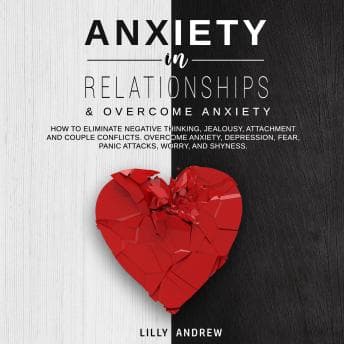

Look, I have a problem with self-help books that promise to fix everything. Anxiety AND depression AND panic attacks AND jealousy AND attachment issues AND couple conflicts? That title is doing a lot of heavy lifting. My therapist would have thoughts about this kind of kitchen-sink approach to mental health.
But here's the thing - I listened to this during my morning jogs through Cambridge, and honestly? It's not as bad as that overwhelming title suggests. It's just... fine. Which is maybe the most damning thing I can say about a self-help audiobook.
The Voice in Your Ear
Lilly Andrew narrates her own book, and there's something I genuinely appreciate about that. She sounds calm, non-judgmental, like a friend who's done some reading and wants to share what she learned. The audio quality is clean - no weird background noise or editing issues that pull you out of the content.
But - and this is a significant but - the pacing is slow. Like, noticeably slow. I found myself wanting to speed it up, and I rarely do that with audiobooks. There's a monotony that creeps in, especially in the middle sections. Not terrible, just... meh. If you're listening while doing something active (like me, huffing through my run), it works. If you're trying to focus exclusively on the content? You might zone out.
Where the Psychology Gets Fuzzy
Okay, so here's where my researcher brain kicks in and gets a little annoyed. The book claims to be based on research, but it reads more like a compilation of general advice you'd find in any anxiety workbook. The research actually shows that attachment styles and relationship anxiety are complex, individualized patterns - you can't just "eliminate" them with mindset shifts. That's not how any of this works.
The strategies aren't wrong, exactly. Breathing exercises, reframing negative thoughts, communication tips - all solid basics. But they're basics. If you've read literally any other anxiety book, you've heard most of this before. What makes Andrew compelling is her genuine warmth. She clearly wants to help. I just wish there was more depth to the help she's offering.
The relationship-focused sections are actually the strongest parts. Andrew seems to understand that anxiety doesn't exist in a vacuum - it shows up in how we attach to partners, how we interpret their silences, how we spiral at 2 AM wondering if that text meant something different than we thought. (Not that I would know anything about that. Ahem.) The communication advice is practical and actionable, which I appreciated.
Who Should Listen (And Who Should Skip)
This is a fascinating case study in audience mismatch, honestly. If you're someone who's never really explored your anxiety before, never read a self-help book, never done therapy - this is a gentle, accessible introduction. Andrew doesn't shame you for your anxiety. She doesn't make you feel broken. That matters.
But if you're dealing with severe anxiety, or you've already done the basic work, this will feel too surface-level. Skip it. The promise of "permanent mindset changes" without medication is... optimistic, let's say. Psychologically, the idea that you can just decide to replace anxiety with "radiating confidence" doesn't track. Anxiety is more stubborn than that. (Trust me, I've tried.)
At 2 hours and 33 minutes, it's a quick listen. I finished it in three runs. It didn't change my life, but it didn't waste my time either. There were moments where I found myself nodding along, and moments where I was mentally arguing with her points. That's not nothing.
Would I Recommend This to a Friend?
Depends on the friend. If someone came to me saying they've been feeling anxious in their relationship and don't know where to start, I'd probably point them here first, then follow up with Brené Brown's work for something with more substance. For a different kind of mental clarity—one focused on performance anxiety rather than relationship anxiety—Mindful Athlete: Secrets to Pure Performance offers techniques that actually translate across contexts. It's a starter kit, not a solution.
The author-narrated aspect adds a layer of authenticity that I value. You can tell she believes what she's saying. I just wish she'd gone deeper, given us more case studies, more specific examples instead of generic scenarios. My therapist would say something about meeting people where they are, and maybe that's what Andrew is doing. She's meeting anxious people at the beginning of their journey.
Not every book needs to be groundbreaking. Sometimes you just need someone calm in your ear telling you that your anxiety makes sense and here are some things to try. This book does that. It just doesn't do much more.