
Look, I wasn't expecting to finish a book about the War of 1812 and immediately text my mom about it. But here we are. She's now convinced I've finally developed an interest in "real history" instead of "those murder books." (She's wrong, but I'm letting her have this one.)
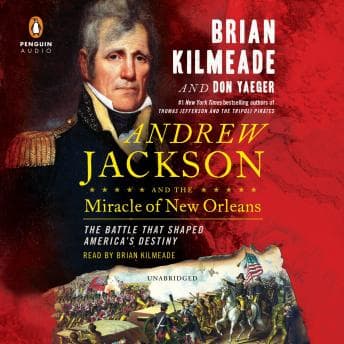
I grabbed this during a particularly brutal stretch of night shifts last month. Five nights in a row, and by night three, my usual thriller rotation was starting to feel like work. Something about fictional violence when you've just spent twelve hours dealing with actual trauma—it hits different. So I switched gears. American history. The Battle of New Orleans. Andrew Jackson being Andrew Jackson.
When the Author Reads His Own Work
Brian Kilmeade narrating his own book is... interesting. And I mean that in both directions. The guy has energy. Like, a lot of energy. At 3 AM when I'm charting and half the unit is finally quiet, his enthusiasm kept me awake better than the terrible break room coffee. He genuinely sounds excited about this stuff, which—honestly? Refreshing. Most history audiobooks put me to sleep. This one didn't.
But sometimes that energy is A Lot. There were moments where I wanted him to just... calm down a little. Let the story breathe. The Battle of New Orleans was dramatic enough without the extra emphasis on every other word. My dashboard got a few "okay, okay, I get it" comments during the drive home.
He's not a professional narrator, and you can tell. But there's something kind of charming about an author this invested in his own material. It's like listening to your uncle tell a war story at Thanksgiving—not polished, but you can feel how much he cares.
Pirates, Militiamen, and a Coalition That Shouldn't Have Worked
Here's what got me: the coalition Jackson pulled together. Frontier militiamen, French Louisianans, Cherokee and Choctaw warriors, freed slaves, and literal pirates. Pirates! Jean Lafitte and his guys basically said "we're criminals, but we're AMERICAN criminals" and showed up to fight the British. As someone who's worked in trauma for fifteen years, I know what it looks like when a team that shouldn't work somehow does. This was that, but with muskets.
The book moves fast—under six hours total—and Kilmeade doesn't get bogged down in academic details. That's both a strength and a weakness. Perfect for post-shift decompression when my brain is running on fumes. Less perfect if you want deep analysis of the political context or, you know, a nuanced look at Jackson as a person. (The man had... let's call it a complicated legacy. The book mostly sidesteps that.)
My mom would love this, actually. She's always saying I don't appreciate American history enough. This is exactly the kind of accessible, patriotic narrative she'd eat up. Carlos listened to part of it with me on a weekend drive and kept asking questions about the British strategy. So it's got crossover appeal, apparently.
What It Gets Right (And What It Skips)
The battle sequences are genuinely gripping. Kilmeade knows how to build tension, and the actual combat at New Orleans—the fog, the confusion, the British advancing into devastating American fire—plays out like a thriller. The detail about the Ursuline nuns praying for the American troops is a nice touch. That same focus on the human side of historical conflict shows up in Geronimo's Story of His Life, though from a very different perspective. Whether you're religious or not, it adds a human element to the chaos.
But look. This is a simplified, celebratory take on history. It's not trying to be a comprehensive academic work, and if you go in expecting that, you'll be disappointed. Some reviewers have criticized it for being shallow, and... yeah, fair. It's a pageturner, not a deep dive. Jackson is presented as a hero with some rough edges, not as the deeply problematic figure a more critical history would explore.
For me, driving home at 7 AM after a rough shift? I wasn't looking for moral complexity. I was looking for a story that would keep me awake and engaged. This delivered.
Who's This For?
Perfect for history-curious listeners who want an accessible entry point, not a graduate seminar. Skip it if you need nuanced analysis of Jackson's legacy or deep political context—this isn't that book. But if you've got a brother-in-law who keeps saying he wants to "get into history"? Hand him this.
Clocking Out
Perfect for that post-shift decompression when you need something engaging but not emotionally heavy. The pacing is tight, the story is inherently dramatic, and Kilmeade's enthusiasm—while occasionally too much—keeps things moving. It's not going to change how you think about American history, but it might make you actually want to learn more about a period most of us slept through in high school.
Would I listen again? Probably not. But it's an entry point, not a destination. And sometimes that's exactly what you need.








![Steve Jobs [unabridged audiobook] audiobook cover](/_next/image?url=https%3A%2F%2Fcovers.audiobooks.com%2Fimages%2Fcovers%2Ffull%2F9788499923406.jpg&w=1920&q=75)