
When's the last time you sat down and really thought about what bedtime stories are supposed to do?
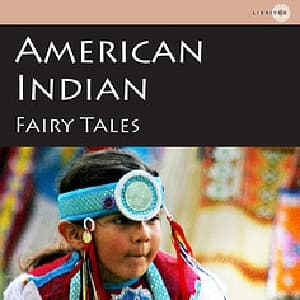
Not just kill the twenty minutes between bath and lights-out (though, let's be honest, that's the primary function in this house). I mean the actual job of a story passed from adult to child - carrying something forward. Wisdom, warnings, identity. I picked up American Indian Fairy Tales because at under three hours it fit neatly into my week, and because Emma's second-grade class just started a unit on Native American cultures and I figured, why not get ahead of the homework for once in my life.
I ended up listening to most of it during Sophie's nap times, which felt weirdly appropriate - sitting in the quiet house while my toddler slept, absorbing stories that were originally told to children in a world so different from mine that it might as well be another planet.
Stories That Survived Centuries Before They Survived My Pause Button
Here's what you need to know: these aren't the fairy tales you grew up with. No princesses in towers. No glass slippers. The stories come from the Lake Superior region tribes, originally collected in the 1830s by Henry Schoolcraft (who actually learned the language - imagine that kind of commitment), then rewritten for kids in the 1920s by William Trowbridge Larned. So there are layers of translation and adaptation happening, and you can feel it. Some of the wildness of the originals peeks through the tidy children's-book framing.
There's a story about Shin-ge-bis, this stubborn little diver duck who refuses to be intimidated by the North Wind personified as this hulking, freezing bully. The North Wind literally tries to freeze him out of existence, and Shin-ge-bis just... keeps singing by his fire. Keeps fishing. Won't give in. I'm sitting in my kitchen listening to this and thinking: okay, that's me versus the morning routine with three kids. Shin-ge-bis is my spirit animal.
The tales about Iagoo the boaster and the various trickster figures have this dry, almost deadpan humor that I wasn't expecting. They're funny in a way that doesn't try too hard - the comedy comes from recognizable human flaws dressed up in magical settings. Vanity, laziness, stubbornness. My kids would get it. I got it.
Chip Reads Like Your Favorite Librarian (And I Mean That Kindly)
The narrator goes by just "Chip," and the style is exactly what the description promises - sweet and simple. This isn't a performance-heavy production with different voices for every character and dramatic sound effects. It's one person reading these stories in a measured, clear, almost campfire-adjacent tone. Think: the storytelling voice of someone who genuinely cares about the material but isn't trying to win an award for it.
Is it going to blow your mind? No. But for stories like these - short, episodic, rooted in oral tradition - the straightforward delivery actually works. These were meant to be told, not performed. The simplicity lets the stories breathe. I will say that if you need high energy narration to stay engaged, this might lull you. I nearly dozed off once during car time, but that was more about my chronic sleep deficit than the audiobook.
The Uncomfortable Elephant in the Room
I'd be lying if I didn't mention the 1920s lens. These stories were "recast as children's fairy tales" from their original forms, and you can feel the era's assumptions about what Native American stories should sound like when packaged for white audiences. Some of the language choices feel dated. The framing of these as quaint "fairy tales" from a culture that "has largely disappeared" - that description made me wince a little, because these cultures haven't disappeared, they've survived. It's worth having that conversation with your kids if you share these stories with them. Emma and I talked about it, and honestly, that conversation was more valuable than the book itself.
That said, the core wisdom in these stories is real and worth preserving. The respect for nature, the consequences of arrogance, the power of persistence. My marketing brain keeps wanting to call it "brand values" but it's so much more than that.
The Mom Verdict: Short, Sweet, and Worth the Conversation It Starts
At 2 hours and 49 minutes, I finished this in three days without breaking a sweat. Survived 47 pauses and still made sense - each story is self-contained, so you can pick it up and put it down without losing the thread. Not groundbreaking, but sometimes you don't need groundbreaking. Sometimes you need something gentle and old and wise that reminds you stories matter. Matilda gave me that same quiet reminder — that the right story at the right age can lodge itself somewhere permanent in a kid's chest.
I'm going to play a few of these for Emma and Lucas at bedtime this week. Sophie will just chew on a book, as is her custom. But the older two? They're ready for Shin-ge-bis.
Perfect for: Parents looking for something cultural and age-appropriate to share with elementary-age kids. Listeners who want a short, low-commitment palate cleanser between longer books. Anyone who misses being read to.
Skip if: You need dynamic narration, modern production values, or you're looking for an authentic indigenous perspective (seek out works by Native authors for that - this is a 1920s retelling and carries that baggage).