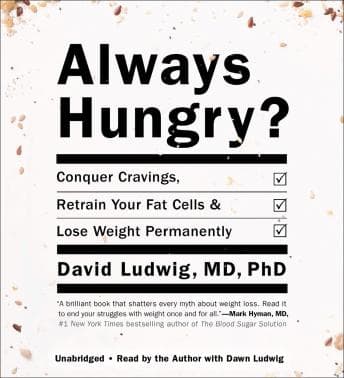

"Overeating doesn't make you fat. The process of getting fat makes you overeat."
That line hit me somewhere around minute 40 while I was standing in my kitchen at 11PM, eating almond butter out of the jar like a gremlin because - irony of ironies - I was stress-eating after a particularly brutal on-call rotation. Kevin walked in, saw me with a spoon in one hand and my AirPods in, and just backed away slowly. Smart man.
The Core Thesis, or: Your Fat Cells Are Basically a Greedy Microservice
Okay, here's the mental model that actually stuck with me. Ludwig frames fat cells like a poorly designed caching layer. They're hoarding resources (calories) that should be available to the rest of the system (your body), and the more you try to restrict input (calorie counting), the more aggressively they cache. So your body's other services start throwing 503 errors - you're tired, hungry, your metabolism throttles down. The fix isn't to reduce throughput; it's to reprogram the caching policy by changing the type of fuel you send through the system.
This is basically Gary Taubes's insulin hypothesis but wrapped in a much more practical, actionable package. The mental side of that reprogramming — actually sticking to a new framework when your body is screaming otherwise — is something How Bad Do You Want It? tackles head-on, though from an athletic performance angle rather than a metabolic one. Ludwig's three-phase program goes: Phase 1 cuts way back on refined carbs and ups the fat (nuts, avocados, full-fat dairy, dark chocolate - yes please), Phase 2 reintroduces some whole grains, Phase 3 is maintenance. The science on insulin's role in fat storage actually holds up pretty well, and Ludwig cites his own Harvard research studies rather than just hand-waving at "emerging science" like half the diet books out there.
What I respect is that he doesn't oversimplify. He talks about the interplay between hormones, inflammation, and fat cell behavior in a way that feels like reading a well-documented technical spec rather than a marketing pamphlet. The calorie-is-a-calorie orthodoxy gets a proper dismantling with actual mechanistic explanations, not just contrarian vibes.
The Audiobook Problem: Recipes Don't Have a Pronunciation
Here's where we need to talk about format. This book has a lot of recipes and meal plans. Like, a LOT. Dawn Ludwig (the author's wife, who co-developed the recipes) narrates, and she's... fine? Perfectly competent, clear diction, reasonable pacing. But listening to someone read ingredient lists and cooking instructions through your earbuds is about as useful as listening to someone read you source code. You nod along, retain maybe 15% of it, and know you'll need the physical copy anyway.
I'd estimate a solid third of this book's runtime is recipe and meal plan content that genuinely does not work in audio format. The explanatory chapters - the why behind the program - are great for commute listening. But every time we pivoted to "now combine half a cup of quinoa with two tablespoons of extra virgin olive oil," my brain just... alt-tabbed.
Dawn's narration is steady and warm but lacks the kind of dynamic energy that keeps you locked in at 6AM. I bumped this to 1.75x - full business-book-that-could've-been-a-blog-post speed - and it improved things. She doesn't have distracting quirks, but she also doesn't have that magnetic quality that makes you forget you're on a packed Caltrain car.
Who This Is Actually For (and Who Should Skip)
Perfect for: You've been calorie counting, it's not working, and you want to understand why from someone with actual credentials instead of Instagram abs. The first half of this book - the science, the framework, the paradigm shift around insulin and fat storage - is genuinely worth your time. If you've read Taubes and wanted something less polemical and more prescriptive, this is your book.
Skip if: You already know the low-glycemic / insulin-aware eating framework. If you've been through Taubes, Jason Fung, or even just spent enough time in nutrition subreddits, the science chapters won't blow your mind. And if you're buying the audiobook expecting a complete standalone experience - you'll still need the print version for the recipes. That's just the reality.
Also skip if you want any acknowledgment of how socioeconomic factors affect food access. Ludwig writes from a place where everyone can casually stock their kitchen with grass-fed butter and wild-caught salmon. That blind spot is real.
The Commit Message
TL;DR: Worth your commute - but only the first 60% of it. The science chapters are a clean, well-argued case for rethinking how you eat, from someone who's done the actual research. But a third of this book is recipes that simply don't translate to audio, and Dawn Ludwig's narration is functional rather than engaging. The ROI on this audiobook is moderate - you're getting maybe 4 hours of genuinely useful content out of 6.5 hours of runtime. Buy the Kindle version, listen to the science chapters, and read the recipes with your eyes like a normal human.
I finished this in 3 commutes. Would've been 2 if I'd skipped the meal plans. Kevin's already mad I'm putting avocado on everything now, but honestly? The almond butter incident has not repeated. Progress.