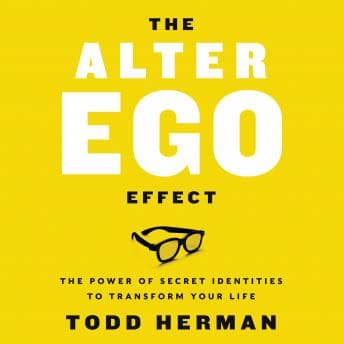

I'm on the 6:47 AM Caltrain, barely conscious, and Todd Herman is telling me about how Bo Jackson channeled a horror movie villain to become one of the greatest athletes of all time. I actually laughed out loud—got some looks from the other zombies in my car. But here's the thing: the more I listened, the more this whole alter ego concept started making a weird kind of sense.
The Bo Jackson Story That Hooked Me
Look, I'm a skeptic by nature. I debug distributed systems for a living—I don't do woo-woo self-help stuff. But Herman opens with this story about Bo Jackson literally becoming Jason Voorhees on the football field, and suddenly I'm thinking about all the times I've had to switch into "production outage mode" at 2 AM. That's... kind of an alter ego? The version of me that can stay calm while everything's on fire isn't the same version that panic-scrolls Reddit at 11 PM.
Herman's been coaching elite performers for over two decades, and he's basically reverse-engineered what a lot of successful people do naturally. Create a mental construct—an alter ego—that you activate when you need to perform. It's not about being fake. It's about giving yourself permission to access capabilities you already have but can't reach when your inner critic is screaming.
The framework is actually pretty solid. He breaks down the "Field of Play" (where you need to show up differently), your "Heroic Self" (who you need to become), and "Activation Devices" (like his own glasses trick—yes, the Superman reference is intentional). Could've been a blog post? Honestly, no. The seven hours give him room to layer in enough examples and nuance that the framework actually sticks.
Author-as-Narrator: Does It Work?
Herman narrates this himself. I know, I know—author-narrated business books are hit or miss. He's not Ray Porter (nobody is), but he's actually... pretty good? His delivery is conversational, like he's explaining this to you over coffee rather than reading from a teleprompter. The pacing works for commute listening—I could zone out for a minute thinking about how to apply something and not lose the thread completely.
That said, if you're used to professional narrators who do character voices and dramatic pauses, this might feel a little flat. Herman's strength is that he clearly believes in what he's teaching—you can hear it. His weakness is that the energy stays pretty consistent throughout. No real peaks and valleys. I bumped it to 1.5x around hour three and it actually improved the experience.
The stories are what carry it. Kobe Bryant, Beyoncé (Sasha Fierce, anyone?), Martin Luther King Jr.—Herman connects the dots between high performers and this alter ego pattern in ways that feel genuine rather than name-droppy. And he's honest about his own journey, which I appreciated. The guy used to be a shy kid who couldn't perform under pressure. Now he coaches Olympic athletes. That arc gives him credibility.
The ROI Calculation
Here's my take: this book is basically cognitive behavioral therapy for performance, wrapped in a framework that actually makes it actionable. The alter ego isn't about pretending to be someone else—it's about creating psychological distance from your fears and insecurities so you can actually do the thing.
I finished this in about four commutes, and I've already started experimenting with the concept. Nothing dramatic—just noticing when I'm in "anxious engineer who doesn't want to speak up in meetings" mode versus "person who actually knows what they're talking about" mode. Giving that second version a name and a trigger? Surprisingly useful.
The book does get a bit repetitive in the middle—Herman really wants to make sure you understand the framework before he lets you build your own alter ego. If you're impatient (hi, it's me), you might get antsy. But the payoff in the final third, where he walks you through the actual creation process step by step, is worth the setup.
Who This Is (and Isn't) For
Perfect for: your commute, the gym, any time you need motivational content that's actually backed by something resembling methodology. If you're in tech, sales, or any field where you have to perform under pressure, the framework translates directly.
Skip if: you want entertainment, you hate self-help as a category, or you need super dynamic narration to stay engaged. Also maybe skip if you're already crushing it in every area of life (in which case, teach me your ways).
The concept clicked for me somewhere around hour five, when Herman talked about how the alter ego protects your "core self" from failure. Untroubled Mind explores a similar idea about creating psychological distance from anxiety, though it takes a more philosophical approach. If your alter ego doesn't nail the presentation, that's not really YOU failing—it's a character you created. That psychological buffer is lowkey genius, and it explains why so many performers naturally gravitate toward this approach.
Ship It?
Yeah. It's not going to change your life overnight, but it gave me a genuinely useful mental model I'm still thinking about weeks later. And honestly, any book that makes me laugh on the 6 AM train deserves some credit.