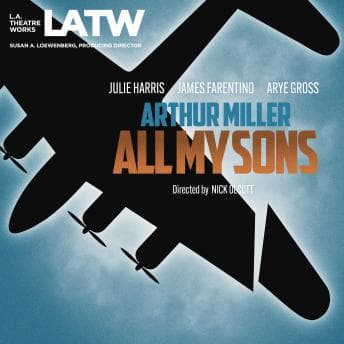

I expected to half-listen to this during Sophie's nap while folding laundry. You know, background noise with some culture attached. Classic American drama, under two hours, seemed perfect for multitasking.
I was wrong. So wrong.
By twenty minutes in, the laundry sat forgotten in a wrinkled heap and I was perched on the edge of my bed with my hands over my mouth. This is not a multitasking play. This is a sit-down-and-feel-your-feelings play.
When the Tree Falls, So Does Everything Else
Here's what nobody told me about Arthur Miller: he doesn't just write tragedy. He writes the specific kind of tragedy where everyone thinks they're doing the right thing, and that's precisely what makes it devastating. Joe Keller genuinely believes he made the right call during the war. Kate Keller genuinely believes her son is coming home. And watching those beliefs crumble in real-time through this full-cast performance? It's like watching a slow-motion car crash where you can see exactly how every decision led here.
James Farentino plays Joe with this gruff, backyard-barbecue-dad energy that's so familiar it hurts. He's the guy who'd lend you his lawnmower, the neighbor everyone likes. And that's exactly what makes his character's arc so gutting—because you LIKE him. You want him to be innocent. Farentino layers in these moments of bluster that crack just slightly when his family pushes back, and you can hear the desperation underneath.
But Julie Harris. Oh, Julie Harris as Kate.
I've listened to a lot of audiobooks with "emotional performances." Most of them are fine. This one made me pull over into a gas station parking lot because I couldn't see the road. Her Kate isn't just a grieving mother—she's a woman who has constructed an entire reality to survive, and Harris makes you hear the terror underneath her denial. There's this quality in her voice that shifts between needy and loving and willfully blind, sometimes within the same sentence. When she talks about her missing son, you can hear her fighting to believe her own words.
Full Cast Magic (When It Actually Works)
Look, I've been burned by full-cast productions before. Sometimes they feel like audiobook-by-committee, with actors clearly recording in different rooms and energy levels that don't match. This one? Recorded live at Voice of America with actual stage managers and live sound effects. You can feel the actors responding to each other in real time.
Arye Gross as Chris brings this earnest, almost painful sincerity to the son who's trying to move forward. Paul Morella's George arrives like a grenade with the pin already pulled. Even the smaller roles—the neighbors, the kid who keeps showing up—feel like real people in a real neighborhood, not just placeholder voices.
The live sound effects are subtle but effective. A door closing, the rustle of movement. It creates this sense of actually being in the Keller backyard, eavesdropping on a family falling apart.
Under Two Hours of Gut Punch
At 1 hour 56 minutes, this is barely longer than a movie. And honestly? That's perfect. Miller doesn't waste a single minute. Every conversation, every seemingly casual mention of the war, every neighbor interaction is building toward something. Event builds tension the same way—every small detail matters more than you think. By the time you realize where it's all headed, you're already too invested to look away.
The bonus interview with historian Bill Yenne about wartime aircraft manufacturing adds context I didn't know I needed. Understanding the real-world stakes of what Joe Keller did—the actual planes, the actual pilots—made the fictional consequences hit even harder.
Who Should Clear Their Schedule (And Who Should Skip)
If you want light listening while you clean the kitchen? This ain't it. If you need something to survive 47 pauses without losing the thread? Also probably not—the tension builds too carefully to interrupt.
But if you have a solid hour and a half where you can actually focus—a solo road trip, maybe, or one of those rare nights when all the kids are asleep by 8—this is worth every minute. It's the kind of story that sticks with you, that makes you think about what you'd sacrifice for your family and whether "for my family" ever stops being a good enough excuse.
Made me cry in a gas station parking lot. High praise.
Mom's Honest Take: Park and Listen
Normally I'd say "perfect for the drop-off loop" but I can't recommend driving during this one. The emotional gut-punches require both hands on the wheel and full attention. Save it for dedicated listening time—which, yes, I know is basically a unicorn for parents of small children. But some stories are worth protecting that time for.
This is one of them.