
Everyone tells you Alice in Wonderland is a children's book. I've taught it to sophomores for fifteen years, and every single time some kid raises their hand and says, "Mr. Williams, this is weird." Yeah. That's the point. Carroll wrote a book about the absolute terror of a world where logic doesn't apply, wrapped it in talking animals and tea parties, and we hand it to six-year-olds. Genius, honestly.
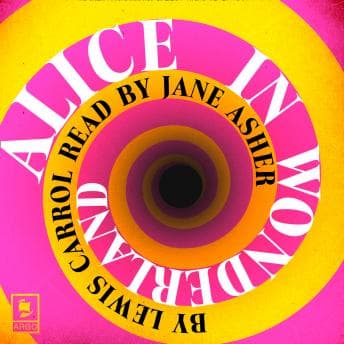
So when I saw this ARGO Classics edition narrated by Jane Asher — yes, that Jane Asher, the actress, the one who dated Paul McCartney back when the Beatles were still a thing — I figured I'd give it a go during a late Sunday walk along the lakefront with Denise. Ninety-two minutes. Shorter than most faculty meetings. (And considerably more useful.)
The Voice That Knows Alice Is Unsettled, Not Whimsical
Here's what people get wrong about Alice: they play her as delighted. As if falling down a rabbit hole and having your body stretch and shrink without your consent is some charming adventure. Jane Asher doesn't make that mistake. Her Alice carries this thread of unease — a polite British girl trying desperately to apply the rules she knows to a world that has thrown the rulebook into the fire. There's a stiffness in her delivery that works beautifully, this sense of a child holding herself together through sheer Victorian propriety while everything around her collapses into nonsense.
Now, this is a full cast production, not just Asher reading solo. Different actors handle different characters, which means you're not relying on one narrator to voice the Cheshire Cat AND the Queen of Hearts AND the Mad Hatter. That's a smart choice for a story this densely populated with eccentrics. But — and this is a real but — the production has some rough edges that betray its origins as a vinyl-era recording.
The Pig Baby Problem (And Other Audio Casualties)
Let me be specific, because this matters. There's a scene with the Duchess's baby — the one that turns into a pig — where the sound design goes absolutely haywire. Crying, squealing, layered effects that drown out the narration completely. I had to rewind twice, and even then I caught maybe half the dialogue. If you're walking near traffic or listening with any ambient noise at all, you'll lose that entire passage.
This isn't a one-off issue. Several of the more dramatic "cut scenes" (their term, not mine) spike in volume in a way that feels jarring against Asher's measured reading. It's the kind of thing that probably worked fine on a record player in 1968 when you were sitting in your living room and could adjust the dial. On earbuds in 2024? It's a problem. Denise actually flinched during one of them, and she's a woman who teaches second grade — she's heard screaming.
The remastering cleaned up general audio quality well enough. Asher's voice comes through clear and crisp in the quieter passages. But whoever handled the restoration didn't flatten those volume spikes, and that's a production choice I can't quite forgive in a recording being sold as a modern download.
Why Ninety-Two Minutes Isn't Really Enough
This is an abridged version. Let's sit with that for a second. Alice in Wonderland is already a short book — maybe four hours unabridged as an audiobook. Cutting it to an hour and a half means you're getting highlights, not the full experience. The trial scene feels rushed. The conversations with the Caterpillar lose some of their philosophical weight. Carroll's prose deserves to be savored — those nested logical absurdities, the way he uses language to make you feel Alice's disorientation — and abridgment strips some of that texture away.
For a first encounter with the story, maybe that's fine. For someone who actually wants to hear Carroll doing what Carroll does — the wordplay, the mathematical jokes hiding inside nursery rhyme logic — you'll want an unabridged edition. I've been thinking about this a lot lately after reading Book of Delights, where Ross Gay does something structurally similar — buries real philosophical weight inside what looks, on the surface, like a casual daily observation.
This reminds me of what Hemingway said about prose being an iceberg. Carroll's iceberg is made of nonsense that only works because the structure underneath is ruthlessly precise. You lose the precision when you trim.
Who Gets an Invitation to This Tea Party
If you want a quick, pleasant listen with a genuinely good lead performance and you don't mind some audio quirks? This'll do. It's a nice way to revisit the story if you haven't encountered it since childhood. Jane Asher's interpretation is worth hearing — she gets the unease right, and that's harder than it sounds.
But if you're a Carroll devotee, or if audio production issues drive you up the wall, or if you want the full unabridged text? Look elsewhere. There are excellent complete versions out there. This one's a beautiful artifact from another era that doesn't quite survive the translation to modern listening.
My students would hate this. Too short, too old-fashioned, too British. I enjoyed it — mostly. The pig baby scene nearly cost me my eardrums, but Jane Asher reading "We're all mad here" with that quiet, knowing tone? Worth pausing the faculty meeting for.