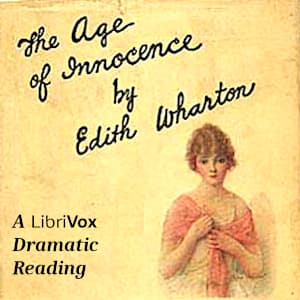

I was grading a stack of junior papers on symbolism in The Great Gatsby - my annual reminder that seventeen-year-olds think green lights are "just decorations" - when I decided I needed Edith Wharton in my ears. Something to remind me why I fell in love with literature in the first place. So I queued up this LibriVox dramatic reading of The Age of Innocence and let it wash over me while I scribbled increasingly illegible margin notes.
Here's the thing about Wharton: she writes sentences that demand to be read slowly. This isn't a criticism. This is a feature. And this particular production - with its full cast of volunteer readers - understands that assignment.
What Wharton Was Really Doing
My students would absolutely hate this book. I say that with complete confidence and zero shame. The plot moves like honey in January. They'd probably prefer the breakneck pace of Midnight Line, where things actually explode. Newland Archer wants to marry May Welland. Then Ellen Olenska shows up - scandalous, European, impossibly alive - and suddenly Newland's entire understanding of his world cracks open. That's it. That's the drama.
But Wharton wasn't writing plot. She was performing an autopsy on a society she knew intimately, having grown up inside it and watched it calcify around her. The "innocence" of the title is devastating irony - these people aren't innocent, they're willfully blind. They've constructed an elaborate system of rules and silences specifically designed to crush anyone who threatens their comfortable arrangements.
The dramatic reading format actually serves this beautifully. When you have different voices for different characters, you hear the performance of it all. May's sweetness becomes its own kind of weapon. Ellen's directness sounds almost shocking against the measured politeness of everyone else. Newland's internal conflict - and honestly, the man is insufferable in that particularly Victorian way - gets its own texture.
The LibriVox Question
I couldn't find detailed background on the individual volunteers in this cast, but I can tell you what I heard: sincerity. These aren't professional actors, and sometimes you can tell. There's an earnestness to LibriVox productions that either works for you or it doesn't.
For me, listening at 2 AM while Denise slept and I pretended to focus on thesis statements about symbolism, it worked. The pacing is deliberate - some would say slow, and they're not wrong. But Wharton's prose deserves that deliberation. She chose those words. She placed those commas. The dramatic pauses aren't padding; they're punctuation.
That said, I get why some listeners bounce off this. If you're coming from contemporary audiobooks with their polished production and celebrity narrators, the shift is noticeable. The energy is different. Quieter. More like someone reading aloud in a library than performing on a stage.
Why Wharton Still Matters a Century Later
Here's what I kept thinking about, walking the lakefront the next morning with the final chapters playing: Wharton wrote this in 1920, looking back at the 1870s. She'd lived through the complete transformation of that world. World War I had shattered the illusion that civilization was progressing toward something better. And yet she wrote this - not as condemnation, but as elegy.
The ending still gets me. (I won't spoil it, but if you've read it, you know.) It's not tragic in the operatic sense. It's tragic in the quiet, devastating way that real life is tragic - the roads not taken, the words never spoken, the slow accumulation of choices that become a life.
My students would say nothing happens. I would say everything happens, just underneath the surface.
Your Syllabus Check
If you loved The House of Mirth but found it too brutal, this is Wharton at her most restrained - which somehow makes it hit harder. If you're teaching American literature and want to actually enjoy a Pulitzer winner instead of just assigning it, this works. If you need something to listen to during faculty meetings that will make you look contemplatively engaged while actually being transported to 1870s Manhattan - Principal Martinez, I'm kidding. Mostly.
Skip this if you need action, if slow pacing makes you reach for the speed controls, or if you're not in the mood to sit with ambiguity. This isn't a book that tells you what to feel. It trusts you to figure it out.
Mr. Williams's Final Grade
The production is clean, the cast is committed, and Wharton's sentences still sing after a hundred years. That's worth something. Maybe not a faculty meeting, but definitely a late night with a stack of ungraded papers and the quiet hope that literature still matters.