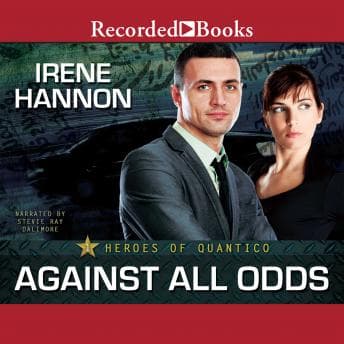

So here's the thing - I expected this to be a by-the-numbers inspirational romance. FBI agent protects reluctant woman, sparks fly, faith is tested, the end. And yeah, structurally, that's what Against All Odds is. But Irene Hannon does something sneaky with the emotional architecture of this thing that caught me off guard while I was color-correcting a branding package at 2 AM with Diego curled on my keyboard like the tiny saboteur he is.
The Slow Melt Between Monica and Evan
What got me was Monica Callahan's estrangement from her father. Not the terrorist threat. Not the FBI protection detail. The daddy issues. Because Hannon doesn't treat it like a plot device to be resolved with a convenient heart-to-heart in chapter twelve - she lets it sit there, uncomfortable and real, this wall Monica has built out of years of being the daughter a diplomat couldn't be bothered to parent properly. And then Evan Cooper shows up, this elite operator who's all discipline and duty, and he doesn't try to fix her. He just... sees her. There's this slow-burn quality where the protection detail forces proximity, and instead of instant chemistry it's more like two people recognizing each other's loneliness. My heart. MY HEART.
The faith element is woven in without being preachy, which - look, I was raised Catholic. My abuela had her rosary going during every telenovela crisis. I know the spectrum from genuine spiritual struggle to performative religiosity, and Hannon writes the former. Monica's questioning feels earned, not like a checkbox for the inspirational market. Abuela would have loved this one, honestly. That same quality of genuine spiritual wrestling - the kind that doesn't resolve into easy answers - is what makes Bible (ASV) 21: Ecclesiastes one of the few faith texts I've returned to repeatedly, because it refuses to tidy up the hard questions either. She'd have been whispering "mija, that man is sent by God" about Evan by hour three.
Stevie Ray Dallimore and the Audio Question Mark
Okay, I have to be honest here - I couldn't find much about Stevie Ray Dallimore's specific performance style before listening, and during the experience, he's... fine? He's steady. His voice has a solid, grounded quality that works for Evan's military-adjacent stoicism. But here's where I got frustrated: the emotional peaks, the moments where Monica is breaking down about her father or where the tension between her and Evan finally cracks open, those needed more vocal range than what I got. At 1.0x speed (because I'm savoring, always), the quieter scenes land well enough, but I kept wanting more texture in the delivery. More breath. More of that thing Julia Whelan does where you can hear a character's throat tighten before they even say the hard thing.
For a 9-and-a-half-hour listen, single narrator handling both the romance and the suspense threads is ambitious. Dallimore keeps the thriller pacing tight enough - the terrorist threat escalation is handled with enough urgency that I stopped fussing with my Pantone swatches and actually paused work during a few sequences. But the romance scenes? They needed a warmth he only sometimes found.
When Hannon Remembers She's a Suspense Writer
This book felt like two genres in a trench coat, and I mean that mostly as a compliment. The White House-ordered protection detail, the "chilling message" that shifts Monica from skeptic to believer in the threat - Hannon's RITA-winning instincts show in how she ratchets up the danger without making the romance feel like an afterthought. The suspense isn't decorative. There's a genuine sense that these people might not get their happy ending, which is wild for inspirational romance but that's what makes Hannon's work different from the stack of faith-based romances that feel pre-ordained from page one.
That said, some of the thriller mechanics feel a little network-TV. The terrorist threat is painted in broad strokes, more backdrop than deeply explored. If you're coming from Hannon's later work (her Hope Harbor series or the Triple Threat books), this earlier novel shows the seams a bit more.
Who Gets the Tissues and Who Should Skip
If you love slow-burn protection romances with a faith undercurrent and don't need explicit heat (this is very clean), grab this. If estranged parent-child dynamics wreck you the way they wreck me, keep tissues within reach. If you need a narrator who goes full theatrical with character voices and emotional crescendos, you might feel a little undersold here. And if inspirational romance isn't your lane at all, this won't convert you - it is what it is with confidence.
The Rainy Sunday Shelf
This is a rainy Sunday book. Not a life-changer, not a forgettable time-filler, but a warm, competent romance that surprised me with the depth of its father-daughter wound and the patience of its love story. I didn't ugly-cry - came close once during a scene where Monica finally confronts what she actually wants from her dad versus what she's been pretending not to need - but I felt that specific ache that means a book found the right nerve. Three and a half stars, a quiet recommend, and Frida judging me from the bookshelf as always.