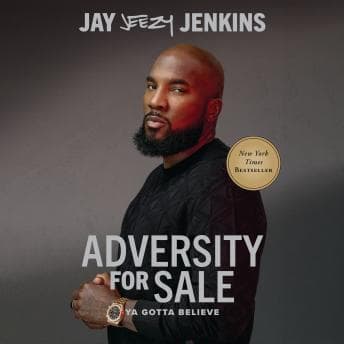

I was up at midnight prepping a pitch deck for a Series B startup that's hemorrhaging cash, and I needed something to keep me awake that wasn't another cold brew. Jeezy's memoir seemed like a wild card. A rapper's business book? Sure. My parents sold dry cleaning. Jeezy sold... let's say other things first. But hustle recognizes hustle, and I was curious whether this was real or ghost-written motivational filler.
Bottom line: there's a solid 4-hour book trapped inside a nearly 8-hour listen. And that ratio, honestly, is better than most business memoirs I've suffered through this year.
The Dry Cleaner's Son Meets the Trap
Here's what surprised me. Jeezy's origin story - growing up in Hawkinsville, Georgia, deep in the Black Belt, raised by his grandmother because his parents weren't around - hits different when you hear it in his voice. That Southern drawl isn't performance. It's geography and survival compressed into vowels. When he talks about realizing as a kid that nobody was coming to save him, that there were no handouts, I heard my father's philosophy delivered with a completely different accent but the exact same steel underneath.
This is what my parents did instinctively. Now it has a TED talk. Except Jeezy's version involves car chases and FBI stakeouts instead of broken steam presses and rude customers.
The stories about Big Meech, Jay-Z, Puffy, Gucci Mane - these are the chapters where Jeezy is fully alive behind the mic. You can hear his voice shift when he talks about these interactions, the energy picks up, the pacing tightens. He's not reading anymore. He's remembering. There's a difference, and your ears know it.
Where the Cliffhangers Kill the Momentum
But here's my problem. Jeezy has this habit of building toward something genuinely gripping - a confrontation, a deal going sideways, a brush with real danger - and then just... stopping. Moving on to the next lesson. It's like watching someone set up the most incredible domino chain and then walking away before knocking it over.
I've seen this in consulting all the time. Founders who tell you the sanitized version. Who get to the part where things got ugly and suddenly develop amnesia. The book markets itself as "honest and unedited," but there are moments where you can feel the editorial guardrails. Certain stories feel truncated not for pacing but for legal or personal reasons. Which is his right - I'm not demanding anyone bare their entire soul - but don't promise me the uncut version and then hand me the director's commentary instead.
Some chapters repeat the same motivational framework three or four different ways. The "adversity is currency" thesis is strong. It didn't need to be restated every 40 minutes. At 2.0x speed this was manageable, but at normal speed? I can see why some listeners checked out.
Jeezy the Narrator vs. Jeezy the Author
Author-narrated memoirs are always a coin flip. You get authenticity but sometimes lose clarity. Jeezy lands closer to the authentic side, which I appreciate. He's not a trained voice actor and he doesn't pretend to be. The delivery is conversational, like he's telling you this over a late dinner - sometimes rambling, sometimes hitting you with something so direct it stops you mid-spreadsheet.
The production is clean but bare. No music, no sound effects, no dramatic scoring. Just Jeezy talking. For a guy whose entire career is built on beats and production, this is an interesting choice. It works more than it doesn't. The raw voice forces you to engage with the content, not the packaging.
Where it weakens: some of the business lessons feel surface-level for anyone who's actually operated in business. "Stay focused on your goals" and "bet on yourself" are fine for someone starting out, but if you've been in the trenches, you've heard these before. The stories behind the lessons are the value. The lessons themselves are the padded runtime.
Who Gets ROI on This Credit
If you're a Jeezy fan, this is a no-brainer. Hearing him narrate his own life adds context to his music catalog that you simply can't get from a Wikipedia page. If you're a business person looking for a traditional framework - skip it. But if you're somewhere in between, someone who appreciates an unconventional path to entrepreneurship and can tolerate some unevenness - it's a decent listen.
Skip to the chapters about his music industry deals and the Big Meech era. Thank me later. The early childhood sections are important for context but move fast through them.
Jenny would say I'm being harsh. Jenny is right. But also - Jeezy built a legitimate business empire from circumstances that would've buried most people, and there's real respect in that. The book just needed a tighter edit and a braver willingness to finish the stories it started. Waste Land pulled off something similar - a raw, unfiltered origin story that didn't flinch at the ugly parts - and it's a useful reminder of what this genre looks like when the guardrails actually come off.




![Steve Jobs [unabridged audiobook] audiobook cover](/_next/image?url=https%3A%2F%2Fcovers.audiobooks.com%2Fimages%2Fcovers%2Ffull%2F9788499923406.jpg&w=1920&q=75)