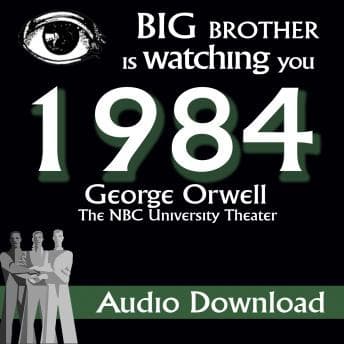

I was up at 2 AM because Diego decided that was the perfect time to knock my water glass off the nightstand, and since sleep was clearly not happening, I figured I'd finally check out this 1949 radio adaptation I'd been curious about. Under an hour? Perfect for a sleepless night with a cat who has no remorse.
And honestly? This thing wrecked me in ways I wasn't prepared for.
When History Sounds Like a Warning Bell
Here's what got me: this aired in August 1949. The book had been out for like four months. World War II ended four years earlier. The Cold War was just getting started. And these actors - David Niven and the full NBC University Theater cast - they're performing this dystopian nightmare while the ash of actual fascism is still settling. There's something in their delivery that feels... urgent. Like they're not just acting. They're remembering.
The radio play format strips everything down to voices and sound effects, and somehow that makes it more claustrophobic than any modern production I've heard. When Big Brother's propaganda cuts through, it has that tinny, broadcast quality that would've been familiar to 1949 listeners. Same technology that brought them war updates and FDR's fireside chats. The medium IS the message, you know?
David Niven's Winston Is Quieter Than You'd Expect
I went in expecting something theatrical - old radio plays can be SO melodramatic - but Niven plays Winston with this restrained desperation that honestly surprised me. He's not chewing scenery. He sounds tired. Defeated before the story even really begins. Which, yeah, that's Winston. That's exactly right.
The full cast format means you're getting actual dialogue exchanges instead of one narrator doing voices, and it works for this story. The Party officials sound appropriately cold and bureaucratic. Julia comes through as this spark of defiance. O'Brien... okay, O'Brien gave me chills. Something about that calm, reasonable tone while saying absolutely horrifying things.
(Abuela would have HATED this book. She lived through enough real-world oppression that fiction about it would've just made her angry. But she also would've appreciated that someone was telling the truth about power. Mixed feelings from beyond, I'm sure.)
55 Minutes That Feel Like Being Held Underwater
Here's my one real criticism: at under an hour, they're obviously condensing a lot. You lose the slow build of Winston's rebellion, the gradual romance with Julia, the philosophical weight of Goldstein's book-within-a-book. This is 1984 as a sprint, not a marathon. Some scenes feel rushed - you barely get to breathe before the next horror.
But maybe that's also... kind of the point? The pacing creates this sense of inevitability. There's no time to hope. The boot is already descending.
The sound design is vintage radio - meaning minimal by today's standards - but effective. Crowd noises during the Two Minutes Hate. The telescreen's constant hum. Silence used like a weapon. They knew what they were doing at NBC.
Who Should Listen (And Who Should Skip)
If you want the full emotional devastation of Orwell's novel, this isn't it. Go find a full-length audiobook. But if you're a history nerd who wants to hear how audiences first experienced this story - when it was NEW, when it was PROPHECY instead of curriculum - this is genuinely fascinating.
It's also perfect if you have commitment issues. Under an hour. You can listen during a long shower or while making breakfast or, apparently, while your cat judges you at 2 AM.
Skip this if you're already feeling hopeless about the state of the world. It won't help. (I say this with love and also as someone who immediately needed to look at pictures of baby goats afterward.)
The Feels
Did I cry? No. But I felt that specific kind of cold dread that settles in your chest and doesn't leave. The kind where you keep thinking about it the next day while you're trying to work on a logo design and suddenly the client's corporate messaging feels sinister.
This isn't a romance. There's no HEA. The vibes are NOT immaculate - they're deliberately, purposefully terrible. But sometimes you need art that makes you uncomfortable. That reminds you what's worth protecting.
Frida and Diego both fell asleep during the Room 101 scene, which feels like a betrayal honestly. But I sat there in the dark, listening to David Niven break, and I thought about my abuela, and I thought about 1949, and I thought about now.
Some books make you feel warm. This one makes you feel awake. Crossroads left me with that same wide-awake feeling—different subject, same sense that I'd been shaken out of comfortable numbness.