
Do you really need another twenty-something tech bro telling you that your 9-to-5 is a prison?
I asked myself this while loading up the elliptical for an angry Tuesday night cardio session. I went into this expecting the audio equivalent of a clickbait YouTube thumbnail—you know the type, rented Lamborghinis and vague promises about dropshipping. But here's the annoying thing: Alex Becker is actually right about a lot of this stuff.
The "Fastlane" Echo Chamber
If you've read MJ DeMarco's The Millionaire Fastlane, you're going to feel some déjà vu. Becker is essentially remixing DeMarco for the ADHD generation—stripping away the complex math and focusing purely on the psychology of value exchange.
My parents ran a dry cleaning business in Koreatown for thirty years. They traded hours for dollars every single day. If they stopped pressing shirts, the money stopped. Becker's core argument—that you must separate time from money by building automated systems—is the exact lesson my parents learned too late. It's not revolutionary if you've read any business books in the last decade, but Becker packages it without the usual corporate politeness. He tells you straight up: if your income requires your physical presence, you aren't wealthy, you're just well-paid help.
When the Voice Doesn't Match the Energy
Here's where the ROI on your credit takes a hit. Barry Abrams is a competent narrator—clear, deep, professional voice. He sounds like a man who should be reading a biography of a mid-century senator or a documentary on soil erosion.
He does not sound like Alex Becker.
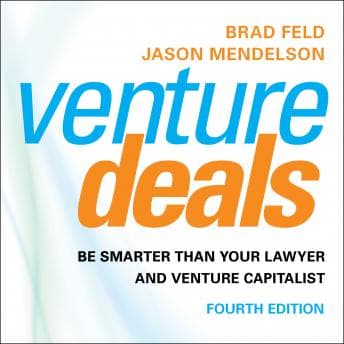
Becker's writing style is aggressive, caffeinated, full of internet slang. He writes like he's shaking you by the shoulders. Abrams reads these sentences with the calm detachment of a flight attendant pointing out the emergency exits. Abrams is far better matched in Venture Deals, 4th Edition, where that measured, professional tone actually earns its keep. When the text screams "WAKE UP AND SEIZE CONTROL," Abrams delivers it like he's ordering a ham sandwich. Bizarre cognitive dissonance. I had to crank this to 2.5x speed just to give Abrams a pulse that matched the content. At normal speed, the irony of a low-energy narrator reading a high-energy hustle manifesto is almost painful.
Who Gets Value Here (And Who Doesn't)
If you're a startup founder or side-hustler who hasn't yet internalized the "time vs. money" distinction, this is a solid primer. The section on "Traffic" (Pillar 7) is actually more tactical than most mindset books, breaking down why building a perfect product is useless if you can't control the eyeballs seeing it. That alone justifies the listen. But if you've already read DeMarco, Ferriss, or any serious business strategy—you're paying for a remix, not new material. Skip it.
The same remix problem haunts a lot of this genre—though I'd argue Little Book of Trading at least brings enough tactical specificity to justify its place on the shelf alongside the classics it echoes.The Spreadsheet Says: Worth It (Barely)
The book is short—under seven hours. That's a plus. It respects your time.
Jenny would say I'm being too harsh on the narrator, but she listens to cozy mysteries where everyone sounds like they're baking cookies. In a business book, I want to feel the urgency. Abrams didn't bring it. The content saves him, but barely.