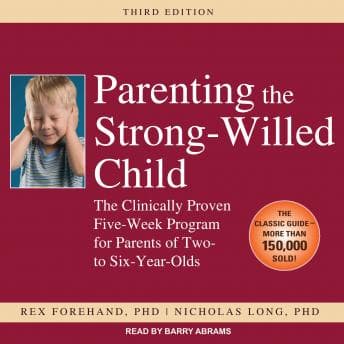

This book is basically a clinical intervention manual dressed up as a parenting guide. And honestly? That's exactly what makes it work.
I was chopping onions for a chana masala at 9 PM on a Tuesday — the kind of elaborate cooking-for-one situation my mother would find deeply concerning — when I started this audiobook. I don't have kids. Let me get that out of the way. But I study why people behave the way they do, and the parent-child dynamic is ground zero for identity formation. So when two PhDs with over 400 publications between them put out a program claiming clinical proof, I found myself asking: does this actually track psychologically, or is it another "love your child harder" platitude machine?
The Research Actually Shows (And They Prove It)
Forehand and Long do something I genuinely respect — they lead with data. The five-week program isn't pulled from vibes or parenting blog wisdom. It's rooted in decades of behavioral research, and you can feel the academic rigor in how they structure each week. Week one focuses on attending — basically teaching parents to narrate their child's play without directing it. This sounds simple until you realize most parents can't do it for five minutes without issuing a command. The authors know this. They anticipate the resistance.
What I appreciated most is how they frame "strong-willed" not as a pathology but as a temperament variable. The chapter on child temperament is genuinely useful — they distinguish between kids who are high in activity level, low in adaptability, and intense in emotional response, and they don't treat these traits as problems to fix. They treat them as parameters to work within. As someone who studies personality development, this is how it should be done. The protagonist here — the strong-willed child — isn't a villain. They're a case study in temperament-environment mismatch.
The section on parental depression and stress was unexpectedly strong. They don't just say "take care of yourself" (the self-help equivalent of "thoughts and prayers"). They actually discuss how parental mental health directly shapes discipline consistency, which shapes child behavior, which feeds back into parental stress. It's a feedback loop, and they name it as such. My therapist would have thoughts about this chapter. Good ones.
Where the Clinic Meets the Kitchen Table
Here's where it gets tricky. The program is structured week by week, with specific skills to practice — attending, rewarding, ignoring, giving clear instructions, using time-outs. Each builds on the last. Psychologically, this tracks. It's essentially applied behavior analysis principles packaged for exhausted parents who don't have time to read journal articles.
But — and this is a real but — listening to a structured, sequential skill-building program as an audiobook has inherent limitations. There are worksheets and practice exercises referenced that you obviously can't see. Some sections feel like they were written for a book you'd mark up with a highlighter, not something you'd absorb while driving carpool. I kept wanting to pause and take notes, which isn't ideal when your hands are covered in turmeric.
The new chapter on play as relationship-building is solid but not groundbreaking if you're already familiar with play therapy literature. For parents new to this, though, it reframes play from "keeping the kid busy" to "this is actually how you build the attachment that makes discipline possible." That's a powerful shift.
The collaborative disciplining with preschool teachers section is practical — consistency across environments is everything with young kids, and the fact that they address it shows they understand real-world application, not just lab conditions.
Barry Abrams Reads Like Your Competent But Slightly Distant Pediatrician
Barry Abrams delivers the material clearly and at a steady pace. He's not dramatic, he's not warm and fuzzy, he's... professional. Which honestly fits. This isn't a memoir or a story — it's a clinical program. You don't need vocal fireworks. You need clarity, and he provides it. Aziz Ansari and Eric Klinenberg pull off something similar in Modern Romance — research-backed content delivered in a voice that respects the reader's intelligence without turning academic. I'd bump playback to 1.25x if you're already familiar with behavioral psychology basics — he reads at a pace that assumes you need time to absorb, which is generous but occasionally slow for the already-initiated.
No sound effects, no production gimmicks. Clean audio. It does what it needs to do.
Who This Is Really For (Be Honest With Yourself)
If you're a parent of a two-to-six-year-old who's been described as "spirited," "difficult," or "stubborn" — and you've been yelling more than you want to admit — this is genuinely useful. The program works if you work it. That's the catch. It requires practice, consistency, and about five weeks of deliberate effort.
If you want a parenting book that validates your feelings and tells stories about messy, beautiful family life — this isn't that. This is a manual. A good one, but a manual.
Skip it if your kid is over six. The authors are specific about the age range for a reason.
The Diagnosis
This is a fascinating case study in how clinical psychology can be translated for a general audience without losing its spine. Forehand and Long respect both the research and the reader. The audiobook format slightly undermines the workbook elements, but the core content is evidence-based and genuinely actionable. Not sexy. Not viral. Just solid behavioral science applied to one of the hardest jobs humans do.