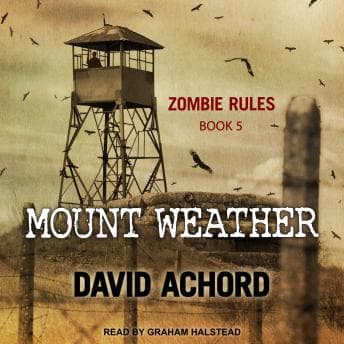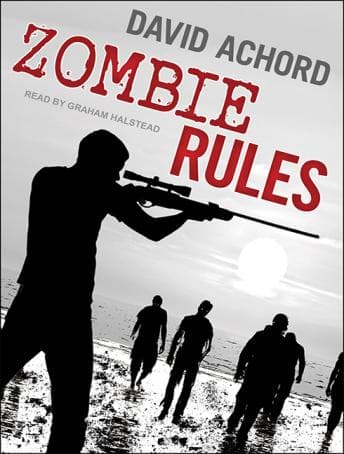

I usually tell my students that the most terrifying monsters are the ones in business suits, not the ones rotting in the street. But sometimes, you just need a good old-fashioned zombie apocalypse to clear the palate. (Don't look at my browser history—the university IT guy already judges me enough.)
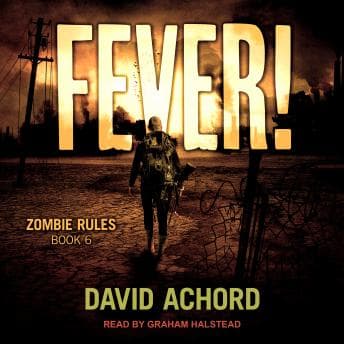
I picked up Zombie Rules during a particularly grueling week of grading papers because I needed to hear about problems that could be solved with a shotgun rather than a red pen. And honestly? It scratched the itch. Is it perfect? No. But perfect is boring, and the human brain in survival mode is anything but.
When the Voices Match the Trauma
Let's talk about the voice in your ear. Graham Halstead creates a fascinating auditory landscape here. You've got Rick—aging Vietnam vet, alcoholic, classic avoidance attachment style—and Zach, the younger, slightly naive counterpart. Halstead manages to make Rick sound like he's been gargling gravel and whiskey for forty years without turning him into a caricature.
From a psychological perspective, auditory differentiation is key in these dual-protagonist setups. If I can't tell the traumatized mentor from the wide-eyed mentee without context clues, I'm out. Halstead nails the distinction. He captures that specific weariness of a man who has seen too much, set against the energy of someone just realizing the world is ending. It's gritty. Feels lived-in. When Rick is lecturing (and oh boy, does he lecture), you believe it's coming from desperate experience, not just the author trying to fill pages.
The Psychology of the "I Told You So"
Here's where the behavioral analysis gets interesting. The author, David Achord, has a background in law enforcement and the military, and it shows. The tactical details? Spot on. The logistics of survival? Surprisingly grounded.
But Rick exhibits what I like to call "Apocalyptic Narcissism"—that prepper community special. There's a lot of "I told you so" energy here. Does it make him likable? Not always. Does it make him realistic? Unfortunately, yes. I've met people like Rick. They're exhausting, but they're usually the ones who survive the first wave.
That same exhausting-but-competent energy shows up in Poet, where the protagonist's obsessive nature is both his greatest strength and his most alienating trait.
However—and this is a big however—the pacing hits a few speed bumps. There were moments in the middle where I found myself zoning out during my run along the Charles River. We get it, you're securing the perimeter. Again. And the romantic subplot towards the end? (Deep sigh.) Look, Maslow's Hierarchy of Needs suggests that when physiological safety is threatened, seeking a mate is not the immediate priority. It felt forced. Humans are messy, yes, but sometimes the timing is just... bad writing.
Who's This For (And Who Should Run)
If you want tactical zombie survival with psychologically believable characters and don't mind a protagonist who's more "grumpy uncle at Thanksgiving" than "heroic leader," you'll dig this. Skip it if forced romance subplots make you want to throw your earbuds into traffic, or if you need your apocalypse fiction to move at a sprint.
Closing Notes Over Cold Coffee
If you want high literature, go read the papers on narrative identity I published that nobody cites. If you want a gritty, realistic look at two guys trying not to die, narrated by a guy who understands the assignment, this works.
Halstead elevates the material significantly. He takes what could be a standard "shoot-em-up" and adds enough emotional weight to make you care when things go south. Just maybe crank the speed up to 1.25x when the romance starts.