
I wasn't supposed to be listening to this at 2AM on a Tuesday.
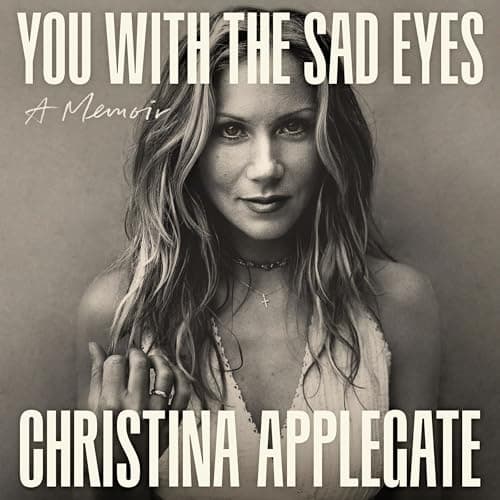
I'd just wrapped a gnarly postmortem doc for a cascading failure in one of our storage services — the kind where you stare at distributed traces until your eyes cross — and I was too wired to sleep but too fried to do anything useful. So I pulled up the next thing in my queue, which happened to be Christina Applegate's memoir. I figured I'd get through twenty minutes and drift off.
I finished it in one sitting. All eight and a half hours.
This Is Not the Kelly Bundy Book
Let me get the obvious thing out of the way: this is not a nostalgia tour through 90s sitcom behind-the-scenes. I mean, Married... with Children is in here, and so is Dead to Me and Anchorman and all the rest. But those are waypoints, not the destination. The actual book is about growing up in Laurel Canyon in the 70s and 80s with a mother fighting addiction, a father who left, and a kid who learned to perform — literally perform, on camera — as a survival mechanism. And then it's about what happens when your body takes away the one thing you built your entire identity around.
Applegate reads from her actual diaries throughout. You can hear it in her voice when she shifts into those passages — there's this quality change, almost like she's reading someone else's words and recognizing them as her own at the same time. The diary entries from her teens are especially brutal. She's writing about body dysmorphia and self-doubt with the vocabulary of a teenager, and Applegate the adult narrator doesn't editorialize over them. She just... lets them sit there.
That restraint is what makes the whole thing work.
Author-Narrated, and It Actually Matters This Time
I listen to a lot of audiobooks where the author narrates and I think, "you should've hired a professional." (Looking at you, half the business books on Audible.) This is the opposite case. You genuinely could not cast someone else for this. When Applegate talks about her MS diagnosis — being confined to her bed, the memories flooding in because there's literally nowhere to go — you're hearing someone who is currently living inside that reality. Not remembering it. Living it.
Her delivery isn't polished in the way a trained narrator's would be. She doesn't do character voices for the people in her life. But that's the point. There's a rawness to it that feels like she's sitting across from you at a bar that's about to close, and she's decided tonight's the night she tells you the real version. The dark humor hits different because you can hear the timing of someone who spent decades in comedy — she knows exactly when to undercut a gut-punch moment with something profane and funny, and when to just let the silence do the work.
The passages about her mother are the ones that stayed with me. There's love and fury and grief all tangled up, and she doesn't try to flatten it into a clean narrative arc.
The Commute-Worthiness Problem
Okay, here's where I have to be honest about the format. This is not a great 6AM-train-while-half-asleep book. It requires your full attention, and not because it's complicated — the prose is straightforward, the chronology mostly linear — but because the emotional register demands it. I caught myself rewinding multiple times during my initial listen because I'd zone out for thirty seconds and miss context that mattered.
At 8 hours 27 minutes, it's the right length. She doesn't pad. There are no chapters that feel like filler. The ROI on this audiobook is high if you're in the right headspace for it — just don't try to multitask through the sections about childhood trauma and chronic illness.
I listened at 1.25x instead of my usual 1.5x. Partly because of the emotional weight, partly because Applegate's natural pacing has these pauses that actually carry meaning. Speeding through them felt wrong.
Who Gets Something Out of This (And Who Should Skip)
If you loved The Woman in Me — the Britney memoir that's also about a woman reclaiming her own story from the public version — this scratches a similar itch but with sharper edges and less pop-culture spectacle. I'd also throw All's Well That Ends Well into that same conversation — it's fiction rather than memoir, but the way it sits with chronic illness and a woman's body being treated as unreliable evidence shares some real DNA with what Applegate is doing here. Applegate's version is darker, funnier, and less interested in being likable.
If you're only here for Hollywood gossip or a feel-good comeback story, skip this one. You'll be frustrated. She's not wrapping things up with a bow. The MS isn't beaten. The childhood stuff isn't resolved. She's just... telling you what happened, and what's still happening, and trusting you to handle it.
The 2AM Verdict
I started this thinking I'd fall asleep. Instead I sat in my dark apartment with my headphones on while Kevin snored in the next room, and I ugly-cried twice and laughed out loud at least four times. A memoir that can do both — actually do both, not just claim to — is rare. The 4.84 average rating makes sense to me. This one earned it.