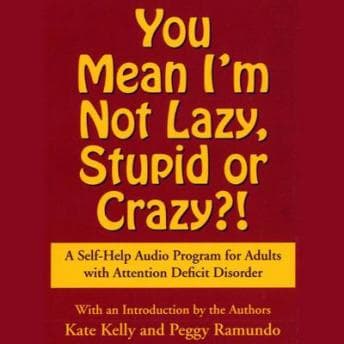

Everyone keeps calling this a "groundbreaking" self-help program. Listeners report yelling "THAT'S ME!" at their headphones. And look - I get it. The emotional relief of someone finally naming the thing that's been sabotaging your whole life? That's real. That same relief — the naming of something previously unnamed — is what Ross Gay chases in a completely different register in Book of Delights, though his subject is joy rather than disorder. But I need to separate the emotional impact from the actual utility of this audiobook, because they're not the same thing.
I was reorganizing my home office at midnight - Jenny was asleep, I was pulling old client files and trying to build a system that would last longer than two weeks. Which, if you know anything about ADD, is kind of the whole joke. I put this on expecting something dense. Two hours later, I was done with both the office and the audiobook. And that ratio tells you something.
Two Hours Is Either Brilliant or Brutal
Bottom line: at 2 hours, this is either the most respectfully concise self-help program ever made, or it's a pamphlet wearing audiobook clothes. I land somewhere in the middle. Kelly and Ramundo - both ADD adults themselves, both clinicians - clearly understand that their audience has attention deficit disorder. So they kept it short. That's smart design. That's knowing your user. My parents would've appreciated that kind of practical thinking.
But here's the tension: the questions they raise deserve more runway. The program walks through daily work capacity, sleep needs, financial baselines, relationship time, spiritual renewal, recreation - basically a life audit. Each topic gets maybe 8-10 minutes of treatment. For someone who's never confronted these questions before, that first pass might crack something open. For someone who's been managing ADD for years and wants actionable frameworks? You'll be hungry for more.
The diagnostic process section and the exploration of how ADD shows up differently in adults versus kids - that's where the real value sits. Kelly and Ramundo don't just list symptoms. They connect the dots between ADD patterns and the specific shame spiral that comes from decades of being called lazy, stupid, or crazy. The title isn't clickbait. It's the internal monologue of every undiagnosed adult.
When the Authors ARE the Authority
Kate Kelly narrates with Peggy Ramundo, and there's something disarming about hearing the people who wrote the book also deliver it. Kelly's psychiatric nursing background gives her a clinical steadiness, but it's the moments where both of them share personal experiences - the recognition scenes, the "I did this too" asides - where the audio format earns its keep over the print version. Their tone stays clear and supportive without tipping into that therapist-voice condescension that makes me want to throw my AirPods into traffic.
No dramatic narrator tricks here. No sound effects. No music. Just two women who've lived this thing talking directly to you about it. At 1.0x it's perfectly paced - I actually didn't speed this one up, which for me is basically a standing ovation.
The weakness? It's a product of its era. The research findings were current when this was produced, but ADD/ADHD science has moved considerably since then. Treatment options discussed here are foundational but not cutting-edge. If you're looking for the latest on executive function strategies or medication developments, you'll need to supplement.
Who This Is Actually For
Here's who should press play immediately: the person who just got diagnosed at 35 or 42 or 58 and feels like the ground shifted under them. The person whose kid got diagnosed and suddenly their own childhood makes a terrible kind of sense. The person who needs someone credible to say "you're not broken" before they can even begin to strategize. For that listener, this is worth every minute. One reviewer said understanding they weren't lazy or stupid "removed a huge burden." I believe them.
Here's who should temper expectations: anyone looking for a comprehensive management system. Two hours can't give you that. This is the emotional foundation, not the operational playbook. Think of it as the first conversation, not the last one.
I've worked with startup founders who clearly had undiagnosed ADD - the hyperfocus bursts, the inability to maintain systems, the brilliant-but-scattered pattern that VCs love until they don't. I wish I could've handed them this program as step one. Not because it solves everything, but because you can't fix what you won't name.
The Consulting Engagement That Costs One Audible Credit
At 2 hours, this asks almost nothing of your time. The ROI question isn't "is this worth 8 hours of my life" - it's "is this worth a long lunch break." And yeah, it is. Especially if you're early in your ADD journey and need someone who gets it to walk you through the basics without drowning you in jargon or false promises.
Jenny would say I'm being harsh about the depth issue. Jenny is right - not everything needs to be a 400-page McKinsey deck. Sometimes the two-page executive summary changes more lives than the full report ever could.