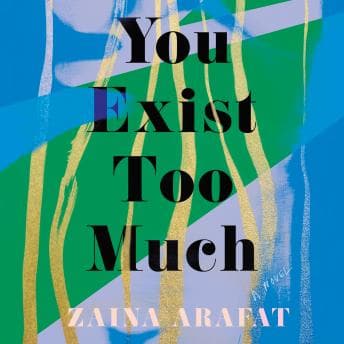

I was three hours into a logo redesign at 2 AM, Frida curled on my keyboard like she owned it, when the scene hit. The narrator admits to her mother that she's queer, and her mother—this woman who should be her safe harbor—responds with "You exist too much." I had to pause. Set down my stylus. Just... sat there in the glow of my monitor feeling gutted.
Abuela would have clutched her rosary at this book. And then she would have kept listening, because she understood that love makes us do unforgivable things to each other.
The Weight of Being Seen (And Not)
This isn't a love story in the way we usually mean it. It's a love addiction story, which is messier and harder to root for. Our narrator—unnamed, which feels intentional—ricochets between women, between countries, between versions of herself she's trying on like outfits that never quite fit. The vignette structure mirrors this perfectly. We're not getting a linear journey. We're getting fragments of a fractured self.
Zaina Arafat writes desire like it's a wound that won't close. The scenes in Palestine carry this specific shame I recognized in my bones—that feeling of being watched, judged, found wanting by people who don't know you but claim authority over your body anyway. Those men outside the Church of the Nativity yelling at a twelve-year-old for showing her legs? That moment echoes through everything that comes after.
The treatment center sections at "The Ledge" could have felt gimmicky, but they don't. They're uncomfortably real. Watching the narrator confront how her need to be loved has become indistinguishable from her need to destroy what loves her back—that's not easy listening. But it's honest.
Zehra Jane Naqvi Gets Inside Your Head
Here's the thing about Naqvi's narration: her voice sounds young. Like, almost too young at first? I wasn't sure about it in the opening chapters. But then I realized—that's the point. This is a story about someone who got stuck emotionally at twelve, at that moment of public shame, and is still trying to grow past it decades later.
Naqvi captures the confusion and the rage and the desperate wanting. When the narrator spirals into another reckless encounter, you can hear the self-destruction in her voice. It's not pretty. It's not supposed to be. The lilting quality works especially well in the Middle East sections, creating this almost dreamlike distance from the harder memories.
I'll be honest—she doesn't do wildly distinct voices for secondary characters. The mother, the girlfriends, they blur a bit. But I think that actually serves the story? Everyone in this narrator's life becomes a mirror she's trying to see herself in. They're not fully realized people to her. They're surfaces for her projections.
This Book Felt Like Picking a Scab
I don't mean that as an insult. Some books are meant to be uncomfortable. Some stories need to make you squirm because the truth they're telling isn't comfortable.
The structure—jumping between Brooklyn apartments and Bethlehem streets, between teenage shame and adult dysfunction—can feel scattered. I've seen people call it "messy" and "flitting." They're not wrong. But messy is what happens when you're trying to piece together an identity from contradictory parts. Queer. Palestinian. American. Daughter of a mother who loves you but can't accept you. The narrative style IS the content.
That said, if you need a clear plot with a satisfying arc? This might frustrate you. It's more portrait than story. More feeling than resolution.
Who This Is For (And Who Should Walk Away)
Listen to this if: you've ever felt like you take up too much space just by existing. If you've loved someone badly because you didn't know how to love yourself first. If you're queer and have complicated family stuff and sometimes need to hear your own chaos reflected back at you.
Maybe skip if: you want romance that feels good. This is romance that feels true, which is different. Also skip if fragmented timelines make you crazy—there's no hand-holding here.
I ugly-cried twice. Once at the mother scene. Once near the end, when the narrator starts to understand that the places that broke her are also the places that made her. That you can't separate the wound from the self.
Abuela Would Understand
At under eight hours, this is a focused listen. I'd say dedicated time, not background—you need to be present for this one. The emotional payoff requires your attention.
I finished it at 4 AM, Frida still on my keyboard, Diego judging me from his perch on the bookshelf. The logo redesign could wait. Some stories demand you sit with them after they end. Into the Forest left me in that same raw place—needing to just sit in silence and process.
Abuela would have called this book "too much." And then she would have understood exactly why that's the point.