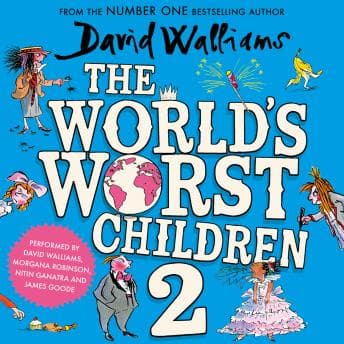

"Fussy Frankie wouldn't eat anything that wasn't beige."
I'm listening to this in the car, picking up my niece from soccer practice, and I nearly rear-end a minivan because I'm laughing at a kid who only eats beige food. Beige. The color of corporate PowerPoints and soul-crushing meetings. And somehow David Walliams has turned it into comedy gold for nine-year-olds.
Look, I don't normally review kids' books. My wheelhouse is "how to not destroy your startup" and "why your company culture is actually toxic." But Jenny's sister asked me to preview this before letting her kids listen, and three hours later, I have thoughts.
The ROI on Grossness
Bottom line: This book knows exactly what it is and delivers with ruthless efficiency. Ten stories, three hours, zero filler. That's a lesson most business authors could learn—say your piece and get out. Each horrible child gets their comeuppance in satisfying, often disgusting ways. Gruesome Griselda picks her nose so aggressively she eventually... well, you can imagine. The structure is predictable in the best way: meet terrible kid, watch terrible behavior escalate, enjoy inevitable karmic justice.
For parents doing the math: that's roughly 18 minutes per story. Perfect for car rides, bedtime routines, or bribing children to behave during errands. The time investment makes sense.
Four Narrators Walk Into a Recording Booth
Here's where things get interesting. You've got Morgana Robinson, Nitin Ganatra, James Goode, and Walliams himself trading off stories. The multi-narrator approach actually works—it keeps the energy varied across the collection so you're not fatigued by hour two. Different comedic timing, different energy.
Walliams clearly knows his material cold, which makes sense given he wrote it. There's a gleeful nastiness to his delivery that feels authentic—like he's genuinely delighted by these horrible children. The other narrators maintain that same mischievous energy without trying to imitate him exactly. The voices didn't blow me away, but they didn't need to. This isn't Shakespeare, it's strategic grossness.
What My Parents Would Say
My mom and dad spent decades watching kids come through their dry cleaning shop. Trust me when I say they've seen real-life versions of every character in this book. The kid who won't stop complaining? They had regulars like that. The one who thinks rules don't apply to them? Every week.
What Walliams gets right—and what most "kids behaving badly" books miss—is the consequences. These horrible children don't get away with it. There's a moral clarity here that would make my church-going parents nod approvingly, even wrapped in booger jokes. Bad behavior leads to bad outcomes. Simple. Effective. True.
(Jenny would say I'm overanalyzing a children's book. Jenny is right.)
Who Gets Value Here (And Who Doesn't)
Parents of kids aged 7-11 who need car entertainment: this is your answer. The humor lands without being actually inappropriate—it's "gross" in the way that makes kids giggle, not "gross" in ways that'll get you angry emails from other parents.
Skip if you're looking for nuanced character development or literary merit. This isn't that. It's not trying to be that. It's trying to make kids laugh while teaching them not to be terrible humans, and it accomplishes both. Also skip if you have zero tolerance for potty humor. There's a lot of nose-picking, burping, and general bodily function comedy. Know your audience.
The Efficiency Play
At just over three hours, this is respectfully short. Compare that to the eight-hour business books I suffer through that could've been blog posts. Walliams understands something most authors don't: get in, deliver value, get out. No padding. No repetition. No "let me tell you what I'm about to tell you."
The special appearance from Raj—apparently a fan-favorite character from other Walliams books—means nothing to me, but my niece apparently lost her mind when he showed up. That same Walliams instinct for building a universe kids want to return to is what made me go back and listen to Midnight Gang—different tone, but that same gleeful loyalty to his audience. Know your audience, deliver fan service efficiently. Basic business strategy, applied to children's literature.
My 2.0x speed wasn't necessary here—the pacing is already tight. Normal speed works fine. Maybe 1.25x if your kids are impatient, but you'll lose some of the comedic timing.
Park's Final Assessment
This is a well-executed product that knows its market. It doesn't try to be more than it is. It delivers exactly what the cover promises: horrible children being horrible, then getting what's coming to them. The multi-narrator production adds value without inflating runtime. The humor ratio is strong—genuine laughs per minute, not just smirks.
Would I have listened to this without the family obligation? No. Am I annoyed that I enjoyed it? Slightly. Will I recommend it to every parent I know who's desperate for car ride entertainment? Already texted three of them.
My niece gave it five stars. I'm giving it a solid rating for doing exactly what it set out to do, efficiently and well. That's more than I can say for most of what crosses my desk.