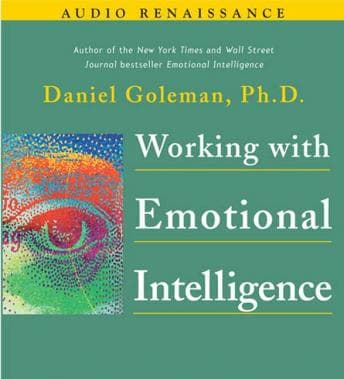

Thirteen hours. Goleman needed thirteen hours to explain what my mother demonstrated daily behind the counter of a Koreatown dry cleaner: read the room, manage yourself, and for God's sake, don't lose your temper with the customer who insists you ruined their silk blouse.
I started this during Sunday meal prep — chopping vegetables, marinading galbi, trying to be productive on two fronts because that's just who I am. Jenny calls it "pathological multitasking." She's not wrong. By the time I'd prepped enough banchan for the week, I was maybe four hours in and already feeling the bloat.
What My Parents Did Instinctively — Now With 500 Corporate Studies
Here's the thing: Goleman's framework is genuinely good. Five domains — self-awareness, self-regulation, motivation, empathy, social skills — broken into 25 specific competencies. He pulls research from over 500 organizations, cites the Bell Labs studies on star engineers (spoiler: the top performers weren't the smartest, they were the most emotionally connected to their network), and includes real case studies from American Express and Johnson & Johnson.
This is the kind of structured thinking that actually lands in corporate settings. I've used similar frameworks at McKinsey when trying to explain to a brilliant-but-alienating partner why clients kept requesting different project leads. Technical skills got them in the door. Emotional incompetence got them benched.
The core argument — that emotional competencies predict star performance better than IQ or technical expertise, especially as you climb the leadership ladder — holds up. I've seen this play out at three different startups this year alone. The CTO who can't give feedback without making engineers cry. The CEO who confuses "visionary" with "unable to listen." Goleman had their number twenty-five years ago.
Thirteen Hours Is a Choice, and It's the Wrong One
But this is where I lose patience. This is a 4-hour book wearing a 13-hour trench coat. Goleman makes a point, illustrates it with a corporate anecdote, then makes the exact same point with a slightly different anecdote, then summarizes the point he just made twice. Chapter after chapter. My 2.0x speed couldn't save this one. I hit the same wall with 7 Eternal Laws of Success — this genre has a recurring structural problem where genuine insight gets buried under its own insistence on being taken seriously.
The competency-by-competency breakdown in the middle section is where the bloat lives. Self-confidence gets its own extended treatment. So does trustworthiness. And conscientiousness. And adaptability. Each one follows the same template: definition, research citation, corporate example, "here's why this matters." Multiply that by 25 competencies and you understand why this audiobook tested my will to live.
Skip to the organizational-level chapters in the back half if you're a founder or manager. That's where Goleman talks about building EQ into hiring and development, and where institutional failures of emotional intelligence create toxic cultures. That's the stuff that's actually actionable. The individual competency catalog? You can get that from his Harvard Business Review articles in a tenth of the time.
Aaron Meza Gets Out of the Way
Meza's narration is clean and professional — the kind of straightforward delivery that works for research-heavy nonfiction. He doesn't try to dramatize corporate boardroom anecdotes or inject false energy into statistical findings, which I appreciate. He's a clear channel for the content. Not going to win any Audie Awards, but he won't make you hit pause in irritation either. For a book this dense and this long, a narrator who doesn't add friction is doing their job.
The ROI Calculation
Bottom line: The underlying framework is solid and still relevant — maybe even more relevant now that every startup founder thinks "move fast and break things" applies to human relationships too. But 13 hours is an absurd delivery vehicle for this material.
If you're in management, leadership, or HR, you need these concepts. You do not need all thirteen hours of them. Stream this on a free trial and skip the middle third. If you're a founder watching your team dynamics disintegrate and you can't figure out why, the organizational EQ chapters are worth your afternoon. The rest is repetition dressed up as thoroughness.
My parents never heard the term "emotional intelligence." They just called it respect, patience, and knowing when to shut up. Took them about five seconds to teach me. Took Goleman thirteen hours. Jenny would say I'm being harsh. Jenny is right. But so am I.