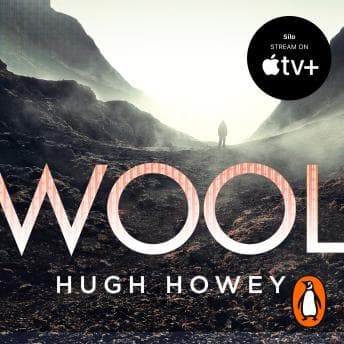

So here's the thing about listening to Wool at 6:17 AM on a Tuesday, sandwiched between a guy whose AirPods are leaking trap music and a woman doing her entire skincare routine on the train - the silo in this book? Feels aspirational. At least those people have personal space.
TL;DR: Worth your commute. The story is phenomenal dystopian sci-fi that earns every one of its 16+ hours. The narrator is... a complicated variable in that equation.
The Silo Is Basically a Distributed System With a Single Point of Failure
Hugh Howey built something genuinely clever here. The silo isn't just a bunker - it's a vertical civilization with 144 floors, each level its own microservice with different responsibilities, and the whole thing held together by rules nobody fully understands. As someone who spends her days debugging distributed systems, the political architecture of this world hit different. Information is siloed (pun very much intended). Nobody has the full picture. The IT department - actual IT, running the servers that keep everyone alive - sits in the mechanical bowels of the structure, physically and socially separated from the people making decisions up top. If that isn't the most accurate organizational metaphor I've ever encountered in fiction, I don't know what is.
The central premise is devastating in its simplicity: if you express a desire to go outside, they let you. And outside is a toxic hellscape visible only through a single degrading camera sensor on the top floor. The cleaning - where condemned people are sent out in a suit to wipe the sensor lens before they die - is the kind of worldbuilding detail that buries itself in your brain. I kept thinking about it during standups. Why do they always clean? Even when they say they won't? That question drove me through the first five hours more than any plot twist could.
Jules as a protagonist is exactly my kind of character - she's a mechanic, she thinks in systems, she solves problems by taking things apart. When she starts pulling at the threads of the silo's lies, it's not because she's some chosen one. She's just stubborn and competent and angry. The ROI on this audiobook is high for the worldbuilding alone, but Jules is the reason you stay.
Susannah Harker: The Narrator Debug Log
Okay. Here's where I have to be honest, and this is going to be a mixed review within a review.
Susannah Harker has a calm, measured British delivery that works beautifully for the oppressive atmosphere of the silo. When the tension is political - whispered conspiracies, the slow dread of realizing your entire reality is managed - her restraint fits. There were stretches, especially in the middle section where Jules is navigating the mechanical depths and uncovering the silo's secrets, where Harker's composure felt exactly right. Like the narration itself was under pressure.
But.
This is set in what reads as a post-American landscape. The characters have names like Holston and Jahns and Marnes. And Harker's British accent occasionally collides with the vernacular in ways that pulled me out. It's a small thing, but at 6 AM when your brain is running at maybe 40% capacity, those little friction points matter. There were also stretches - particularly in the early Holston chapters - where the pacing dipped into genuinely monotonous territory. I caught myself zoning out twice on the same commute, and I had to rewind. That almost never happens to me.
I bumped playback to 1.25x around hour three and that basically fixed the pacing issue. At default speed, the narration drags in spots where the story doesn't. At 1.25x, Harker's measured tone becomes atmospheric instead of soporific. Night and day difference.
She's not Ray Porter. (Nobody is. I know.) But she's competent, and the calm works more often than it doesn't.
Who Gets Sent to Cleaning, Who Gets to Stay
Perfect for: train, roadtrip, housework. The worldbuilding rewards sustained attention but won't punish you for missing thirty seconds while you're dodging someone's rolling suitcase in the aisle.
Skip for: bedtime. I mean it. Multiple people have reported this narrator putting them to sleep, and if you're already horizontal, you will lose hours of progress. Ask me how I know. (I don't want to talk about it.)
If you loved The Bobiverse for the "one person vs. an impossible system" energy, this scratches a similar itch but darker. Way darker. Fell Sword occupies a different genre entirely but gave me that same feeling of one stubborn competent person grinding against a system that was never designed to let them win. If you watched the Apple TV+ Silo show - the book goes deeper into the mechanical and political layers that the show glosses over. The IT subplot alone is worth the listen.
I finished this in about 6 commutes at 1.25x, and I immediately bought Shift. The ending doesn't so much resolve as crack open - not a cliffhanger exactly, but you feel the weight of everything that hasn't been explained yet. It's the setup book in a trilogy, and it earns that position.
Ship It (With Known Issues)
Wool is a 4-star story with a 3-star narration, and the math on that lands somewhere around "absolutely worth your time, just tweak the settings." Bump the speed. Push through the first couple hours. Once Jules takes over as the POV, the whole thing accelerates. Could I have been a blog post? Absolutely not. This one earned every hour.