
Twenty-nine hours. That's roughly 19 commutes, or in my case, three and a half weeks of Caltrain zombification. And I regret nothing.
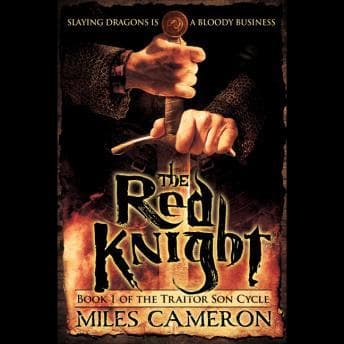
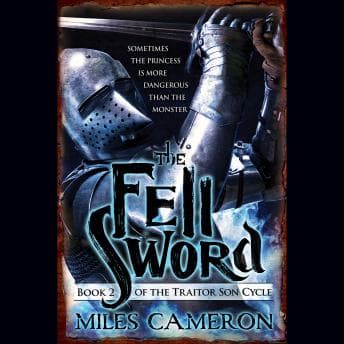
Miles Cameron's The Fell Sword is basically a medieval battlefield simulator with magic systems that actually make tactical sense. If you enjoyed The Red Knight, this sequel cranks the scope up significantly—we're no longer stuck in one siege, we're watching an entire empire fracture while the Red Knight tries to hold together his company, his sanity, and about seventeen different political alliances that keep shifting like poorly-commented legacy code.
Matthew Wolf Handles the Chaos
I'll be honest—I hadn't encountered him before this series, and now I'm slightly annoyed because I've been missing out. The thing that struck me around hour six: his female characters don't sound like a man doing a falsetto impression of what he thinks women sound like. That sounds like a low bar, but if you've listened to enough fantasy audiobooks, you know it's actually rare.
He handles the massive character roster—and we're talking massive, this book has more POVs than my on-call rotation has alerts—with enough differentiation that I could usually track who was speaking without narrative cues. The court nobles get this clipped, formal register while the mercenaries sound rougher, more practical. It's not showy, it's just... competent? In the best way?
His pacing during battle sequences matches Cameron's prose style perfectly. When the writing gets staccato and brutal during combat, Wolf's delivery tightens up. When we're in the political intrigue sections, he lets things breathe. Good audiobook narration is invisible, and this mostly is.
Why Your Brain Will Thank You (And Also Curse You)
Look, I need to be upfront: this is not a 1.5x-speed book. I tried. I usually cruise through fantasy at 1.5x, sometimes 1.75x if it's tropey enough to predict. The Fell Sword punished me for that hubris.
Cameron is a historical reenactor, and it shows. The battle tactics aren't hand-wavy "and then they fought"—there's actual formation work, supply line considerations, the kind of logistics that make you realize most fantasy authors have never thought about how you actually move an army. It's the same meticulous attention to military detail I appreciated in War and Peace, Book 09: 1812, though Tolstoy skips the magic systems. I found myself rewinding sections because I'd zoned out for thirty seconds and suddenly didn't understand why a flanking maneuver mattered.
This is both the book's strength and its barrier to entry. If you're the kind of person who pauses strategy games to optimize unit positioning, you'll love this. If you want your fantasy battles to be vibes-based—skip it.
The magic system also gets more complex here. The "memory palace" approach to spellcasting—where practitioners literally build mental architecture to house their power—is genuinely clever. It's not just cool worldbuilding, it becomes plot-relevant in ways I didn't anticipate.
29 Hours Is a Relationship
This is book two of five, and while there's a satisfying arc here, you're signing up for the long haul. The political complexity that makes it rewarding also means you can't really use this as background listening. I tried putting it on while debugging a particularly gnarly race condition at work. Bad idea. Ended up having to relisten to two hours because I'd retained nothing.
Perfect for: dedicated commute listening, long flights, road trips where you're not the driver. Skip for: gym sessions, housework, anything where your attention might fragment.
The pacing is uneven in places—there are stretches in the middle where we're juggling so many POV characters that the main plot feels like it's treading water. But when Cameron brings the threads together for the climactic sequences, the payoff is substantial.
The ROI Calculation
At 29 hours, you're getting serious value per credit. The narration quality is high enough that this doesn't feel like a slog even when the plot meanders. If you bounced off The Red Knight for pacing reasons, this one moves faster once it gets going—the setup from book one is already done.
Content-wise: violence is frequent and described with the kind of detail that suggests Cameron has actually held medieval weapons. There's some sexual content, nothing gratuitous but present. Language is period-appropriate-ish.
Deploy or Defer?
If you're already invested in this series: absolutely. Matthew Wolf's performance elevates material that could feel dense on the page into something genuinely propulsive. If you're new to Cameron, start with The Red Knight—this sequel assumes you know the players.
For fans of Mark Lawrence or John Gwynne who want their fantasy with more tactical crunch and less grimdark edge: this is your next series. The Red Knight is morally grey but not nihilistic, and the world feels lived-in rather than designed.
Who should skip: Anyone who needs their audiobooks to work as background noise, or who finds detailed military logistics tedious rather than thrilling.
I finished this at 11:47 PM on a Tuesday, earbuds still in, standing in my kitchen because I'd gotten home and couldn't stop listening long enough to actually enter my apartment. That's the kind of book this is.