
So I was up at 2 AM supposedly debugging a procedural terrain generator for my thesis, except my brain had fully checked out somewhere around midnight. I threw on The Woman Who Rides Like a Man because five and a half hours felt like exactly the kind of commitment I could handle while pretending to be productive. And look - I grew up reading Tamora Pierce. These books were formative for me in the same way the Player's Handbook was formative. Alanna was basically my first paladin before I knew what a paladin was.
But here's the thing people don't talk about enough: book three is the weird one.
The Desert Arc Is Basically a Side Quest (And That's Fine, Actually)
If books one and two are the main campaign - disguise yourself, train at the palace, earn your shield - then Woman Who Rides Like a Man is that session where the DM sends you to a completely different region and you spend four hours dealing with local politics instead of fighting the big bad. Alanna gets captured by the Bazhir, wins a magical duel to the death (which is rad), and then... becomes their shaman. The first female shaman. And the rest of the book is her teaching apprentices, navigating tribal gender norms, and figuring out her romantic life.
Is it slower than In the Hand of the Goddess? Yeah. Absolutely. The pacing downshifts hard. But I actually think the slower burn works because Pierce is doing something interesting here - she's taking Alanna out of the structure that defined her (the palace, the disguise, the knighthood quest) and dropping her somewhere she has zero framework. The Bazhir don't care that she's a knight. They care that she has the Gift and that she's a woman doing things women don't do in their culture. It's the same fight she already fought, just reflected through a completely different lens.
My D&D group would love the Bazhir worldbuilding, honestly. Pierce sketches out their customs, their relationship to magic, their tribal hierarchy - it's compact but it works. At under six hours, she doesn't have room for Sanderson-level detail, but what's there feels lived-in rather than decorative.
Trini Alvarado and the 5.5-Hour Sprint
Alvarado's narration is... solid. Not spectacular, solid. She differentiates the Bazhir characters with slightly shifted accents and tonal choices, and her Alanna voice carries the right mix of stubbornness and vulnerability. The emotional beats land where they need to - Alanna's frustration with her apprentices, her complicated feelings about George and Jonathan, the grief that threads through the back half of the book.
But I'll be honest: there's a lack of polish here compared to what I've heard her do in the first two books. Some scenes feel a touch flat, like she's reading through the emotional moment rather than sitting inside it. The magical duel early on should crackle with tension - and it does, mostly - but a narrator like Steven Pacey would've had me white-knuckling my keyboard. (Steven Pacey walked so other narrators could run. I will say this until I die.)
For a 5.5-hour listen, though, it moves. I finished it in one sitting - partially because thesis avoidance is a powerful motivator, partially because once you're in Alanna's headspace with the Bazhir, you want to see how she reshapes them. And how they reshape her.
The Progression Is Satisfying (Even When It's Quiet)
Here's what I think people miss when they call this the weakest book in the quartet: Alanna's growth here isn't about leveling up her sword skills or unlocking new abilities. It's about her learning to be a mentor, a leader, someone who changes systems from inside rather than just punching through them. The progression is satisfying in a way that's less flashy but arguably more mature than what came before. That kind of slow-burn generational weight - characters shaped by history and culture more than by combat - is something I also found in Love Songs of W.E.B. Du Bois, which does it on an absolutely epic scale if you've got more than five hours to spare.
The apprentice dynamics - particularly the tension around which students can handle the Gift and which can't - give the story real emotional stakes even without a massive battle sequence. Pierce doesn't pull punches with the consequences, either. There's a scene involving one of Alanna's students that genuinely hurt, and Alvarado's delivery there was probably her strongest moment in the whole production.
(I read this instead of writing my thesis. Dr. Patel, if you're somehow reading audiobook reviews at 3 AM, I promise the terrain generator is coming along great.)
Who's Rolling Initiative on This One
If you're already invested in the Song of the Lioness quartet, you need this. It's the bridge between Alanna earning her shield and the finale, and skipping it would be like missing a whole chapter of character development. If you're a Pierce completionist, obviously yes.
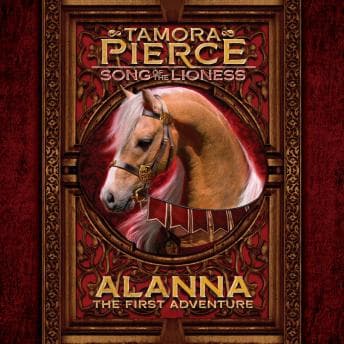
If you're new to Pierce? Don't start here. Go back to Alanna: The First Adventure. This book assumes you care about these characters already, and it earns its slower pace on the back of that investment.
If you need constant action and can't hang with a fantasy book that's more about cultural change than combat? This isn't for you. (But you're wrong. Growth arcs are important.)
Tom's Thesis-Avoidance Verdict
At 5.5 hours, it's a quick listen that punches above its page count in terms of character work. The Bazhir setting is a welcome change of scenery, the magic system stuff with the apprentices scratches the progression itch, and Alanna remains one of the best protagonists in YA fantasy - period. Alvarado's narration gets the job done without blowing you away. It's the quietest book in the series, but quiet isn't the same as empty. Sometimes the side quest is where you learn the most about your character.