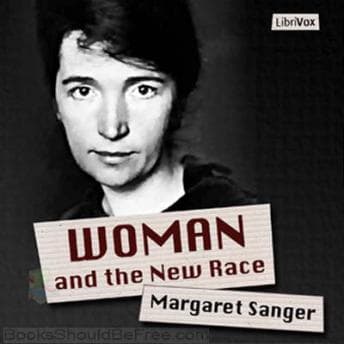

Margaret Sanger would've made a hell of a staff officer. Say what you want about the woman - and there's plenty to say on both sides - but Woman and the New Race reads like someone who identified the objective, mapped the terrain, and executed with zero hesitation. I finished this one late last night, sitting on my back porch with Ranger sprawled across my feet and a bourbon I'd forgotten about going warm beside me. Four hours. That's all it takes. And those four hours will rearrange how you think about early 20th-century America.
Let me cut to the chase: this is a primary source document from 1920 that reads more like a manifesto than a history book. And that's both its greatest strength and its biggest complication.
The Briefing Nobody Taught You in School
Sanger's central argument is straightforward - women controlling their own reproduction is the single greatest lever for societal progress. She hammers this point chapter after chapter with the kind of relentless conviction that reminds me of the best military briefers I've worked with. No hedging. No "well, some might argue." She lays out her case with statistics on maternal mortality, infant death rates in overcrowded tenements, and the grinding poverty of families with twelve, fourteen children they couldn't feed.
What caught me off guard was how directly she ties birth control to the labor movement. Chapters on how large families supplied cheap, expendable workers to factories - basically arguing that uncontrolled reproduction was a tool of economic exploitation. I've seen this scenario play out in different contexts overseas, where population pressures create exactly the kind of instability she's describing. Her logic isn't subtle, but it's effective. The same uncomfortable arithmetic — where systemic forces grind down the people with the least leverage — runs straight through Locking Up Our Own, a book I kept thinking about while Sanger was making her case about economic exploitation.
But here's where it gets uncomfortable, and I'm not going to dance around it. The eugenics thread runs through this book like a trip wire. Sanger talks about "unfit" populations, about the societal burden of "defectives," and you can feel the 2024 listener bracing for impact every time she heads in that direction. The author clearly did her homework for her era - but her era's homework included some deeply troubling conclusions. If you're going to engage with this text, you need to engage with all of it. Cherry-picking the parts that aged well is intellectually dishonest.
Becky Cook Behind the Microphone
Cook narrates this like she's reading to an intelligent adult, which is exactly the right call. Clear enunciation, measured pacing. She doesn't try to dramatize Sanger's prose or inject emotion where the text doesn't call for it. For a political treatise from a century ago, that restraint is appreciated.
This is where it lost me a bit, though - the pacing gets monotonous in the middle chapters. Sanger has a habit of restating her thesis from slightly different angles, and Cook doesn't vary her delivery enough to distinguish between the really incendiary passages and the more routine argumentation. Around the two-hour mark, when Sanger is building her case about historical precedent, I found my attention drifting. Had to rewind twice. At 1.25x it's manageable, but at normal speed I think you'd struggle to stay locked in during the repetitive stretches.
The production quality is bare-bones. No supplementary material, no historical context framing at the beginning - you're just dropped into Chapter 1. For a book this loaded with historical context that modern listeners probably don't have, an introduction would've been welcome. You're essentially getting a straight read of a hundred-year-old text with nothing to anchor you.
Who Needs to Hear This (And Who Should Brace Themselves)
If you're interested in American political history - the real, messy, uncomfortable kind - this is essential listening. Not because Sanger was right about everything. She wasn't. But because you cannot understand the last century of reproductive rights debate without understanding where it started, and some of those roots are tangled in places that'll make everyone uncomfortable regardless of where they stand politically.
Skip this if you're looking for a balanced historical overview. This isn't a history book about the birth control movement - this IS the movement, written by its most aggressive champion, with all the blind spots and fire that implies. It's a primary source, not a textbook.
Also skip if you need dynamic narration to stay engaged with nonfiction. Cook is competent but not electric. Four hours of a single voice reading early 20th-century prose requires some commitment on your end.
Worth Your Time? Here's the Debrief
At four hours, the time investment is minimal for what you get - a front-row seat to one of the most contentious social movements in American history, told by its most controversial figure, in her own words. I walked away genuinely surprised by how much of this debate hasn't changed in a hundred years. The arguments, the counterarguments, the moral panic - it's all still playing out on cable news right now.
Ranger slept through most of it, which is his way of saying the narration didn't have enough explosions. Linda would probably like this one more than I did. But I'm glad I listened. Some books you read because they're enjoyable. Some you read because you should. This one's the latter.






![Steve Jobs [unabridged audiobook] audiobook cover](/_next/image?url=https%3A%2F%2Fcovers.audiobooks.com%2Fimages%2Fcovers%2Ffull%2F9788499923406.jpg&w=1920&q=75)