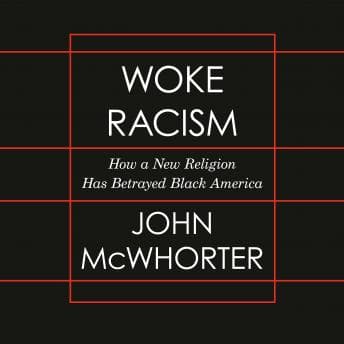

Let me cut to the chase: John McWhorter just wrote the book I've been waiting for someone to write for about five years now.
I finished this one during a late-night drive back from Houston after a client meeting ran long. Just me, Ranger snoring in the back seat, and McWhorter's voice cutting through the dark I-10 corridor. And here's the thing—when an author narrates their own work, it can go sideways fast. Academics especially tend to drone. McWhorter doesn't. The man's a linguist, and you can tell he actually enjoys the sound of language. There's a dry wit in his delivery that the printed page probably can't fully capture.
The Religion Framework Actually Works
McWhorter's central thesis—that modern antiracism functions as a religion complete with original sin, heretics, and evangelists—isn't new. I've heard variations of this argument at dinner parties and in op-eds. But McWhorter builds the case with the precision of a well-planned operation. He's not throwing grenades from the cheap seats. He's a Black professor at Columbia, a lifelong Democrat, and he's essentially saying: my team has lost the plot.
What makes this effective is that he doesn't waste time on the easy targets. He's not mocking college kids or cherry-picking the most ridiculous Twitter takes. Heartland tackles similar questions about condescension and expectations, though from a different angle—Sarah Smarsh writing about class instead of race, but with the same impatience for people who mistake pity for solidarity. McWhorter goes after the underlying logic—or lack thereof—in how we're told to think about race. The idea that Black Americans are perpetual victims who can't be expected to meet standard expectations? That's not progressive, he argues. That's condescending as hell. And as someone who served alongside Black soldiers who were every bit as capable as anyone else in the unit—often more so—I found myself nodding along.
Where He Loses Some Altitude
Is this a perfect piece of work? No. At just over five hours, it's lean—almost too lean. McWhorter spends considerable time diagnosing the problem but his prescriptions feel rushed. He offers three policy proposals near the end: ending the war on drugs, promoting phonics-based reading instruction, and expanding vocational training. All reasonable. But they feel bolted on, like he ran out of runway and had to land fast.
The "scripts" he provides for pushing back against woke ideology in your personal life are... fine. Practical, I guess. But they read like HR training modules, which is ironic given his targets. I would've preferred more depth on the historical and linguistic evolution of these ideas. The man's a linguist—I wanted more of that expertise on display.
The Author-Narrator Advantage
Here's where the audiobook earns its keep. McWhorter reads with the energy of someone who's genuinely frustrated—not performatively angry, just tired of watching what he sees as a slow-motion disaster. There's humor in his delivery, particularly when he's describing the logical contortions required to maintain woke orthodoxy. You can hear him almost chuckling at the absurdity of positions he's dismantling.
No fancy production here—no sound effects, no music, just a man and a microphone. Which is exactly right for this kind of book. At 1.25x speed (my standard), it clips along nicely without losing clarity.
Who Should Deploy This (And Who Should Stand Down)
If you're looking for a book that confirms your priors about "the woke mob," you'll find ammunition here. But that's not really the point. This is more useful for people who sense something's gone wrong in the racial conversation but can't quite articulate what. McWhorter gives you the vocabulary and the framework. Too Much and Never Enough gave me a similar framework for understanding dysfunction in institutions—different subject entirely, but that same clarity when someone finally names the pattern you've been seeing.
If you're deeply committed to the Kendi/DiAngelo school of antiracism, you'll probably hate this. McWhorter explicitly positions himself against that framework. Fair warning. But people who get annoyed by sloppy thinking—regardless of political tribe—will appreciate the rigor here. McWhorter isn't interested in tribal loyalty. He's interested in what actually helps Black Americans. Whether you agree with his conclusions or not, that's a refreshing starting point.
Mission Debrief
Worth your time? Yes, with caveats. This is a sharp, well-argued polemic that benefits enormously from the author's narration. It's not a comprehensive policy manual, and the solutions section needed another hour of development. But as a diagnosis of a cultural moment that's made a lot of us feel like we're losing our minds? Mission accomplished.
Ranger slept through the whole thing, which means it wasn't exciting enough to wake him. But he's a dog. I found it plenty engaging.