
"I will not have my niece become a laughingstock."
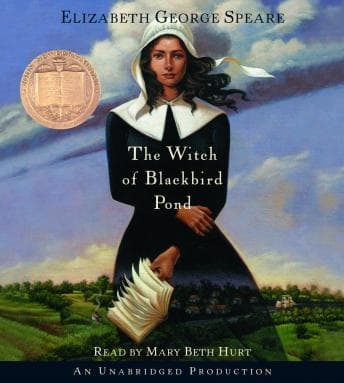
That line hit me somewhere around hour two, and I had to pause the audiobook because I was suddenly back in my classroom, watching a freshman get torn apart for wearing the wrong brand of sneakers. The Witch of Blackbird Pond is technically a children's book from 1959, but Elizabeth George Speare understood something about conformity and cruelty that feels uncomfortably relevant. My students would probably roll their eyes at the Puritan setting. They'd be wrong.
Why This Newbery Winner Still Works
Look, I've taught enough "classics" to know that award stickers don't guarantee a book holds up. But Speare earned that Newbery. Kit Tyler arrives in Connecticut Colony like a tropical bird dropped into a gray New England winter - she's been raised in Barbados with books and swimming and actual joy, and suddenly she's surrounded by people who think reading for pleasure is suspicious. The culture clash isn't subtle, but it doesn't need to be.
What makes this more than a historical curiosity is how Speare builds the witch trial tension slowly. Hannah Tupper, the so-called witch, is just an old Quaker woman living alone in the meadows. Kit befriends her because she's desperate for someone who doesn't look at her like she's already committed a crime. And then - because this is how these things always go - the community's fear needs a target.
I listened to most of this while grading papers at my kitchen table, and Denise kept asking why I was muttering at my laptop. The answer was that I was watching a mob form, and Speare makes you feel every step of how ordinary suspicion becomes something dangerous. My juniors are reading The Crucible next semester. I'm seriously considering assigning this as a companion piece. I had a similar thought when looking at There There for our contemporary lit unit—sometimes books marketed to different audiences tackle the same essential questions about belonging and community violence. (Don't tell them it's technically middle grade. They'll never take it seriously.)
Mary Beth Hurt Finds the Warmth
Mary Beth Hurt's narration is warm without being saccharine, which is exactly what this book needs. She gives Kit a kind of breathless quality that works for a sixteen-year-old who keeps saying the wrong thing at the wrong time. Her Hannah Tupper is gentle and a little tired - you can hear decades of being an outcast in how she speaks.
The character voices are distinct enough that I never lost track of who was talking, even when I was half-focused on whether my students understood the difference between "their" and "they're." (They don't. They never do.) Hurt's pacing is solid - she knows when to let a moment breathe and when to push forward.
I'll be honest: I couldn't find much about Hurt's other audiobook work online, but based on this performance, she understands that narrating for younger audiences doesn't mean dumbing things down. The emotional beats land. When Kit realizes how much danger she's in, Hurt's voice shifts in a way that made me stop pretending to grade.
One small complaint - apparently the opening music is louder than the narration, which some listeners found jarring. I listen at low volume anyway because of my wife's sleep schedule, so I didn't notice. But fair warning if you're starting this with headphones at full blast.
The Slow Burn That Paid Off
This is a 6.5-hour listen, and Speare doesn't rush. The first half is really about Kit learning - painfully - how to exist in a community that finds her suspicious just for being different. She learns to spin flax. She teaches a child to read using the Bible. She falls for the wrong man before realizing the right one was there all along.
If you need constant action, this might feel slow. But the pacing is deliberate. Speare is building a world where the witch trial climax feels inevitable rather than dramatic. When it comes, it hits hard because you've spent hours watching the community's fear simmer.
My students think I'm ancient for listening at 1.0x speed. This book is why. The prose deserves to be heard at the pace Speare intended. The sentence rhythms matter. The pauses between accusations matter.
Who Should Listen (And Who Should Skip)
This is perfect for anyone who loved The Crucible but wanted something with more hope. It's great for commutes - engaging enough that you'll take the long way home, but not so complex that you'll lose the thread if traffic gets distracting. Parents looking for something to listen to with older kids could do much worse.
Skip it if you need your narrator to sound exactly like your mental image of the character. Some listeners felt Hurt's Kit didn't match what they'd imagined. That's fair - we all have our own Kit in our heads. But give it an hour. She grew on me. And if witch trial content is a hard no for you, this isn't your book - it's handled thoughtfully, but it's still central to the story.
I finished this around midnight, papers still ungraded, and immediately texted my department head suggesting we add it to the curriculum. She hasn't responded. She's probably asleep like a normal person. But Speare wrote something that still matters sixty-five years later, and Mary Beth Hurt delivers it with the care it deserves. That's worth losing some sleep over.