
I was making my mother's dal makhani at 10 PM on a Tuesday — the kind of elaborate, slow-simmered comfort food you make when something in you needs tending but you can't name what — when Francis Weller started talking about the fourth gate of grief. What we expected but did not receive. I had to put the wooden spoon down.
Let me back up.
The Five Gates Changed How I Think About Clinical Frameworks
I study how stories shape identity. I read psychological frameworks the way some people read restaurant menus — critically, hungrily, always asking does this actually map onto how humans work? Weller's five gates of grief framework is one of the most psychologically honest models I've encountered outside of peer-reviewed literature, and I say that as someone who is professionally skeptical of self-help books that package pain into tidy categories.
Here's what makes it different: the gates aren't sequential. They're not stages à la Kübler-Ross. They're portals — things you walk through repeatedly, sometimes simultaneously. The first gate (everything we love, we will lose) is the one most grief books live in. Fine. Expected. But Weller doesn't stop there. The second gate — the parts of ourselves that have never known love, our secret shames — is where this book becomes a genuine case study in shadow work without ever using that overused Jung-lite terminology. And the fifth gate, ancestral grief? The research actually shows that intergenerational trauma is stored somatically, and Weller treats this not as woo-woo mysticism but as embodied psychological reality. As a daughter of immigrants who watches her parents carry griefs they've never been given language for, I found myself asking: why does Western psychology so consistently ignore this gate?
The protagonist here — and yes, in a self-help book the protagonist is you, the reader — exhibits classic avoidant patterns that Weller names with precision. He talks about how our culture creates "private ghettos of grief" where we're expected to process enormous losses in isolation, maybe with a therapist if we're lucky, but stripped of communal ritual. My therapist would have thoughts about this, and most of them would be nodding.
Derek Botten Does the Quiet Part Well
At six hours and forty-seven minutes, this isn't a long listen. But it's dense. Botten's narration is measured — almost meditative — which serves the poetic, reflective passages well. When Weller's prose gets lyrical (and it does, frequently), Botten doesn't oversell it. He lets the words land. There's an emotional steadiness to his delivery that mirrors what Weller is actually asking of the listener: stay present. Don't rush through the pain to get to the resolution.
That said, I want to be honest about what I don't know. The research on this audiobook is thin on production specifics — no sound effects, no music, no full cast. It's a single narrator reading a single author's work. Straightforward. And for this material, that's correct. You don't need cinematic production on a book about sitting with sorrow. You need a voice that doesn't flinch. Botten doesn't flinch.
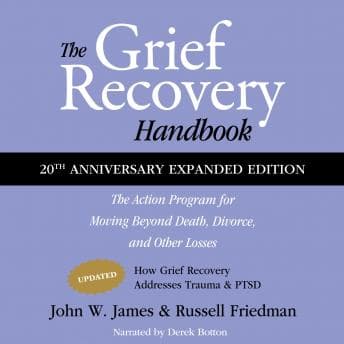
Botten brings that same unflinching steadiness to The Grief Recovery Handbook, though that one leans more clinical and action-oriented where Weller stays contemplative.But here's my caveat: some of Weller's writing leans heavily into ritual prescription — specific ceremonies for grief, community-based practices — and in audio format, without the ability to flip back and reread instructions, those sections lose some utility. I caught myself wishing I could underline things. (Anderson Cooper apparently had the same impulse with the print version, so at least I'm in good company.)
Where Weller Gets It Right and Where I Squinted
What makes this book psychologically compelling is Weller's refusal to pathologize grief. He's a psychotherapist who essentially argues that our therapeutic culture has it backwards — we treat grief as a problem to solve rather than a human capacity to exercise. That's a bold claim from someone inside the profession, and he backs it with enough clinical and cross-cultural evidence to earn my trust.
The third gate — sorrows of the world, ecological grief, collective pain — is where I squinted a little. Not because it's wrong. It's not. But because Weller's political lens (extractive capitalism, occupation, environmental destruction) occasionally moves from psychological observation into advocacy territory without quite acknowledging the shift. Psychologically, I wanted him to sit longer with why collective grief is so hard to hold, rather than directing me toward what actions my soul should take. The prescriptive moments are the weakest moments.
But the fourth gate. That fourth gate broke something open in me that I'm still sitting with, three days later, while I eat leftover dal alone at my kitchen table. What we expected but did not receive. The love that should have been there. The language we were never given. This is a fascinating case study in how absence becomes its own form of loss — not the dramatic, funeral-worthy kind, but the slow, quiet kind that shapes who you become.
Who Needs This (and Who Should Wait)
If you're in acute grief — fresh, raw, recent loss — this might not be the right moment. Weller is asking you to think about grief conceptually, not just feel it. That requires a certain distance. But if you're someone carrying old, unnamed losses — the immigrant daughter kind, the "my family doesn't talk about feelings" kind, the "I didn't even know I was grieving" kind — this book will find the exact bruise you forgot you had and press on it. Gently. But press.
Listen with focus. Not on a jog. Not in the background. This one needs your full attention and probably a journal nearby — even if you're listening to the audio version.
My Case Notes, Closed
Francis Weller understands human nature in a way that most self-help authors don't — because he doesn't pretend healing is linear, and he doesn't pretend you can do it alone. The audiobook format works for roughly 80% of this material; the other 20% (the ritual instructions, the community exercises) really wants to be in print. But that 80% is some of the most honest psychological writing on grief I've encountered. And I've read a lot of it. Professionally and otherwise.