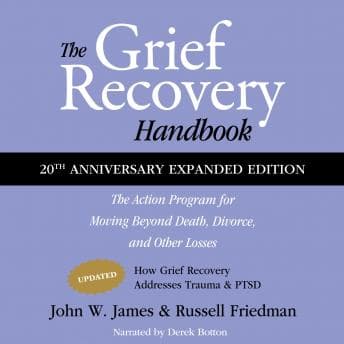

"Grief is the normal and natural reaction to loss of any kind." Somewhere around the forty-minute mark, that line stopped me mid-stride on my morning jog through Cambridge. I actually had to pause, hands on knees, because—and my therapist would have thoughts about this—I realized I'd spent years treating grief like a pathology to be cured rather than a response to be processed.
This is the thing about James and Friedman's approach that got under my skin in the best possible way.
The Research Actually Shows... We've Been Doing This Wrong
The authors spend considerable time dismantling what they call the "myths of grief"—those well-meaning but ultimately harmful platitudes we've all internalized. "Time heals all wounds." "Be strong." "Keep busy." As someone who's read the literature on complicated grief, I found myself nodding along. The research backs them up. These cultural scripts don't help; they teach us to intellectualize pain instead of completing the emotional relationship with what we've lost.
What makes this book compelling is its refusal to be another feelings-focused meditation. James and Friedman aren't interested in helping you sit with your emotions indefinitely. They're interested in action. The "Grief Recovery Method" they outline is structured, almost clinical in its specificity—identify the loss, examine the relationship, write a completion letter. It's the kind of systematic approach that appeals to the researcher in me, even as the human in me initially resisted its almost mechanical precision.
The expanded edition adds chapters on loss of health, career, and faith—losses that don't come with casseroles and sympathy cards. The section on growing up in alcoholic or dysfunctional homes hit particularly hard. The protagonist (and yes, I'm treating this like a case study, I can't help it) of these chapters is anyone who learned early that their feelings were inconvenient. The authors understand that childhood teaches us patterns of emotional suppression that persist decades later.
Derek Botten's Steady Hand
Here's where I have to be honest about the limitations of what I can tell you. The research didn't surface specific details about Botten's performance—no complaints, no particular praise. What I experienced was a narrator who understood the assignment: stay out of the way. This isn't material that benefits from dramatic interpretation. Botten reads with a measured, almost therapeutic cadence. Warm but not saccharine. Present but not intrusive.
At 6 hours and 49 minutes, it's a reasonable commitment—long enough to feel substantial, short enough that you won't lose the thread between listening sessions. I found myself returning to certain sections while cooking dinner (elaborate dal that took two hours, eaten alone, don't feel sorry for me). That same solitary ritual of processing through action reminded me of the embodied self-examination in My Body. The pacing works for this kind of reflective content.
Where the Method Meets Its Limits
Psychologically, there are moments where this doesn't quite track for me. The book occasionally oversimplifies the grief process in ways that made me pause. Not everyone can complete a relationship through a letter-writing exercise. Some losses are too ambiguous, too ongoing. The authors acknowledge this to some degree, but I found myself asking: what about the person whose health loss is progressive? Whose career loss is tangled with identity in ways a completion letter can't untangle?
And yet.
The framework still has value precisely because it offers something to *do*. Thirty years of clinical experience backs their approach, and there's something to be said for practitioners who've sat with thousands of grieving people and developed a method from that accumulated wisdom rather than from theory alone.
The book also requires something from you. This isn't passive listening. You'll need a notebook. You'll need to pause and actually do the exercises. If you're looking for something to absorb while half-paying attention during your commute, this isn't it.
A Case Study in Practical Psychology
I came to this book as a researcher, curious about how popular grief literature translates clinical concepts for general audiences. What I found was something more personal than I expected. The authors share their own losses—James lost his child, Friedman his marriages and career—and that vulnerability grounds the methodology in lived experience.
The 20th anniversary edition feels earned. Twenty years of helping people grieve means twenty years of refining what works. The expanded sections on non-death losses acknowledge what the research shows: we grieve many things, and we're often not given permission to.
Who This Is (and Isn't) For
If you're ready to engage actively with your grief—notebook in hand, willing to pause and write—this offers a clear path forward. Skip it if you want passive comfort listening or if structured exercises feel too clinical for where you are right now. The workbook approach won't land for everyone, but for those who process better through doing than dwelling, this is the methodology you've been looking for.