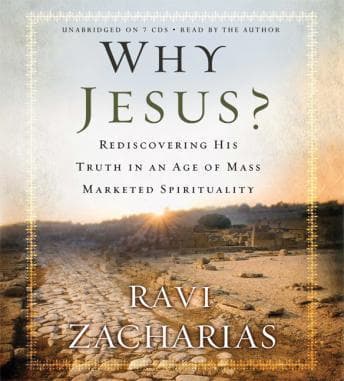

Ravi Zacharias is doing something my students desperately need but would never admit to wanting: he's teaching them how to think.
I finished this one at 2 AM, grading a stack of essays about The Great Gatsby while Zacharias methodically dismantled Deepak Chopra's theology in my earbuds. The juxtaposition was almost too perfect—seventeen-year-olds fumbling toward meaning while this Oxford-trained apologist traced the intellectual genealogy of every spiritual fad that shaped their parents' bookshelves.
The Syllabus Nobody Asked For (But Everyone Needs)
Zacharias structures this like the best kind of lecture—the kind where you realize halfway through that he's been building toward something you didn't see coming. He walks through the New Age movement chronologically: the Age of Aquarius, Shirley MacLaine's Out on a Limb, The Celestine Prophecy, The Secret, The Da Vinci Code. That same mass-marketed spirituality playbook shows up in Girl, Wash Your Face, though Rachel Hollis wraps it in Instagram-friendly packaging my students would actually recognize. Each gets its moment on the operating table.
What struck me—and this is the English teacher talking—is how he treats these texts as texts. He's not dismissing Eckhart Tolle or Marianne Williamson with hand-waving. He's reading them closely, the way I'd read Fitzgerald. Finding the internal contradictions. Asking what the author really means when they say "we are all gods" and then following that premise to its logical conclusion.
The Oprah section is particularly sharp. Zacharias traces how her platform became a kind of theological amplifier, introducing millions to a spirituality that sounds Christian but isn't. He's not attacking Oprah—he's analyzing her influence the way a cultural historian would. My students would actually find this relevant, which is saying something.
Hearing the Argument in His Voice
Zacharias narrates his own work, and this matters more than you'd think. Nine hours is a commitment, but his delivery earns it. There's a warmth there—he sounds like someone who genuinely wants you to understand, not someone trying to win a debate. His pacing is deliberate. He pauses before key points the way a good preacher does, letting the previous sentence settle.
The accent helps too—that particular blend of Indian and British that carries an implicit authority. (My wife Denise, who grew up Baptist in Alabama, says he sounds like "the professor you wish you'd had in seminary." She's not wrong.)
But here's my caution: this is not background listening. I tried it during a faculty meeting once—Principal Martinez was discussing budget allocations—and I had to rewind twenty minutes because Zacharias was making a point about the resurrection that required my full attention. The arguments are layered. He'll reference Bertrand Russell, then pivot to Dostoevsky, then quote Jesus. If you're not tracking, you'll lose the thread.
Where the Classroom Meets the Cosmos
The resurrection section near the end is where Zacharias is at his best. He presents the historical evidence—the empty tomb, the witnesses, the transformation of the disciples—with the precision of a prosecutor building a case. But he's also doing something literary: he's arguing that the resurrection is the plot point that makes everything else cohere. Without it, the story of Jesus becomes just another tragedy. With it, the narrative changes genre entirely.
This reminds me of what Hemingway said about writing—that the dignity of movement of an iceberg is due to only one-eighth of it being above water. Zacharias has clearly done decades of reading beneath the surface. What we hear is the distillation.
Who Should Press Play (And Who Shouldn't)
This is for listeners who want their faith examined, not just affirmed. If you're looking for devotional comfort, this isn't it. If you've ever wondered why your neighbor's copy of The Secret bothers you but you couldn't articulate why, Zacharias will give you the vocabulary.
Skip it if you want something light. Skip it if you're not interested in Christianity's exclusive claims—he's unapologetic about them, and that will irritate some listeners. Skip it if you need action and movement; this is a man thinking out loud for nine hours.
But if you loved C.S. Lewis's Mere Christianity and wished someone would update it for the Oprah era? This is its spiritual successor.
Mr. Williams's Final Grade
I've assigned Zacharias essays to my AP students before. They complain about the vocabulary. Then they come back senior year and tell me they finally understood what he was getting at. This audiobook works the same way—demanding in the moment, clarifying over time.
The prose deserves to be savored. Listen at 1.0x. Let him finish his sentences. The author chose those words, and Zacharias—being the author—knows exactly how to land them.