
Bottom Line: Worth your commute if you're working through some inner stuff, but manage expectations - this is more personal testimony than systematic framework.
Look, I'll be honest. This isn't my usual genre. I'm way more likely to reach for hard sci-fi or a business book I can immediately apply to debugging my life (and my code). But I'd been going through a rough patch - the kind where you're staring at your terminal at 2AM wondering if you're actually good at anything or just faking it really well. A friend from my old church in Seattle recommended this, and at 5 hours, it seemed low-commitment enough.
When the Sermon Becomes Something More
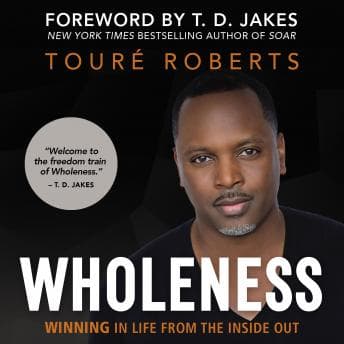
Touré Roberts narrating his own work is... interesting. And I mean that in a good way. There's this warmth to his voice that feels less like a polished audiobook and more like you're getting coffee with a really thoughtful mentor. He's got that pastor cadence - you know the one - but it doesn't feel performative here. It feels earned. The guy grew up with a single mom, made it through inner-city challenges, found success in corporate America before pivoting to ministry. When he talks about brokenness, you believe he's been there.
The "Two Halves Don't Make a Whole" chapter hit different for me. Adult Children of Emotionally Immature Parents digs into similar territory about filling those gaps ourselves instead of expecting others to complete us. Kevin and I have been together three years, and there's this tendency (okay, MY tendency) to expect him to fill gaps I should probably be addressing myself. Roberts basically calls this out without being preachy about it. The relationship stuff is practical without being a couples therapy manual.
The Engineering Brain vs. The Spiritual Framework
Here's where I got a little frustrated. My engineering brain wants systems. Give me a flowchart. Give me an algorithm for processing past trauma. Roberts gives you frameworks - "The Cracked Mirror" concept is genuinely useful for understanding how past experiences distort self-perception - but then he'll spend twenty minutes on personal anecdotes that, while compelling, feel like they could've been condensed.
This is basically therapy concepts wrapped in faith-based language. If you're not comfortable with the Christian framework, you'll probably bounce. But if you are (or you're at least open to it), there's real substance here. The "Ghosts of the Past" section has some legitimately practical tools for not letting old patterns sabotage new opportunities. If you're dealing with parental baggage specifically, Adult Children of Emotionally Immature Parents goes even deeper into breaking those inherited patterns. I actually paused the audiobook on my commute to jot down a few things in my phone notes.
The pacing drags in spots. Around the middle, I bumped up to 1.75x because some points were being made, remade, and then made again with slightly different wording. Classic self-help book problem. Could've been a blog post? No, there's too much here. But could've been a tighter 4-hour listen? Probably.
The Wholeness Test Situation
The book ends with a "Wholeness Test" which... okay, I appreciate the attempt at measurability. My product manager brain respects wanting to track progress. But it's less of a diagnostic tool and more of a reflection exercise. Don't go in expecting a Myers-Briggs for your soul. It's more like journaling prompts with structure.
Who Should Listen (And Who Should Skip)
Perfect for: Long commutes, gym sessions, Sunday morning chores. The vibe is contemplative but not so heavy you can't multitask. Skip if: You need secular self-help with research citations and case studies, or you're trying to focus on deep work. This ain't it for either.
The ROI on this audiobook depends entirely on where you're at. If you're in a season (ugh, I sound like a pastor now) where you're questioning patterns in your relationships or career, and you're open to a faith-based perspective, Roberts delivers. His voice is genuinely soothing - I listened to the last hour before bed and actually slept better than I had in weeks.
Would I recommend it to my engineer friends? Selectively. Would I recommend it to my boyfriend who's been dealing with some family stuff? Already did. He's two hours in.
It's not going to revolutionize your life in one listen. But it might give you language for things you've been feeling but couldn't articulate. And sometimes that's exactly what you need on a 6AM train surrounded by other zombies, trying to figure out why you keep making the same mistakes.