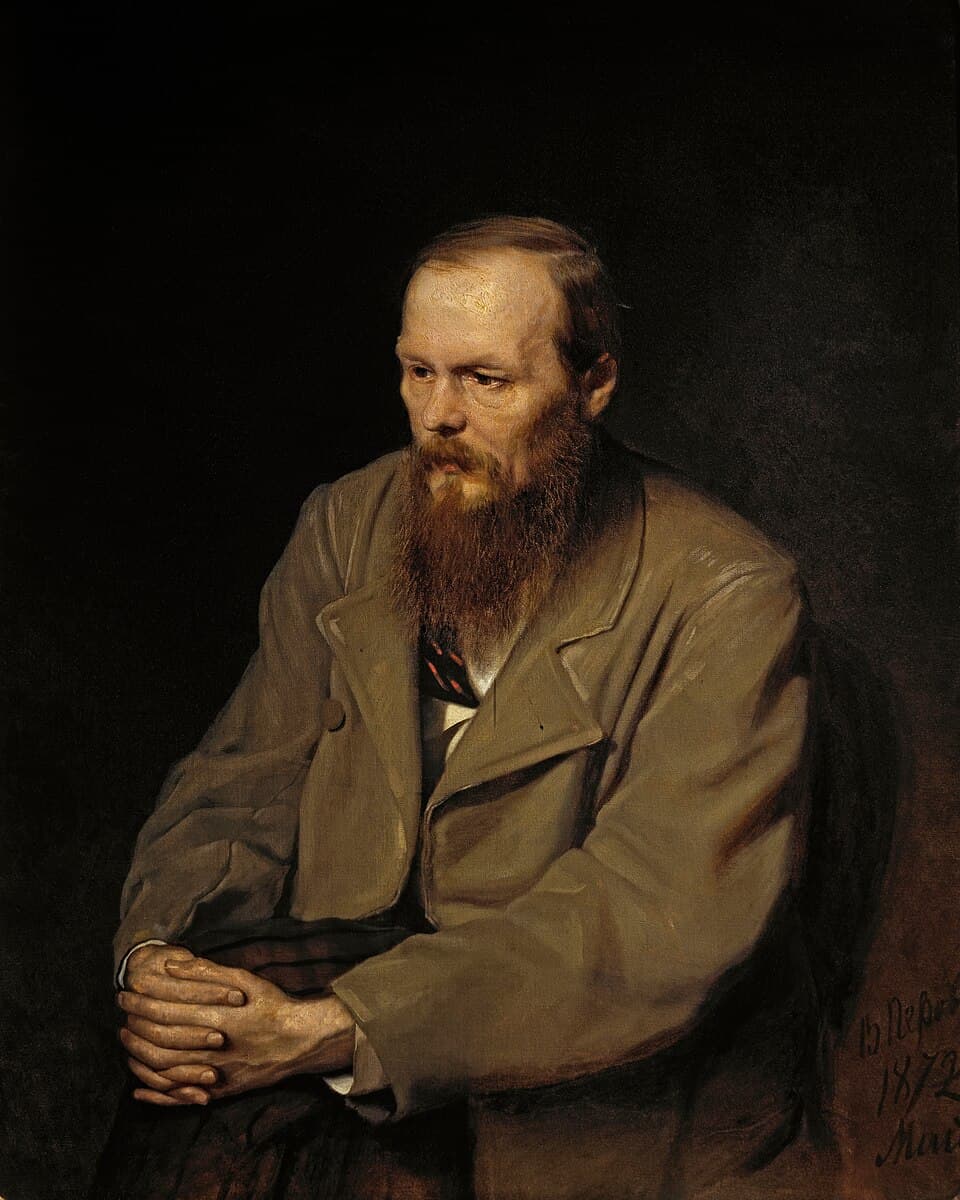

Dostoyevsky is the writer who makes you feel like a fool for ever thinking you understood loneliness.
I started this collection on a Sunday evening, grading a stack of sophomore essays about symbolism in The Great Gatsby — half of them insisting the green light means money, the other half copying SparkNotes — and somewhere around the second night of White Nights, I set my red pen down and just... listened. The unnamed narrator wandering St. Petersburg, building an entire cathedral of feeling around a woman he's known for four evenings. Four. And Dostoyevsky makes you believe it. Makes you remember every time you were twenty-two and convinced that a stranger's smile was the architecture of your future. My students would hate this. I love it. I had a similar moment of unexpected surrender reading One Night: Promised — a much different book, obviously, but it shares that same quality of making you feel slightly embarrassed by how completely it got to you.
The Stories Nobody Talks About
Here's what surprised me: everyone comes to this collection for White Nights and Notes from the Underground — the hits, the greatest-hits-album tracks — but the deep cuts are where Dostoyevsky gets genuinely weird and wonderful. "A Christmas Tree and a Wedding" is barely a short story. It's more like a sketch, a snapshot of a man calculating a young girl's dowry at a holiday party with the precision of an accountant and the hunger of a predator. It's chilling in about twelve minutes. "Polzunkov" is this strange, almost comic piece about a man who can't stop humiliating himself, and you're laughing until you realize you're not. "Mr. Prohartchin" — and I'll be honest, I had to rewind sections of this one — is Dostoyevsky doing something genuinely odd with a miserly clerk whose death reveals a fortune stuffed in his mattress. It's Gogol by way of a fever dream.
The collection spans early and middle Dostoyevsky, before he wrote the doorstop novels that made him immortal, and you can hear him working things out. The psychological obsessions are already there — the self-torture, the paralysis of overthinking, the way his characters build prisons out of their own consciousness. Notes from the Underground is the obvious centerpiece, the proto-existentialist rant that Sartre and Camus would later raid like a philosophical buffet. But hearing "A Faint Heart" — about a young clerk so overwhelmed by his boss's kindness that he literally loses his mind — that's the story that stopped me cold during a Wednesday faculty meeting. (Sorry, Principal Martinez. Your remarks about the new attendance policy were very important, I'm sure.)
The LibriVox Bargain — What You Pay For and What You Get
Let's talk about what the author is really saying versus what you're actually hearing. This is a LibriVox production, which means volunteer narrators, which means free, which means — and I say this with genuine affection for the project — you get what you get. The quality varies. Some volunteers read Dostoyevsky like they understand that pause is punctuation, that the space between a character's thoughts matters as much as the thoughts themselves. Others read it like they're working through a to-do list.
The multi-narrator approach creates an odd effect with a short story collection: each story essentially gets a fresh voice, which actually works better here than it would in a novel. You're not jarred by a narrator switch mid-character. But the inconsistency in audio quality is real — some chapters sound like they were recorded in a proper studio, others in what I can only describe as a room with a ceiling fan. There are pronunciation wobbles with Russian names that made me wince (the way one narrator handles "Prohartchin" versus another is... an experience). And the pacing swings from measured and careful to rushed, sometimes within the same story.
But here's the thing I kept coming back to: these are Dostoyevsky's words, and the prose deserves to be savored even through imperfect delivery. At 1.0x speed — always 1.0x, I will die on this hill — the literary power of these stories punches through the production limitations. Not always gracefully. But it punches through.
Who Gets the Assignment (And Who Gets a Pass)
If you've never read Dostoyevsky and want to start, White Nights alone is worth the listen — it's compact, devastating, and surprisingly modern in its emotional honesty. If you already know Notes from the Underground from a college syllabus and want to hear it performed rather than just parsed, this delivers that, uneven edges and all. If you loved Crime and Punishment as a novel but found the audiobook commitment intimidating, this collection is its spiritual predecessor — shorter doses of the same psychological intensity.
But if inconsistent audio quality pulls you out of a story, or if you need professional narration to stay engaged through dense 19th-century prose — and there's no shame in that — spend the credit on a professionally produced edition instead. This is a library-loan listen, not a keeper.
The Red Pen Stays Down
Denise found me on the couch at midnight, headphones in, papers ungraded, listening to the final pages of White Nights for the second time. She asked if I was okay. I told her Dostoyevsky wrote about a man who was happy to have been heartbroken because at least he'd felt something real. She said that sounded like something I'd say on my podcast. She's not wrong. This is why we still read the classics — because a Russian writer dead for 143 years can still make a tired English teacher in Chicago forget about his red pen.