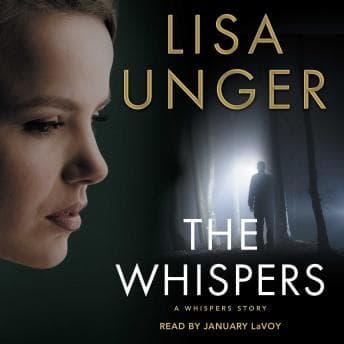

So here's the thing — I picked this up thinking it was fantasy. The Hollows? Psychic visions? Sounds like urban fantasy to me. I was three-deep into a board game night with my old D&D crew (we were running a one-shot because nobody prepped for the actual campaign, classic), and I threw this on during my drive home expecting something with maybe a magic system or at least some paranormal worldbuilding I could sink my teeth into.
What I got was... different. Not bad different. Just not what my brain was wired for at 11:30 PM on a Georgia backroad.
Grief as a Catalyst Is Doing a Lot of Heavy Lifting Here
Lisa Unger's setup is pretty straightforward — Eloise Montgomery loses her husband and oldest daughter in an accident, and in the aftermath, psychic abilities start surfacing. It's less "Sanderson-level magic system" and more "quiet literary thriller wearing a paranormal coat." There's no explanation of how the visions work, no rules, no limitations laid out. If you're like me and you want your supernatural elements to come with a stat block — or at least some internal logic — you're going to feel a little unmoored.
But here's where I have to be honest: the emotional core actually works. Unger writes grief in a way that feels heavy and real, not melodramatic. Eloise isn't some chosen-one archetype who picks up her powers and runs with them. She's broken, confused, and trying to keep her surviving daughter from drowning in the same sadness. The psychic visions feel less like a superpower and more like another thing she didn't ask for — another burden stacked on top of the worst thing that's ever happened to her. That landed for me, even as I kept waiting for the worldbuilding to kick in.
The "saving lost women and girls" element is more of a promise for the larger trilogy than something fully realized here. This is a 98-minute origin story, and it knows it. You're getting the setup — the tragedy, the first flickers of ability, Eloise starting to figure out what she can do. It's a prologue dressed up as a novella.
January LaVoy Carries a Lot on Limited Runtime
I didn't have strong expectations for the narration going in, and LaVoy surprised me. She doesn't do the kind of showy voice work that makes my narrator-obsessed brain light up — this isn't Steven Pacey territory where every character sounds like a different human being. But that's not really what this story needs. What LaVoy does well is emotional modulation. She shifts Eloise's voice from numb to terrified to cautiously hopeful across a pretty tight runtime, and it never feels forced.
The tragedy beats especially — LaVoy reads them with this restrained quality, like she's holding back instead of pushing for maximum tears. It makes Eloise feel like a real person processing real loss instead of a character performing sadness for the audience. For a story this short, that restraint keeps you from feeling manipulated.
No sound effects, no music, no production gimmicks. Just a single narrator doing solid, clean work. Nothing to complain about, nothing that made me rewind to catch something I missed.
The Short-Form Problem (And Why I'm Still Thinking About It)
Here's my actual frustration: at an hour and thirty-eight minutes, this is barely a snack. I listen to 40-hour epics where authors spend more time on a single battle than Unger spends on this entire story. So my instinct is to say "this is too thin, give me more." And structurally, yeah — it's thin. You get the inciting trauma, some psychic awakening, and then it's basically saying "okay, now go buy the next two novellas."
But — and I kept coming back to this during my drive — the brevity actually works for the tone. Grief doesn't explain itself. Psychic visions, in this story, don't come with a manual. The short runtime mirrors Eloise's confusion. You're dropped in, things happen that don't fully make sense yet, and then it's over and you're sitting with it. Left To Die drops you into its mystery with that same disorienting speed, though it leans harder into plot mechanics than emotional atmosphere. That's... kind of effective? Even if it left my worldbuilding-hungry brain wanting.
I read this instead of writing my thesis. Well, listened. For less than two hours. Dr. Patel can't even be mad about that one.
Who Gets the Most Out of This
If you're a fantasy reader who needs hard magic systems and detailed lore — this isn't for you, and I say that as one of those people. But if you like paranormal elements used as metaphor for real human pain, and you want something you can finish in a single listening session, LaVoy and Unger deliver a tight, emotionally honest piece. It's a gateway into The Hollows series, not a destination. Think of it like a character backstory session before the real campaign starts — necessary, occasionally moving, but you're really here for what comes next.
My D&D group would probably roll their eyes at this one. But I'm weirdly glad I listened to it.