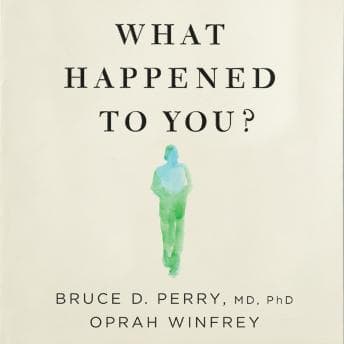

I'll admit it—I've been skeptical of Oprah's forays into psychology. Not because she lacks insight (the woman has interviewed more trauma survivors than most clinicians ever will), but because celebrity + science often equals oversimplification. So I went into What Happened to You? with my researcher guard up.
I was wrong. And honestly? I'm glad.
The Question That Changes Everything
Here's the thing about trauma psychology—we've been asking the wrong question for decades. "What's wrong with you?" puts the burden on the individual. It implies brokenness. Dr. Perry's reframe—"What happened to you?"—isn't just semantics. It's a fundamental shift in how we understand human behavior, and the research backs this up completely.
I found myself nodding along during my morning jogs through Cambridge, probably looking unhinged to other runners. But Perry explains the neurobiology of trauma in a way that's accessible without being dumbed down. He talks about how early experiences literally shape brain architecture, how our stress response systems get calibrated in childhood. This isn't pop psychology. This is the real science, presented by someone who's spent decades in the trenches.
What makes this work is the conversational format. Perry will explain a concept—say, the sequential processing model of the brain—and then Oprah will share a personal story that illustrates it. Her vulnerability here is... actually remarkable. She doesn't hold back about her childhood abuse, her struggles, the patterns she developed. It's not performative. It reads as someone genuinely trying to understand her own history through this framework.
Two Voices, One Coherent Message
Some listeners apparently find it feels like a podcast. They're not wrong—it does have that intimate, conversational quality. But I'd argue that's a feature, not a bug. Trauma is inherently relational. Healing happens in connection. Having two voices in dialogue models exactly what the book advocates.
Oprah's narration is warm and grounded. Perry's is more measured, clinical but never cold. They complement each other well. There were moments where I wished Perry would go deeper into the research—my academic brain wanted more citations, more studies—but I reminded myself this isn't written for psychology researchers. It's written for the person commuting to work who's wondering why they keep repeating the same patterns.
The pacing felt right for the content. At 8+ hours, it's substantial, but I never felt like they were padding. Each section builds on the last. I listened over about two weeks, and honestly, I think that spacing helped. This isn't content you want to rush through. (My therapist would probably agree with that assessment.)
Content Warnings and Who Should Listen
Look, I need to be direct here. This book discusses childhood sexual abuse, domestic violence, suicide, addiction—the full spectrum of adverse childhood experiences. Oprah shares her own experiences with sexual abuse. Perry discusses cases from his clinical work. If you're in a fragile place with your own trauma processing, maybe have a conversation with your therapist before diving in.
But for people who are ready—whether you're a survivor trying to understand yourself, a parent wanting to break cycles, or a professional who works with trauma populations—this is genuinely valuable. The science is solid. The applications are practical. And the underlying message—that our behaviors make sense when viewed through the lens of our experiences—is both validating and hopeful.
I found myself thinking about my own research differently after listening. The characters I analyze in fiction, the patterns I identify—they all exist because authors (consciously or not) understand that behavior has context. That's exactly what makes Holes so psychologically rich—Louis Sachar builds an entire narrative around how trauma and injustice ripple across generations. Perry and Oprah are making explicit what good storytellers have always known: we are shaped by what happens to us.
The audiobook format works particularly well here because you're literally hearing two people in relationship, processing ideas together. That's the model they're advocating for—regulated, connected conversation as a healing tool. Meta? Sure. But effective.
The Academic's Verdict (With Caveats)
Would I assign this to my students? Probably as supplementary reading. Would I recommend it to my mother, who still doesn't fully understand why I study what I study? Actually, yes. This might be the book that bridges that gap.
Just maybe warn her about the content first. And have tissues ready.