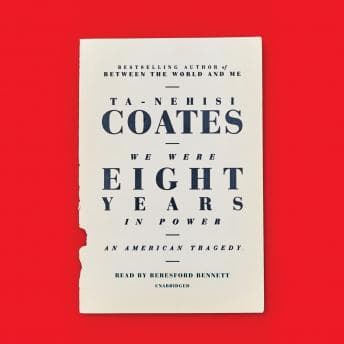

Look, I usually stick to murder mysteries because real life is scary enough. But sometimes you have to face the music. Or in this case, the 13-hour audio essay collection that explains exactly why the American psyche is currently fracturing.
I listened to We Were Eight Years in Power while jogging through Cambridge, passing perfectly manicured lawns and "In This House We Believe" signs. The cognitive dissonance was real. Coates isn't writing a history book here; he's conducting a psychological autopsy on the Obama era. And frankly, the results are grim.
The Voice in My Head (That Isn't Coates)
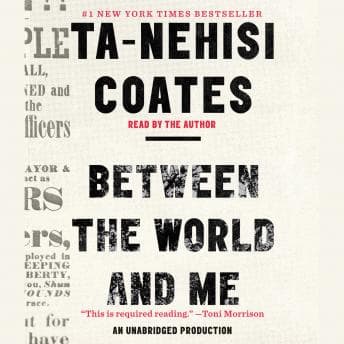
Here's the thing about audiobooks for memoirs or personal essays: I want the author. I want the person who lived it. Ta-Nehisi Coates narrated Between the World and Me himself, and it was intimate. Here, we get Beresford Bennett.
Bennett is... distinct. He has this cadence—some reviews call it a "Southern drawl," others call it passionate. To me? It felt like a performance. A good one, mostly. He brings a certain gravitas that fits the "tragedy" in the subtitle. But—and this is just me being picky about auditory processing—there were moments where the accent felt a bit distracting. Like, I found myself focusing on how he said a word rather than what Coates was arguing.
(My therapist would probably say I'm projecting my need for authenticity onto a narrator who is just doing his job. She's usually right, but still.)
If you're expecting the author's own voice, you might need an hour to adjust. Once I stopped comparing him to the version of Coates I have in my head, Bennett actually handles the emotional weight pretty well. He doesn't rush. He lets the anger sit there.
The Psychology of "Whitelash"
From a psychological perspective, this book is a case study in group identity and reaction formation. Coates argues that Trump wasn't an accident; he was a direct, inevitable psychological response to Obama. The "First White President" essay? Chilling.
It tracks. Human beings hate losing status. The research backs this up—status anxiety drives irrational behavior. Listening to Coates lay out the timeline, connecting the dots from the "Good Negro Government" of the Reconstruction era to the Obama White House, I felt that familiar tightness in my chest. You know the one. It's the feeling of realizing the pattern was there the whole time, and we were just too optimistic to see it.
There are moments—specifically in "The Case for Reparations"—where the data is so dense I almost zoned out. Not because it's boring, but because it's overwhelming. Bennett keeps the energy up, but you can't listen to this passively. If you're multitasking, you're gonna miss the thread.
Who This Is (and Isn't) For
If you liked The New Jim Crow or The Warmth of Other Suns, this is your next listen. Skip it if you need your audiobooks to be background noise—this one demands your full attention. And maybe don't queue it up right before bed. It's not exactly a lullaby.
Closing the Case File
Is it a "fun" listen? Absolutely not. It's heavy. It's like sitting down with your smartest, most pessimistic friend who refuses to let you look away from the car crash.
But it's necessary. My mother always asks why I read such dark stuff. "Priya, why do you want to be sad?" It's not about being sad, Maa. It's about understanding the mechanism. You can't fix the machine if you don't know how it broke.
If you want a psychological deep-dive into a different kind of American tragedy, Too Much and Never Enough dissects the Trump family dynamics with clinical precision.