
I started this audiobook on a long drive home after visiting family, and honestly, I wasn't sure a YA love triangle was going to hold my attention for three hours of highway. I was wrong. By the time I pulled into my driveway, I sat in the car for another twenty minutes because I couldn't bring myself to pause it during one of the climactic scenes where Belly is wrestling with the biggest decision of her young life.
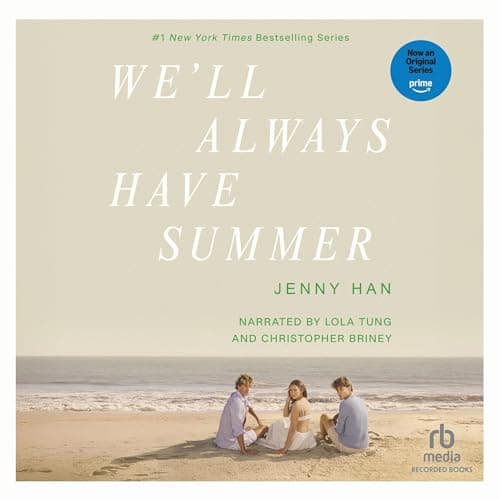
We'll Always Have Summer wraps up Jenny Han's The Summer I Turned Pretty trilogy, and it does so with the kind of emotional urgency that makes six hours feel like two. Belly has been with Jeremiah for two years now, and things seem settled — until they very much aren't. When a sudden decision to make things permanent forces everyone's hand, Conrad finally has to reckon with what he lost. The setup isn't complicated, but that's the point. Han strips the story down to its emotional core: two brothers, one girl, and a choice that will permanently reshape every relationship involved.
What surprised me most was how much the narration elevated material I might have otherwise breezed through on the page. Having Lola Tung and Christopher Briney — yes, the actors from the Prime Video adaptation — voice Belly and Conrad is genuinely inspired casting. Tung gives Belly this quality that walks a razor-thin line between youthful impulsiveness and real emotional intelligence. Her voice has a warmth to it, almost a softness, that makes you root for Belly even when she's making decisions that would drive you crazy if your best friend told you about them over coffee. She captures the vulnerability of a young woman who knows she's about to hurt someone she loves no matter what she chooses, and that awareness sits in every line reading.
Briney, meanwhile, does something really interesting with Conrad. This is a character who communicates more through what he doesn't say, and Briney uses pauses and shifts in tone to let you feel Conrad's internal struggle without spelling it out. There are moments where you can hear the restraint in his voice crack just slightly, and those are the moments that got me. If you've watched the show, you'll recognize these performances, but there's something more intimate about hearing them in your ear without the visual distraction. You're forced to sit with the emotions rather than watch them.
Now, here's where I have to be honest about the story itself. This is the shortest book in the trilogy at just over six hours, and you can feel it. The pacing moves quickly — which works for most of the book, building that breathless sense of inevitability — but the ending arrives faster than the emotional groundwork fully supports. I wanted more time in the resolution. More breathing room to process what happened. Han clearly knows where she wants things to land, and the destination feels right, but the last stretch reads like she's sprinting toward it. A few listeners I came across felt the same way, wishing for even one more chapter to let things settle.
There's also a fair argument that if you've already watched the TV adaptation, some of the character development feels thinner here. The show had time to expand on backstory and secondary characters in ways a six-hour audiobook simply can't. The flip side? The audiobook offers something the show doesn't: direct access to Belly's internal monologue and Conrad's private thoughts, delivered by performers who clearly understand these characters on a cellular level.
What struck me as I listened was how well Han handles the love triangle without making either brother a villain. It would be so easy to stack the deck, to make one choice obviously right and the other obviously wrong. Instead, she lets both Jeremiah and Conrad be fully realized people with legitimate claims on Belly's heart. The result is that you genuinely don't know which way things will go, and when the answer finally comes, it feels earned rather than predetermined. Let Me Love You pulls off something similar — that same refusal to make one love interest obviously wrong — and it hit me just as hard.
The dual narration format works well here. Switching between Belly's and Conrad's perspectives gives the story a depth that a single narrator couldn't achieve. You understand the situation from both sides, and that understanding makes the inevitable heartbreak land harder because you've lived inside both characters' hopes.
Who Should Listen (And Who Should Skip)
If you've read or listened to the first two books in the trilogy, this is a no-brainer — you need the ending. Fans of the Prime Video show who want to hear Tung and Briney in a more intimate format will get something genuinely different here. Skip it if you need your romance novels to have slow, drawn-out resolutions; the ending comes in hot, and that rushed final stretch will frustrate you.
Is this the strongest YA romance audiobook I've ever heard? No. But it's one of the most emotionally satisfying trilogy conclusions I've come across, carried by two narrators who bring genuine feeling to every scene. The production is clean, the pacing mostly works, and the emotional payoffs — particularly in the final act — hit with real force. I found myself thinking about it for days afterward, which is more than I can say for most books twice its length.