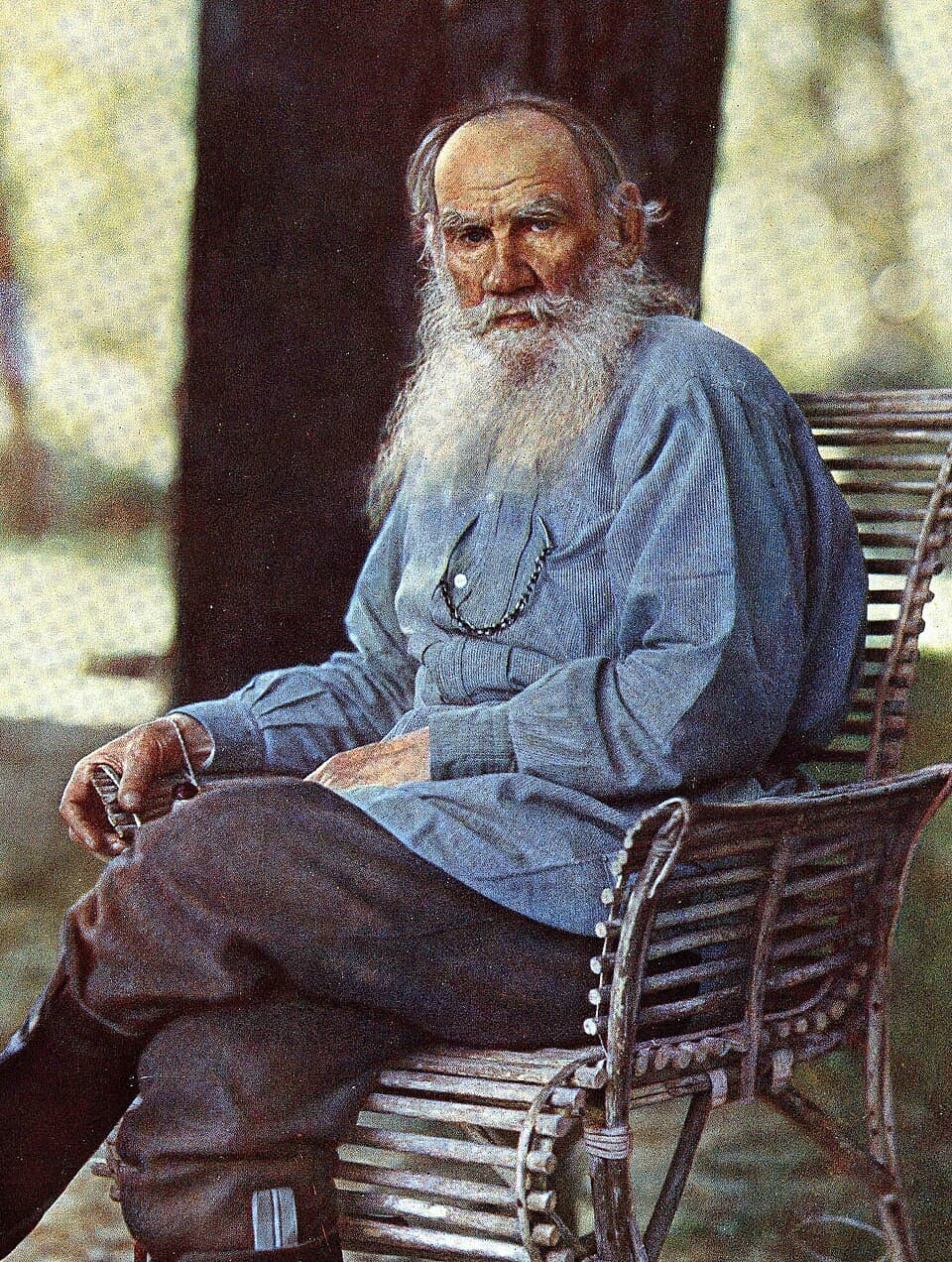

There's something beautifully absurd about listening to Tolstoy while grading sophomore essays on symbolism in The Great Gatsby. One student wrote that the green light represents "Gatsby's love of money and also maybe Ireland." Meanwhile, in my earbuds, Tolstoy is dismantling Napoleon's hubris with the precision of a surgeon who's also somehow a philosopher-king. The contrast was almost too much.
Book 14 of War and Peace covers 1812—the burning of Moscow, the French retreat, the moment when history pivots and everyone knows it. This is Tolstoy at his most panoramic and his most intimate simultaneously. Two hours and nine minutes. That's it. And yet.
The LibriVox Gamble
Let's be honest about what we're dealing with here. LibriVox is volunteer reading, which means you're essentially accepting a potluck dinner invitation. Sometimes you get Aunt Martha's legendary casserole. Sometimes you get that weird gelatin thing your cousin brings.
I've heard complaints about LibriVox's War and Peace recordings—readers who overcook the drama, voices that slip into what I can only describe as "storytime for toddlers" mode, volume levels that jump around like my students' attention spans during last period on Friday. Book 14 has multiple volunteers, which compounds the inconsistency. One reader might deliver Tolstoy's philosophical digressions with appropriate gravity; the next might sound like they're reading a grocery list in a windstorm.
But here's the thing my students never understand when I assign audiobooks as an option: imperfect delivery doesn't negate great writing. The words are still Tolstoy's words. The ideas still land. You just have to work a little harder sometimes.
What Tolstoy Is Actually Doing Here
This reminds me of what Hemingway said about Tolstoy—that he could make the movement of troops as interesting as the movement of a man's mind. Book 14 proves it. The French are retreating. Moscow is burning. And Tolstoy keeps pulling back to ask: but what does this MEAN? Who actually controls history—the generals who think they're making decisions, or the thousands of individual soldiers just trying to survive until dinner?
My students would hate this. I love it.
Tolstoy's argument that Napoleon wasn't really in control of anything—that historical "great men" are actually just surfing waves they didn't create—feels uncomfortably relevant. (Principal Martinez, if you're reading this, I'm not making a comparison. Mostly.)
The prose deserves to be savored, even filtered through volunteer readers of varying skill. There's a reason we still read the classics, and it's not because English teachers are sadists who enjoy watching teenagers suffer. I make the same argument when my students complain about To Kill a Mockingbird—some books teach you how to see the world differently, and that's worth the effort. Sentences like Tolstoy's—the way he can zoom from a burning city to a single soldier's hunger to the entire arc of European civilization in three paragraphs—that kind of writing teaches you how to think.
The Two-Hour Commitment
At just over two hours, this is essentially a single long walk along the lakefront. Denise and I did exactly that last Sunday—she was listening to some true crime podcast, I was listening to Napoleon's army freeze to death. We held hands. Marriage is weird.
The short duration makes the LibriVox inconsistencies more tolerable. You're not committing to forty hours of variable quality. You're getting a concentrated dose of one of literature's most pivotal moments, read by people who cared enough to volunteer their time and voices. There's something touching about that, actually—strangers across the world, recording themselves reading Tolstoy in their bedrooms and home offices, contributing to this massive collaborative project.
Is it the Audible production with a single professional narrator? Obviously not. But it's free, it's accessible, and it's Tolstoy.
Who This Is (and Isn't) For
If you're working through War and Peace in chunks (the only sane approach), this is essential. If you want to understand why 1812 matters—not just historically but philosophically—Tolstoy's your guy. Skip this if you need professional polish and consistent delivery; look elsewhere and prepare to pay for it.
If you're a high school English teacher who needs something to drown out the sound of your own red pen scratching "unclear antecedent" for the four hundredth time—well, you could do worse.
Worth Pausing the Faculty Meeting For
LibriVox's War and Peace isn't a revelation. It's a service—a free, imperfect, genuinely valuable service. The volunteer readers are doing their best with some of the most demanding prose in the Western canon. Some succeed beautifully. Some don't. But Tolstoy survives the translation from page to voice, from professional to amateur, from 1869 to whatever year you're reading this.
My mom will probably fall asleep during this review. But she'd be proud I'm still finding Tolstoy in the margins of my grading life. And honestly? That's enough.