
What happens to a person's identity when the body they've built their entire career around starts betraying them?
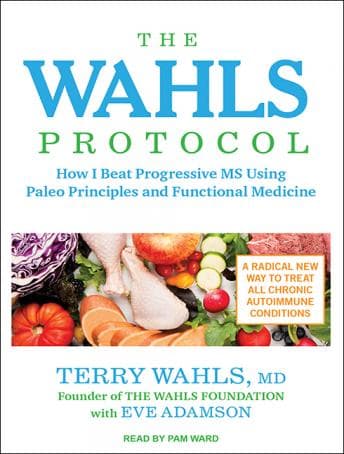
I was chopping vegetables for chana masala - alone, by choice, my preferred Saturday situation - when Dr. Terry Wahls started describing the moment she realized her tilt-recline wheelchair was no longer a temporary arrangement. It was going to be her life. And something in the way she narrates that shift - from physician who fixes people to patient who can't fix herself - stopped me mid-dice. Because psychologically, that's one of the most devastating identity collapses a person can experience. The research actually shows that when professionals lose the ability to perform the role that defines them, it triggers grief responses nearly identical to bereavement. Wahls doesn't use that clinical language, but she's living it on every page.
The Doctor Who Became Her Own Case Study
The protagonist exhibits classic what-psychologists-call "biographical disruption" - that moment when chronic illness forces you to rewrite the story you tell about yourself. What makes Wahls fascinating as a narrator of her own experience (and I mean narrator in the psychological sense, not the audiobook sense) is that she doesn't wallow. She pivots. She takes the same obsessive research brain that made her a clinical professor at the University of Iowa and aims it squarely at her own mitochondria. There's something almost manic about the way she describes diving into autoimmune research, hunting down every paper on brain biology and nutrient density. I found myself asking: is this a woman healing herself, or a woman refusing to grieve the body she lost? Probably both. That's what makes it honest.
The protocol itself - the actual dietary frameworks, the three levels of increasing restriction, the neuromuscular electrical stimulation component - takes up the bulk of these twelve hours. And look, I'm a psychology person, not a nutritionist. I can't evaluate whether nine cups of vegetables a day will fix your myelin sheaths. But I can tell you that Wahls structures her argument the way a good researcher should: personal story first to earn trust, then mechanistic explanation, then actionable steps. She's not just telling you to eat more kale. She's explaining why sulfur-rich vegetables matter for your cellular detox pathways, why organ meats specifically provide the coenzyme Q10 your mitochondria are starving for. Whether you buy the science or not, the architecture of persuasion here is genuinely sophisticated.
Twelve Hours Is a Lot of Vegetables
Here's where I have to be real. At twelve hours, this audiobook demands commitment. The middle sections - where Wahls walks through specific food lists, supplement recommendations, and meal planning - are dense. Like, textbook-dense. Pam Ward's delivery is clean and professional (she's an Alexander Scourby Award winner, which is basically the Oscars for audiobook narration for the visually impaired community), and she handles the medical terminology without stumbling. But no narrator alive can make a lengthy enumeration of B-vitamin food sources feel electric. Though I have to say, Pam Ward's talent for delivering dense information without lulling you to sleep served her well in Pretty Little Killers, a true crime case study that benefits from her steady, clinical tone. I found my attention drifting during the protocol-heavy chapters and snapping back during the patient case studies and Wahls's own recovery milestones - like the moment she went from wheelchair to bicycle, eighteen miles in a single day. That's the stuff that lands.
Psychologically, this doesn't track as a simple health manual. It's a narrative about agency. About a woman who refused the story conventional medicine was writing for her - progressive decline, manage symptoms, accept limitations - and wrote a different one. My therapist would have thoughts about this character. Specifically about whether the relentless optimization mindset is empowerment or a sophisticated avoidance of acceptance. It's a question that cuts to the heart of Learned Optimism, where Seligman explores whether we can train ourselves out of helplessness—or whether relentless positivity is its own kind of denial. I suspect the answer is: it doesn't matter, because she's biking eighteen miles and she wasn't supposed to walk again.
Who This Is Actually For (And Who Should Probably Skip)
If you or someone you love has MS or another autoimmune condition, this is pretty much required listening. Not because it's a guaranteed cure - Wahls herself is careful about those claims - but because it represents a coherent, research-backed framework that complements conventional treatment. If you're a general wellness enthusiast looking for a quick paleo overview, this is way too specialized and way too long. You'll be bored by hour three. And if you need your health books delivered with podcast-bro energy and constant motivation hits, Pam Ward's steady, almost clinical delivery will not scratch that itch.
The Case File, Closed
This is a fascinating case study in what happens when a scientist turns the lens inward. The personal narrative is genuinely powerful - the identity reconstruction alone is worth the first few hours. The protocol sections are thorough to a fault, which is either a feature or a bug depending on why you're here. I kept coming back to something Wahls says early on: that she had to become the expert on her own disease because no one else was going to do it for her. That's not just a medical statement. That's a psychological one. And it's the kind of quiet defiance that sticks with you longer than any food list ever could.