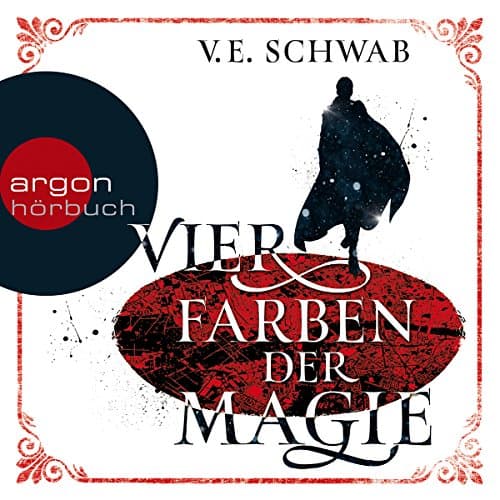

Everyone kept telling me this was a fantasy darling — all worldbuilding candy, light on the dark stuff. And sure, on paper, Vier Farben der Magie reads like a portal fantasy adventure. But I was shelving returns at the library Tuesday evening, earbuds in, and when Kell crossed into Schwarzes London — that dead, magic-consumed husk of a world — I stopped mid-cart. Just stood there between the biographies and large-print romances like an idiot, because Schwab doesn't treat that dead London like set dressing. She treats it like a warning. Like a grave you can walk through. And that? That understands that horror isn't about gore — it's about dread.
Let me back up. This is V.E. Schwab's multiverse London concept: four parallel cities layered on top of each other, separated by walls of magic. Red London is lush and thriving. Grey London is basically our mundane Georgian reality. White London is a brutal authoritarian nightmare where magic is hoarded and weaponized. And Black London is the void — the city that let magic consume everything until nothing remained. Kell, one of the last Antari (blood magicians who can travel between worlds), works as a royal courier between them. He also moonlights as a smuggler, which is how he ends up with a cursed black stone that half the multiverse wants to kill him for.
The conceit is brilliant, and I mean that structurally. Each London has its own texture, its own rules, its own kind of danger. Schwab color-codes her entire magic system and makes it feel intuitive rather than gimmicky. When Kell cuts his arm and uses blood to open a door between worlds, there's a visceral cost to the magic that kept me anchored even during the more swashbuckling sequences.
Delilah Bard Is the Knife This Story Needed
Here's where the book really woke up for me: Lila Bard. Schwab introduces her as a Grey London pickpocket who robs Kell almost immediately after meeting him, and she's not charming-thief-with-a-heart-of-gold. She's feral. She wants out — out of Grey London, out of her small life, out of the world she's stuck in. That same cornered-animal hunger is exactly what I found in Demon Magic and a Martini — a protagonist who claws her way into a magical world she has no business surviving, and owns every second of it. When she negotiates her way into Kell's mission (basically blackmailing a blood magician, which takes nerve), the dynamic shifts from solo quest to something much more volatile. Their chemistry isn't romantic here — it's two people who don't trust each other forced into mutual dependence. And Schwab lets that friction breathe instead of resolving it neatly.
The White London sequences with the Dane twins — those twin tyrants ruling through cruelty and magic theft — gave me genuine chills. Schwab writes power as something that corrodes, and the Danes are walking proof. They're not complex villains with tragic backstories. They're what happens when magic becomes currency and empathy becomes liability.
Peter Lontzek — Steady Hand, Missing Pulse
So. The narration. Peter Lontzek is a good fit for this material in a lot of ways — his voice has this measured, slightly dark quality that works for Kell's restrained personality and for the atmospheric passages describing each London. When he's narrating worldbuilding or action, the pacing feels right. He reads with precision.
But — and my podcast listeners have heard me say this before about German-language audiobook narrators — precision isn't the same as commitment. When Lila Bard is supposed to be sharp and dangerous and desperate, Lontzek delivers her lines competently but without that edge. I wanted teeth. I wanted to hear the hunger in her voice when she realizes magic is real and she can have it. Instead I got... pleasant reading. Same with the emotional beats between Kell and his adoptive brother Rhy — there's a tenderness in the text that the narration glides over rather than sitting inside.
He commits to consistency rather than emotional range, and for a story about someone who literally bleeds to do magic, I needed more blood in the performance.
Who Should Listen (And Who Should Skip)
If you love portal fantasy that actually interrogates what different worlds cost — the way magic can be abundance or weapon or extinction — you're going to eat this up. If you want a heroine who earns her place through audacity rather than destiny, Lila Bard is your person.
Skip this one if you need a narrator who delivers full emotional range and distinct character voices — Lontzek's approach will frustrate you. And if you need breakneck pacing from page one, know that Schwab takes her time building the four Londons before the plot catches fire around the midpoint.
I listened past midnight, Shirley curled on my chest, the apartment dark. The Black London scenes hit different that way. Schwab gets something fundamental about what makes magical worlds terrifying — not the monsters in them, but the absence of everything that used to be there. Shirley Jackson walked so this author could run, at least when it comes to understanding that emptiness is scarier than any creature.
My podcast listeners are going to love this — I'm already planning an episode on horror elements hiding inside portal fantasy. This book is the exhibit A I didn't know I needed.