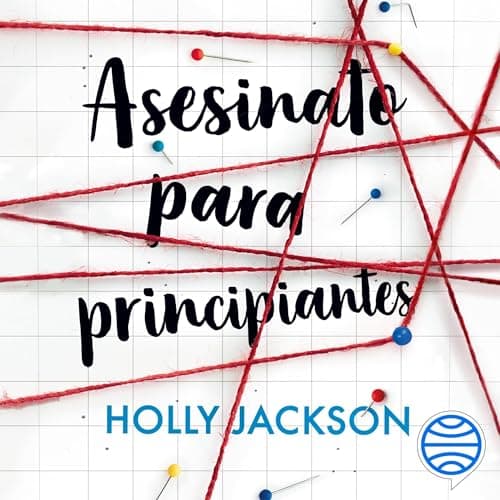

I started this one on the downtown 6 after a brutal overnight, still in scrubs, trying not to miss my stop while Pip kept getting that same message in my ear: ¿Quién te buscará cuando seas tú la que desaparezca? Bad choice for a sleep-deprived subway ride, honestly. I kept looking up from my phone like somebody was behind me. That’s the kind of book this is.
Pip stops being the girl with answers
What makes Venganza para víctimas hit differently from the first two books is that Pip isn’t just investigating danger anymore. She’s living inside it. And Holly Jackson leans hard into that shift. The whole engine of the story is this ugly, persistent feeling that Pip’s usual intelligence and control may not save her now - because the threats are personal, repetitive, and escalating, and because the stalker’s behavior starts echoing a killer who supposedly should be locked away.
That premise alone is strong. But the part that worked for me was how ugly it lets Pip become. Not “ugly” as in badly written. Ugly as in frayed, obsessive, suspicious, exhausted. Which - yes - some listeners hated. I get why. If you wanted the cleaner, sharper version of Pip from earlier books, this installment may irritate you. She spirals. She makes choices from fear. She feels less reliable, less pleasant, more chemically and psychologically strained. The slow psychological unraveling of a character who knows too much and trusts too little is something I also watched play out - with much messier consequences - in Killing Mr. Griffin, where the spiral starts from a place of control too. But that actually tracked for me. As someone who’s actually run a code, I have very little patience for thrillers where trauma happens on page and then the main character just keeps functioning like a well-rested detective with perfect emotional regulation. That’s not how bodies work. That’s not how minds work either.
So when this book lets the consequences show - paranoia, tunnel vision, the sense that every message and shadow means something - I bought it. Maybe not every beat, but enough.
Darker, denser, and not built for half-listening
This is not the breeziest entry in the series. You need to pay attention. There were a few stretches where the plot feels dense in exactly the way some listeners warned about: you’re following threads of stalking, old crimes, new suspicions, and the possibility that the wrong person is sitting in prison while the real predator is still moving around freely. If your brain drifts for even a couple minutes, you can come back feeling like, wait - who knows what now?
I listened to a chunk of it between shifts and salah, and this kept me going - but only when I gave it my full attention. This is not your “fold laundry and casually tune in” thriller. It asks you to lock in.
The payoff, though, is real. Especially if you’ve been with the series from the beginning. One of the smartest choices here is the way events reportedly loop back toward the first book and close that circle. I’m trying not to spoil anything, but the satisfaction comes less from one flashy twist and more from the architecture of the whole trilogy tightening around Pip. You feel the walls closing in. Then you see how long some of those walls have been there.
And yes, the ending has teeth. Not cheap shock. Actual consequences.
Helena Roura knows this isn’t a game
There isn’t a ton of detailed production info out there on Helena Roura’s performance, so I’m not going to fake a paragraph about accent shading that nobody documented. What I can say: this is a solo narration that seems to understand the assignment. Roura’s strength is emotional pressure. She reads this like a story that has moved past teen sleuth fun and into something more claustrophobic and bruised.
That matters here. Because if the narrator played Pip too cool, the whole book would collapse. Instead, from what I heard, the delivery supports the darker turn - fear sounds like fear, not melodrama. Urgency sounds earned. The audiobook also benefits from clean, distraction-free production. No gimmicky music, no fake-crime-podcast effects trying to oversell tension. Just voice and momentum.
Would I call it a wildly transformative narration performance? No. And the research doesn’t support that either. I didn’t come away thinking, wow, every side character had an instantly iconic vocal identity. What I did think was: good, she understands the emotional weather of this book. Sometimes that’s enough. Especially in a thriller where tone is half the battle.
You’ll either buy Pip’s unraveling or you won’t
This is the dividing line.
If you can accept a final trilogy entry that gets messier, meaner, and more psychologically cornered, there’s a lot here for you. The recurring threat message is memorable. The imprisoned-killer angle gives the story moral tension beyond simple stalking. And the fact that listeners reported laughter, tears, tension, even nightmares? Yeah, that scans. This book wants you unsettled.
If you need your protagonist consistently likable, or you want a straightforward thriller with easy signposts, this may be the one where you hop off. I yelled at my phone on the subway during this one - not because it was medically inaccurate for once, but because I wanted Pip to breathe, sleep, stop, think. She often doesn’t. That frustration is part of the experience.
And weirdly, I think that’s why the book works as often as it does.
My sign-out before next shift
Worth your credit if you’ve already committed to Pip and you’re ready for the darkest version of her story. Not the cleanest listen. Not the easiest. But it lands with enough force - and enough trilogy-level payoff - that I’d rather take this messy, high-stress finale than a safer one that lies about what fear does to a person.