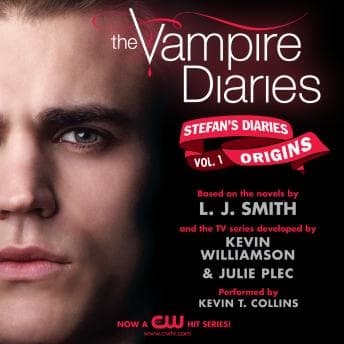

Let me cut to the chase: this isn't the Vampire Diaries you remember from the original books. It's the TV show's version, transplanted into 1860s Virginia, and that distinction matters more than you'd think.
I picked this up during a late-night drive back from a client site in Houston—four hours of empty highway, Ranger snoring in the back seat, and me needing something to keep my brain engaged without requiring too much tactical analysis. A vampire origin story seemed like the right call. Light enough to follow, dark enough to stay interesting.
The Salvatore Brothers Before the Fangs
Stefan's the narrator here, which means we're getting the brooding, honor-bound brother's perspective on everything. The setup is pure Civil War-era Virginia—plantation life, Southern society's rigid expectations, and two brothers who genuinely seem to like each other. At first. There's this scene early on where Stefan, Damon, and Katherine are playing football on the estate grounds, and it's oddly charming. Just three young people being young, before everything goes sideways. You know the knife is coming, but watching them be happy first makes it cut deeper.
The love triangle mechanics are predictable if you've ever watched the show, but hearing Stefan's internal justifications for falling for Katherine—knowing what she is—adds a layer of tragic stupidity that works. He's not an idiot. He's just young and convinced he's the exception to every rule. I've seen that exact mindset get lieutenants killed.
Collins Handles It, But the Accent Question Lingers
Kevin T. Collins does solid work here. His Stefan sounds appropriately earnest without tipping into whiny territory, and he keeps the pacing steady through the slower society scenes. At six hours, it never drags—I finished the drive and kept listening in my driveway for another twenty minutes.
But here's the thing some listeners have pointed out, and I can't unhear it now: the Southern accents aren't quite right. We're supposed to be in Mystic Falls, Virginia, 1864. The dialogue mentions the Confederacy, the social structures, the whole antebellum package. Collins gives it a general "old-timey" quality, but it doesn't land as authentically Southeastern. Not a dealbreaker—I've heard worse accent work in books set in places I've actually served—but if you're from that region, it might pull you out of the story. Ballad of Songbirds and Snakes had similar narrator challenges with its prequel setting, though that one nailed the character work.
No character differentiation issues jumped out at me. Katherine sounds different enough from the brothers, and Damon's dialogue carries the right edge of arrogance even when Collins isn't doing much to distinguish the voice itself.
Where the TV Show Bleeds Through
If you came to this from L.J. Smith's original novels, prepare for whiplash. This is Julie Plec and Kevin Williamson's version—the TV continuity, not the book continuity. The backstory doesn't match what you might remember from the original Vampire Diaries books. Katherine's characterization, the timeline, the family dynamics—all adjusted to fit what the show established.
I never read the original books, so this didn't bother me. But I can see why longtime fans of Smith's work would feel like they got bait-and-switched. The cover says L.J. Smith, but the story DNA is pure CW television. Worth knowing before you spend a credit.
Who Should Saddle Up (And Who Should Stand Down)
This is for TV show fans who want more Salvatore history. Period. Same way Ballad of Songbirds and Snakes exists for people who needed to understand President Snow's backstory. If you watched Paul Wesley and Ian Somerhalder do their thing and wanted to know what happened in 1864, this delivers exactly that. It's YA-level complexity—no deep tactical plotting, no moral ambiguity that'll keep you up at night—but it's competently executed.
Skip it if you're looking for serious vampire horror. Skip it if you need your Civil War-era fiction to feel historically rigorous. And definitely skip it if you're expecting the original book canon—you'll just end up confused and annoyed.
For everyone else? It's a solid commute listen. Nothing revolutionary, but it accomplishes its mission.
Mission Assessment
Worth your time if you're already invested in this world. Collins keeps it moving, the origin story has enough tragedy to feel earned, and six hours is the right length—any longer and the love triangle drama would've worn thin. Ranger slept through most of it, which I'm choosing to interpret as approval.
Not a must-listen, but not a waste of a credit either. Wait for a sale if you're on the fence.