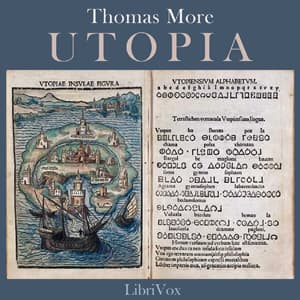

Thomas More wrote the blueprint for every political argument you've ever had at Thanksgiving dinner — and he did it in 1516.
I finished this one on a Sunday morning walk along the lakefront with Denise. She was talking about her sister's new kitchen renovation, and I was half-nodding while More's fictional philosopher Raphael Hythloday explained why private property is the root of all human suffering. Denise caught me mouthing "but what about the gold chamber pots" and gave me the look. You know the look.
The 500-Year-Old Argument That Won't Die
Here's what I tell my juniors when we touch on utopian literature: More wasn't writing a policy proposal. He was doing something far sneakier. He created a fictional island where gold is literally used for toilet fixtures and prisoner shackles — deliberately humiliating the thing Europe worshipped most — and then wrapped it in a frame narrative where the character "Thomas More" argues against the ideas being presented. The whole book is a trap. You're never quite sure if More the author agrees with Raphael or with the fictional version of himself. That ambiguity is the point. It's a 500-year-old Socratic dialogue disguised as a travel narrative, and it still works.
The Burnet translation from the 17th century, cleaned up by Morley in the 19th, reads like a solid historical document. It's not modern. You'll feel the age in the sentence structures — long, winding constructions that loop back on themselves before arriving at their point. But there's something appropriate about that formality when you're hearing about a society that regulates everything from dining arrangements to premarital inspections. (Yes, More's utopians require couples to see each other naked before marriage. My students would lose their minds over this. I love it.)
At under four hours, this is a short listen, but don't mistake brevity for lightness. Book One is essentially a philosophical debate about whether intellectuals should serve corrupt governments — a question I think about every time I sit through another meeting about standardized testing. Book Two is the detailed tour of Utopia itself, and it gets granular. Religious tolerance. Euthanasia. Communal meals. Slavery as punishment. More throws everything at the wall with the same calm, rational tone, which makes the disturbing bits land harder precisely because they're presented as reasonable.
Jenilee Reads More Like a Seminar, Not a Stage
This is a LibriVox recording, so let's set expectations correctly. Jenilee is a solo volunteer narrator tackling a Renaissance political treatise, and she approaches it with steady, clear delivery. No dramatic flourishes. No character voices — which, honestly, is fine for a text that's 80% philosophical argument and 20% fictional travelogue. She reads like someone presenting at a thoughtful lecture, measured and unhurried. The pace suits the material.
What I noticed: she handles More's longer sentences well, keeping the clauses organized so you don't lose the thread. That matters with this translation, where a single sentence can contain three subordinate ideas before reaching its verb. The audio quality is clean enough, though you'll catch the occasional ambient hum that reminds you this isn't a studio production. For a free recording of a text most people would never sit down and read? It does the job.
I wouldn't call the narration interpretive, though. And that's where I have a small grievance. The prose deserves to be savored, and there are moments — particularly Raphael's passionate condemnation of European greed in Book One — where a little more heat in the delivery would have served More's rhetoric. The words are fierce. The reading is even. That gap is noticeable.
Who This Is Actually For
If you loved Plato's Republic, this is its spiritual successor — but with more practical detail and more self-aware irony. If you're a philosophy student, a political science nerd, or just someone who wants to understand where the word "utopia" actually comes from (spoiler: it's a pun meaning "no place" and "good place" simultaneously, because More was that kind of clever), this is essential listening.
Skip it if you need plot. There's almost none. Skip it if you need dramatic narration. This isn't that audiobook. But if you want to hear the voice of a man who was eventually beheaded for his convictions, calmly and brilliantly imagining a world that probably can't exist — and knowing he knew it couldn't — there's something quietly devastating about that.
The Annotation I'd Leave in the Margins
I assigned excerpts of Utopia to my AP class three years ago. Half of them called it "communist propaganda." The other half called it "satire." They argued for forty-five minutes. I get that same classroom-argument energy from Black Swan Green, where Mitchell embeds real ideological friction inside what looks like a quiet coming-of-age story. That's the genius of this book — it's been making smart people disagree for five centuries, and it'll keep doing it. At four hours, it's worth your Sunday morning. Just don't try to explain the naked marriage inspection policy to your wife on the lakefront. Trust me on that one.









