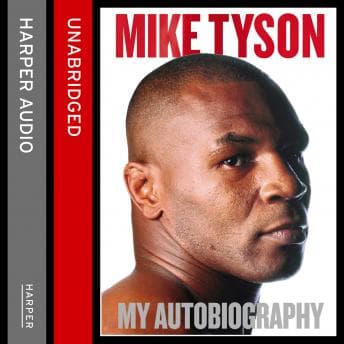

"I'm just a kid from Brownsville who wanted to be somebody."
That line hit me somewhere around hour three, and I had to pause my work because my eyes were blurring. Not from tears yet — that came later — but from this gut-level recognition. I grew up in San Antonio, not Brooklyn, but I know what it feels like to come from a place people write off. My abuela cleaned houses so my mom could go to community college. Mike Tyson's mom worked herself to nothing in Bed-Stuy. Different worlds, same hunger. That same feeling of recognizing your own hunger in someone else's story is what drew me to Boys' Life of Booker T. Washington — another kid from nothing, another life built on sheer will and the people who refused to write him off.
I was not expecting this book to wreck me the way it did.
The Kid Who Trained With Ghosts
Let me be real — I picked this up on a whim. Twenty hours is a commitment, and I'm a romance girl, not a sports girl. But I'd just finished a string of contemporary romances that left me feeling nothing (the worst sin a book can commit), and I wanted something raw. Boy, did I get it.
The Cus D'Amato chapters are where this book becomes something beyond a celebrity memoir. Tyson describing this old man in Catskill, New York, who saw a scared, lisping kid robbing people and decided to turn him into a god — the tenderness there is almost unbearable. Because you know what's coming. You know Cus is going to die. You know Mike is going to lose the only person who ever structured his chaos. And when it happens, the book cracks open like a wound that never heals. Every bad decision Mike makes after that — every binge, every fight outside the ring, every woman, every line of cocaine — traces back to that loss. This book felt like watching someone try to fill a hole shaped like the only father they ever chose.
My heart. MY HEART.
Joshua Henry Earned His Check on This One
I'd never heard Joshua Henry narrate before, and honestly I went in skeptical. Single narrator on a twenty-hour memoir about one of the most distinctive voices in pop culture? Risky. But Henry doesn't try to do a Tyson impression, and that's the smartest choice he could've made. Instead he channels the emotional register — the bravado that's clearly covering terror, the moments of almost childlike honesty when Tyson talks about being bullied as a kid and having his pigeons killed by older boys in his neighborhood. Henry's delivery during the jail chapters goes quiet in a way that made the hair on my arms stand up. He doesn't perform prison — he lets the loneliness sit there.
The pacing is steady without dragging, which for twenty hours is genuinely impressive. I listened at my usual 1.0x and never felt the urge to speed up, even during the business-deal sections (which, okay, aren't the most thrilling parts, but they're necessary to understand how everyone around Mike was bleeding him dry).
When It Made Me Ugly-Cry at 2 PM on a Tuesday
The chapters about Tyson realizing he's broke — truly, devastatingly broke, with children depending on him — hit different when you're a freelancer whose biggest client just cut their budget by 40%. (Diego was sleeping on my keyboard and I was crying into his fur. He did not care.) But it's the addiction chapters that really gutted me. Tyson talks about his drug and sex addiction with this brutal, almost clinical honesty that keeps tipping into despair. There's no self-pity party. He just... tells you what he did. What he lost. How many times he almost died. And then he talks about his daughter Exodus, who died in a treadmill accident at four years old, and I had to stop listening for the rest of the day.
Abuela would have clutched her rosary during this entire book. Every chapter. She also would've finished it, because she understood that people are complicated and messy and still worthy of compassion. She watched telenovela villains with more empathy than most people give real humans.
Comparisons That Actually Mean Something
If you've listened to Andre Agassi's Open, this lives in similar territory — athlete peels back the mythology and shows you the bruised person underneath. But Tyson goes darker. Way darker. Agassi's rebellion was burning his tennis gear; Tyson's was burning his life to the ground, multiple times, with people still inside. The honesty here is closer to something like A Million Little Pieces (the real parts, anyway) — that unflinching "here's the worst thing I've ever done, and also I did something worse the next week" energy.
Who This Is For (and Who Should Maybe Not)
If you need your memoirs polished and redemptive with a clean arc — skip this. Tyson's story doesn't resolve neatly. He's still figuring it out on the last page, and the honesty of that is what makes it real. Content warnings are serious here: violence, abuse, sexual content, addiction in graphic detail. This is not background listening. This is a "sit with it" book.
But if you want to feel something — really feel something, the kind of feeling that recalibrates how you see a person you thought you already understood — this is twenty hours well spent. I went in knowing Mike Tyson the meme, the ear-biting clip, the face tattoo. I came out knowing Mike Tyson the kid who just wanted his pigeons to be safe.
Frida knocked my headphones off the desk three times during this listen. Even she knew I needed a break.